

Audio By Carbonatix
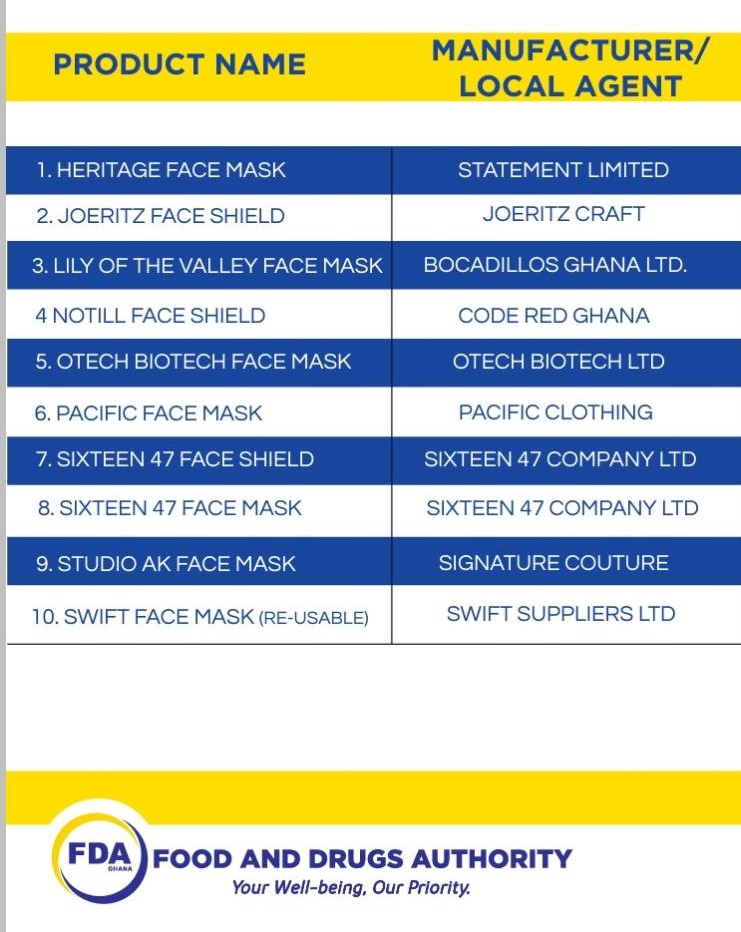
The Food and Drugs Authority (FDA) on Sunday listed 10 registered and approved face masks and shield for public use to help contain the Covid-19 pandemic.
They are Heritage Face Mask, Joeritz Face shield, Lily of the Valley Face Mask, Notill Face Mask, Otech Biotech Face Mask, Pacific Face Mask, Sixteen 47 Face Shield, Sixteen 47 Face Mask, Studio AK Face Mask, and Swift Face Mask (Re-Usable).
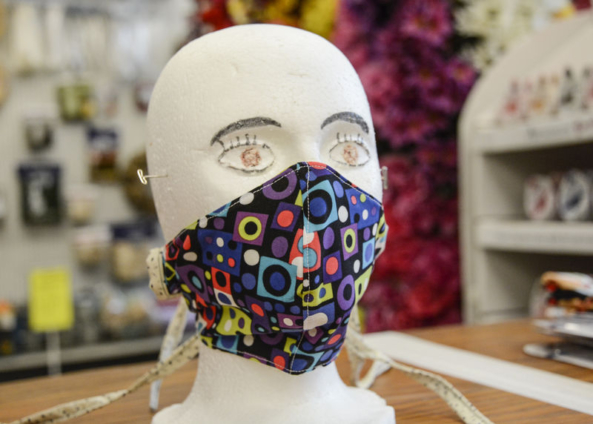
The FDA has urged the public to go by the recommended three-layered face masks to effectively help in curbing the spread of the global pandemic.
In an interview with the Ghana News Agency, Mr Joseph Yaw-Bernie Bernnie, the FDA Head of Medical Devices, said most of the locally produced facemasks posed health risks to citizens rather than protecting them.
He said most of the local ones were either single or double-layered cloth and sewn with treated materials, which in itself may pose danger to the user.
The FDA, therefore, appealed to the public to desist from using un-recommended face masks, stressing that in an attempt to contain the spread of the disease, many were producing it locally, the efficacy of which could not be ascertained.
Mr. Bernie said face masks generally must be able to filter out particles and still be easy to breathe through.
He said in the absence of propylene, which is the common material used for medical-grade face masks, 100 per cent cotton or cotton blends possessed good material characteristics for homemade face masks.
He said recent studies and evaluations undertaken by the FDA on viable materials for face masks production established that Calico-Stiff (Hard/Medium)-Calico (three layers) combination was ideal for a reusable homemade COVID-19 face mask.
Mr Bernnie said there must be no chemicals in the materials used for producing masks as they may have health implications.
He said the FDA was carrying out market surveillance to rescue the system, educating both producers and users to stop producing and using face masks there were not recommended.
He said face masks were for protecting the wearer from others or vice versa but wearing those not recommended would rather expose the wearer to danger because of the false sense of security.
Latest Stories
-
‘Apologise if you accept you erred’ – Political analyst tells Chief Justice
41 minutes -
Mahama’s board shake-up should not be linked to indiscipline – Akwatia MP
1 hour -
‘My Police, Your Police, Our Police’: the Aboso fire and a lesson in Policing together
1 hour -
Parliament backs OSP probe into alleged GH¢70k payment to Patricia Appiagyei
2 hours -
Photos: Joy FM Back-to-School Fair buzzes with excitement, strong patronage on Day 2
2 hours -
Dissolving inactive SOE boards is justified – Dennis Miracles Aboagye
2 hours -
John Boadu: I am not contesting for president; I am contesting to make Bawumia President
2 hours -
Zoomlion begins post-flood disinfection exercise in West Gonja to curb health risks
3 hours -
When Lady Justice Counted Eight Years
3 hours -
SIGA reporting should distinguish commercial performance from public service – Yaw Appiah Lartey
3 hours -
SOEs must hold AGMs, not just submit audited accounts – Deloitte Partner
3 hours -
There are errors in SIGA report that affected its conclusions – Miracles Aboagye
3 hours -
Joy FM Back-to-School Fair gains momentum as Day 2 gets underway
3 hours -
Bright Simons fires back, rejects claims he used AI to critique SIGA report
3 hours -
SIGA did not conjure or manufacture figures – Prof Kpessa-Whyte
4 hours