

Audio By Carbonatix
Amidst the haze of uncertainty around the global corona virus crisis, there is one thing that is certain – we will not have the luxury of returning to the old order. Whenever this crisis ends, however it does, it will leave in its wake an upended global order that must be radically rethought. It is not just because we need to insulate ourselves against the next possible pandemic or something similar, it is because we have been forced to confront the weaknesses of the current settlement.
Over the course of the last generation, the neo-liberal consensus, as we have come to refer to it, has brought tremendous progress to people in all corners of the world. The market-led approach, for all the criticism it gets from furious ideologues, has lifted more people out of poverty than any other system in history.
Around the world, quality of life has been vastly improved and access to life’s necessities and comforts are available to more people than could have been imagined by people living even three decades ago. So in many senses, the way in which we have crafted the world has worked and it is worthy of commendation, even protection.
But complex global supply chains, just-in-time manufacturing, stateless companies and offshoring of critical goods and services have long had an untested soft underbelly. Until Covid-19 however, we had not been forced to confront or even contemplate this elephant lurking in the room.
A crisis that forces us to close our borders and shut off interaction with other countries however has a way of forcing a reckoning. So when eventually we are able to shake hands again – assuming we will – we will need to recalibrate much more than our social conduct.
Ghana has of course not been exempt from all this. Since the 1980s when we had to submit to the Bretton Woods packages, we have gradually lost our production capacity. With ever-cheaper imports ever more accessible, local firms, unable to compete have folded up or reduced capacity. While our deindustrialisation had been on a march even before that, local conditions and global progress have accelerated our slide in manufacturing and even agriculture to the point where we have to import nearly everything.
For many of us, this has been a worrying trend. An overdependence on foreign production is not just economically imprudent; it is also a national security threat. A sovereign nation that is entirely reliant on conditions in other countries for its basic needs is setting itself up for exactly the near-crisis we had when Covid-19 struck and we found ourselves at the mercy of price gougers looking to extract the last possible penny for a bottle of hand sanitizer.
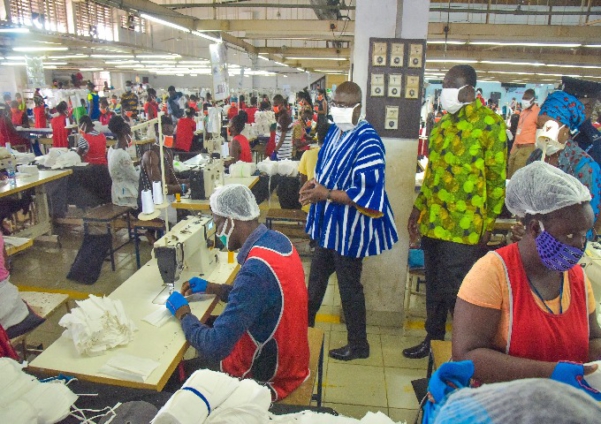
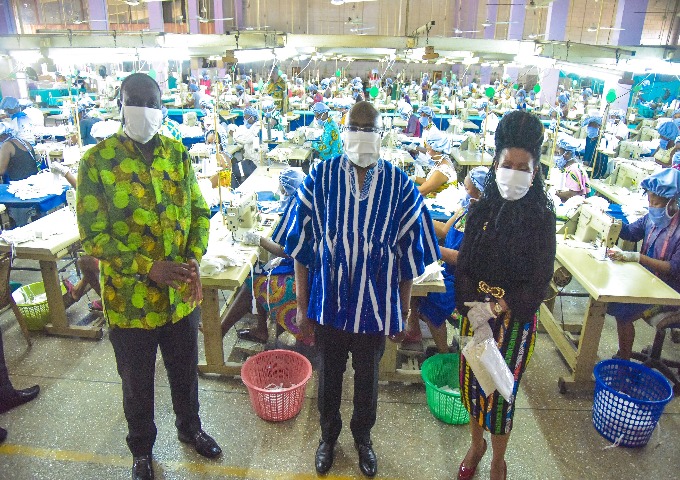
With our ports shut and no imports coming, however, an amazing thing has happened. Local ingenuity and enterprise has stepped in to protect us from our bad decisions. To their credit, liquor manufacturers utilised their production units and raw materials to help meet the demand for hand sanitizers. Local dress makers and tailors as well as others with the capacity, are providing nose masks.
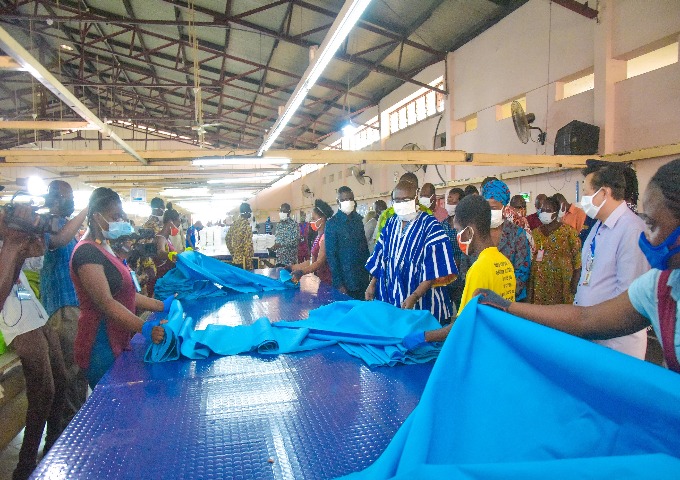
We have seen thrilling innovation from people around the country who are crafting hand washing and sanitisation devices fit for our peculiar no-contact moment. At a much higher level, we have seen the Kwame Nkrumah University for Science Technology develop a ventilator and team up with local firm INCAS to produce a rapid test kit for easy diagnosis of Covid-19 infections. And we cannot forget the heroic work of the team at the University of Ghana and Noguchi Memorial Institute for Medical Research whose work sequencing the genome of local strains of the virus has added to our understanding of it.
What all these sprinklings of innovation and enterprise tell us is that our problem has not been so much one of capacity or ability. With our self-indulgent dependence on other nations’ hard work, we have allowed our own industrial and production systems to wither, while complaining that we do not have it in the first place. Thank God, they did not die entirely and have risen in the face of this necessity to show the invention that has kept us going these last few weeks. This must be our turning point.
Whenever Covid-19 and the data and science around it allow us to return to normal, it must not be the old normal. Our economy will need rebuilding and the relationship between the state and the citizen would need to be redefined. We must start this process by placing the citizen’s welfare and the health of our local production systems at the centre of our plans. We cannot leave citizens on their own to rebuild their lives and we cannot allow imports to be our default choice. And these two considerations are contingent on each other.
Now that we have concrete evidence of the capacity and ingenuity of local businesses, we have to have a plan to support them to grow. It is gratifying that while the crisis has been on-going, President Nana Addo Dankwa Akufo Addo has met leaders of industry. These discussions, I believe should crystallise into a grand, consensus-driven plan to kindle and sustain the sleeping giant of Ghanaian industry.
One way to do this would be to assure local industries of custom by applying the awesome procurement might of central as well as local governments in their favour. We cannot ban imports but our government must no longer feed mouths in other countries with our tax Cedis. It must spend the money here whenever possible.
On the supply side, we now have to take even more seriously, the government’s plan for a factory in every district. Partisan bickering aside, this is a laudable plan that assures us of jobs, evens out development across the country and will place us in a much better position to withstand the next global crisis, whenever it comes.
On both sides of the political aisle, we must recognise these essential truths and work together to make this plan a success. Whether through direct intervention, enhanced support or even through regulatory revisions, we have to make sure that we have industrial units ticking across this country.
Our post-Covid 19 reality must not be the same as before.
We have had a jarring wake-up call and while it looks like we may yet escape relatively unscathed, we must not go back to sleep. We have to use this moment as one to fundamentally redefine how our country works. And we must begin, I submit, by rebuilding our economy’s industrial and agricultural base. That’s how we will do even better when the next crisis comes.
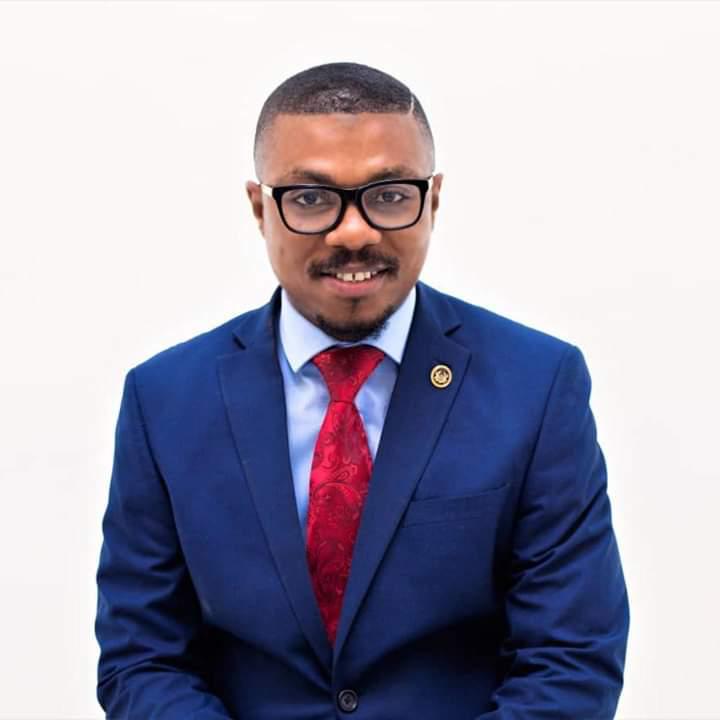
The writer is the Executive Secretary of the National Council for Curriculum and Assessment (NaCCA) and an aspiring parliamentary candidate of the New Patriotic Party in Kwesimintsim in the Western Region.
Latest Stories
-
FoSCel foundation calls for end to stigma and stereotyping against people living with sickle cell disease
11 minutes -
Auditor-General to track audit recommendations as GH¢280.5m in surcharges remains unpaid
11 minutes -
Walewale MP withdraws ‘rude’ comment on Bagbin’s Parliament recall, apologises
28 minutes -
FoSCel founder urges curriculum reform to strengthen sickle cell education in Ghana
35 minutes -
United States launches America.Gov for public services 5 years after Dr. Bawumia launched Ghana’s version Ghana.Gov
46 minutes -
Cocaine probe: Majority used super majority with Speaker’s support to weaken Parliament – Afenyo-Markin
50 minutes -
UGMC Research Director urges stronger clinical trials to bridge gap between research and patient care
60 minutes -
IEAG calls on FDA to resolve delays in import code issuance
60 minutes -
UGMC research must translate laboratory findings into healthcare solutions – Prof Evelyn Yayra Bonney
1 hour -
Court remands 3 over alleged gold concentrate robbery
1 hour -
Two bodies stuck at St. Anne’s mortuary after refrigeration engines break down
2 hours -
‘We will not let this matter rest’ – Afenyo-Markin after Bagbin rejects narcotics probe
2 hours -
AFCON 2027Q: Ghana suffer 4-2 defeat to Gambia
2 hours -
Your strike could disrupt academic calendar – GES urges teachers to return
2 hours -
Speaker’s ruling has failed integrity test required of Parliament to discharge its duties – Afenyo-Markin
3 hours