

Audio By Carbonatix
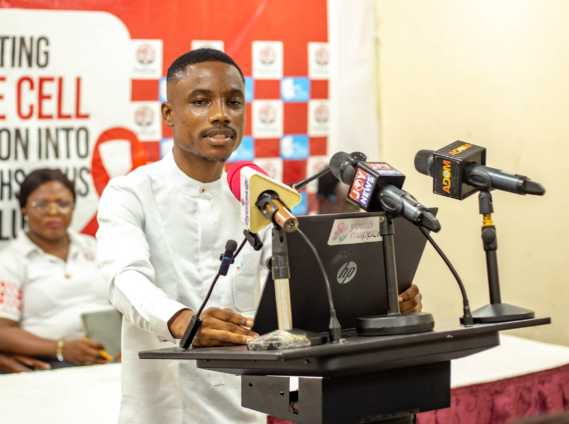
The Founder of the Focus on Sickle Cell Foundation (FoSCel), Amos Andoh, has called for structured, age-appropriate sickle cell education to be integrated into Ghana’s school curriculum to equip young people with accurate information about the condition before they make decisions about relationships and parenthood.
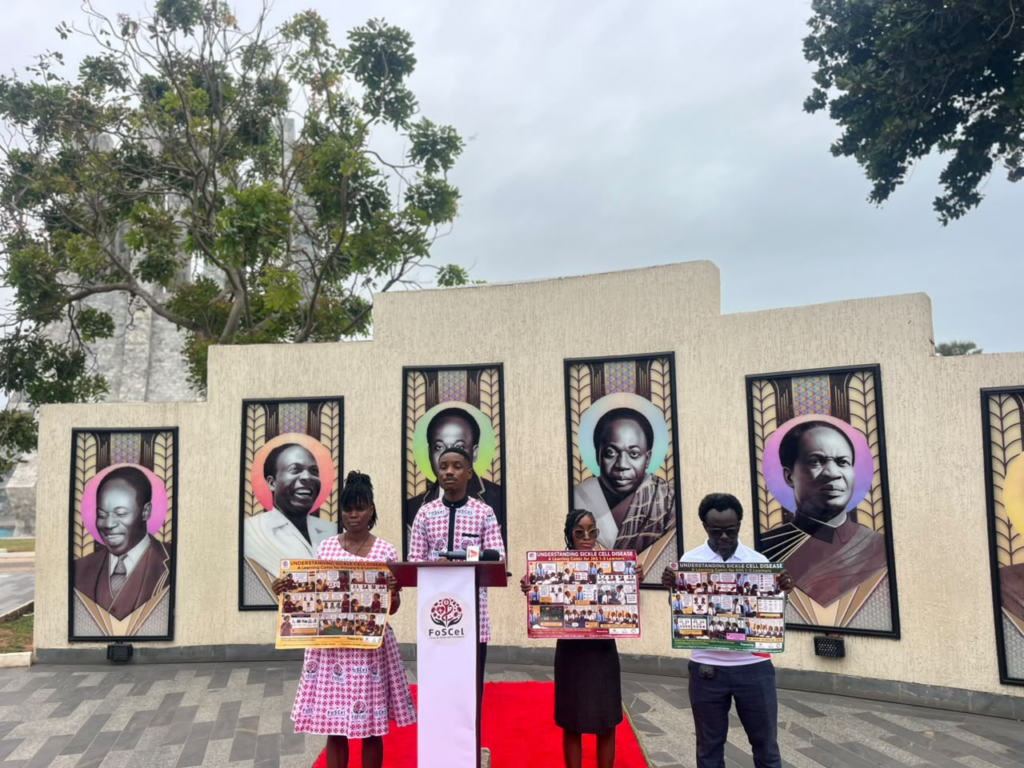
Speaking to the press on Tuday, September 29, at the Kwame Nkrumah Memorial Park, Mr Andoh said Ghana’s response to sickle cell disease must extend beyond hospital-based treatment and public awareness campaigns to sustained education in schools.
He said FoSCel’s approach was to transform awareness into practical knowledge that would enable young people to make informed health decisions.
“We do not want to create awareness alone. But we want to turn awareness into knowledge, then knowledge into decisions, and decisions into a healthier community,” he said.
Ghana records an estimated 15,000 to 18,000 babies born with sickle cell disease each year, according to recent health-sector and WHO-linked reports. The Ministry of Health has also developed a national strategy and screening and case-management guidelines aimed at improving prevention, early diagnosis and care.
Mr Andoh said the scale of the condition made it necessary for education to become an integral part of Ghana’s national response.
According to Mr Andoh, sickle cell disease should not be treated only as a medical concern affecting hospitals, patients and their families.
He described it as a national health, educational and generational issue, arguing that healthcare interventions must be complemented by accurate information delivered early to children and young people.
“Healthcare is essential, but healthcare must go hand in hand with accurate education. Let our teachers teach what our doctors treat. And that is our message,” he said.
He explained that early education could help young people understand genotype, sickle cell inheritance, genotype compatibility and the importance of screening, while also challenging misinformation and stigma surrounding the condition.
Mr Andoh said conversations about genotype compatibility often became more serious only when young adults were already in relationships or preparing for marriage.
He argued that by that stage, introducing information about genotype and inheritance could be more difficult because emotional considerations could influence decisions.
“We cannot wait until consequences that have already occurred before we begin the education,” he said.
He therefore called for age-appropriate sickle cell education to be provided while children are still in school.
FoSCel has previously advocated the integration of sickle cell education into Ghana’s JHS and SHS curriculum, including lessons on genotype, inheritance, screening, stigma and informed health decisions.
Mr Andoh said the Foundation’s advocacy had already moved beyond calls for curriculum reform, with the development of an educational comic model designed to make sickle cell information easier for young learners to understand.
He said the Foundation had piloted its educational activities in collaboration with the Ghana Education Service in the Efutu area, gaining practical experience in presenting sickle cell information in a simple and age-appropriate format.
According to him, FoSCel subsequently developed educational materials for basic, JHS and SHS learners and submitted a policy proposal calling for sickle cell education to receive greater attention within Ghana’s education system.
He said the Foundation had also engaged relevant stakeholders, including the leadership of the National AIDS/STI Control Programme and parliamentary stakeholders, over the proposed integration.
Mr Andoh said the Foundation had formally presented its comic material to the health authorities for professional review.
He explained that the use of storytelling and illustrations was deliberate because difficult health concepts could become easier for children to understand when presented through relatable characters and narratives.
“A well-designed story can make difficult health information very simple, relatable and memorable for our young learners,” he said.
The material covers sickle cell disease, genotypes, genotype compatibility, support for people living with the condition, stigma and stereotyping.
Mr Andoh said these were issues young people needed to understand before becoming adults and making decisions about relationships and families.
Mr Andoh urged the Ministry of Education, Ghana Education Service, Ministry of Health, Ghana Health Service, National Health Insurance Authority (NHIA) and other relevant institutions to support the initiative and strengthen sickle cell education and policy.
He said FoSCel welcomed professional assessment of its educational materials and was hopeful that engagement with relevant institutions would contribute to a stronger national approach to sickle cell education.
He stressed that education should complement, rather than replace, healthcare.
Mr Andoh also commended the Ministry of Health, Ghana Health Service and NHIA for efforts to improve access to healthcare for people living with sickle cell disease.
He particularly welcomed the inclusion of hydroxyurea and other essential sickle cell medicines under the NHIS benefits package, saying access to medication was important in managing the condition.
He encouraged people living with sickle cell disease and their caregivers to remain engaged with the healthcare system and ensure their NHIS membership remained active.
Recent health-sector reporting has similarly highlighted hydroxyurea and comprehensive care as important components of Ghana’s response to sickle cell disease, alongside early diagnosis, newborn screening and appropriate follow-up care.
However, Mr Andoh said treatment alone could not address all the challenges faced by patients and their families.
He cited complications associated with sickle cell disease, including kidney problems, stroke, heart-related complications and avascular necrosis, and said some interventions could impose significant financial pressure on affected families.
Speaking from personal experience as someone living with sickle cell genotype SC, Mr Andoh appealed to the public to reject misconceptions and discrimination against people living with the condition.
He stressed that sickle cell disease is not contagious and cannot be acquired through ordinary social interaction, including playing or associating with someone who has the condition.
He also called on employers to avoid discriminating against people living with sickle cell disease based on assumptions about their physical capacity or ability to work.
According to him, people living with the condition have the capacity to contribute meaningfully to national development if given appropriate opportunities.
“Sickle cell disease is not a death sentence,” he said, urging people living with the condition not to allow it to limit their aspirations.
He said people living with sickle cell disease could pursue careers across public and private institutions and contribute to society in fields ranging from politics and public service to business, entertainment and other professions.
Mr Andoh said Ghana’s long-term response should combine access to healthcare with preventive education and accurate public information.
He argued that early education could help address ignorance surrounding genotype and inheritance, while also helping to reduce stigma against people living with sickle cell disease.
He said families often reported learning about their child’s condition only after diagnosis, while some parents had not understood the significance of genotype testing before marriage.
“Why are we waiting for our children to be born before we can start the treatment?” he asked.
Mr Andoh acknowledged that treatment and medical support remained essential but said these measures needed to be accompanied by a stronger preventive and educational response.
“Education is the way, awareness is the way so that we can eventually eliminate sickle cell disease in our country,” he said.
Mr Andoh therefore urged the media, government institutions, educators, health professionals, corporate organisations and the general public to support efforts to improve sickle cell education and ensure that people living with the condition receive accurate information, appropriate care and equal opportunities.
Latest Stories
-
Bagbin adjourns Parliament indefinitely
10 minutes -
African Most Beautiful USA Queen to host Community Zumba Dance session in Accra
10 minutes -
Cocaine probe: Speaker got it wrong by blocking parliamentary inquiry – Minority Leader
23 minutes -
FoSCel foundation calls for end to stigma and stereotyping against people living with sickle cell disease
35 minutes -
Auditor-General to track audit recommendations as GH¢280.5m in surcharges remains unpaid
35 minutes -
Walewale MP withdraws ‘rude’ comment on Bagbin’s Parliament recall, apologises
52 minutes -
FoSCel founder urges curriculum reform to strengthen sickle cell education in Ghana
59 minutes -
United States launches America.Gov for public services 5 years after Dr. Bawumia launched Ghana’s version Ghana.Gov
1 hour -
Cocaine probe: Majority used super majority with Speaker’s support to weaken Parliament – Afenyo-Markin
1 hour -
UGMC Research Director calls for deliberate pathway from research to patient care
1 hour -
IEAG calls on FDA to resolve delays in import code issuance
1 hour -
UGMC research must translate laboratory findings into healthcare solutions – Prof Evelyn Yayra Bonney
2 hours -
Court remands 3 over alleged gold concentrate robbery
2 hours -
Two bodies stuck at St. Anne’s mortuary after refrigeration engines break down
2 hours -
‘We will not let this matter rest’ – Afenyo-Markin after Bagbin rejects narcotics probe
2 hours