

Audio By Carbonatix
The Founder of Focus on Sickle-Cell Foundation (FoSCeL), Amos Andoh, has stressed the importance of advocacy and public education in the fight against sickle cell disease, calling on the government to make genotype and inheritance education compulsory in schools.
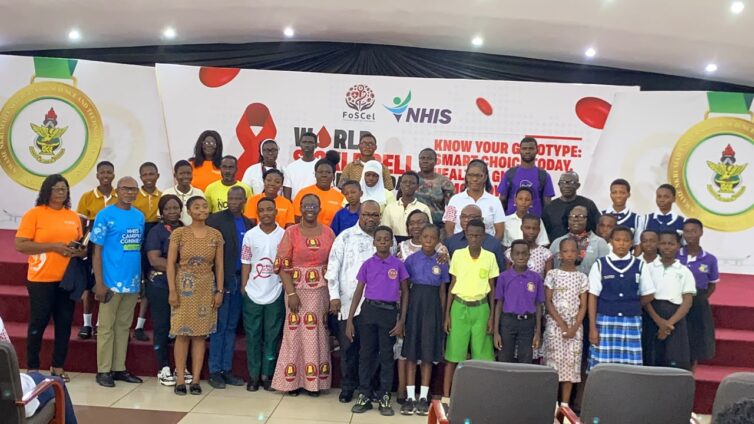
He disclosed on the sidelines of the World Sickle Cell Day commemoration held at the Great Hall of Kwame Nkrumah University of Science and Technology (KNUST).
Mr Andoh called on the government, through the Ministry of Education, to integrate sickle cell education into the national curriculum to equip young Ghanaians with knowledge before they start families.
He added that curriculum integration should include genotype education, carrier status, and the science of inheritance, alongside modules that address discrimination against people living with the condition.
According to him, this is the best way to prevent future cases and reduce stigma.
“Sickle cell is hereditary, yet many students complete school without knowing their genotype or understanding the risks,” he said. “If we teach this in basic and senior high schools, we can prevent future cases and reduce stigma. Education is the cheapest and most sustainable prevention tool we have.”
Mr Andoh said while research into bone marrow transplants and gene therapy offers long-term hope for a cure, prevention through education remains Ghana’s most immediate and cost-effective strategy.
“If every Ghanaian knows their genotype before marriage, we can dramatically reduce the number of children born with sickle cell disease within one generation,” he stated. “The long-term goal is a cure, but today the fastest tool we have is knowledge.”
He urged parents, religious leaders, and community groups to support screening and awareness campaigns, and called on media houses to sustain education beyond annual commemorations.
Speaking at the event, Professor Christian Agyare, Provost of the College of Health Sciences at KNUST, urged Ghanaians, especially those yet to marry, to know their genotype as a preventive measure.
He said genotype testing before marriage and pregnancy is the most effective way to reduce new cases.
Prof. Agyare noted that couples with both partners as carriers face a 25% risk of having a child with sickle cell disease in every pregnancy.
“This is not about stopping people from marrying who they love. It is about making informed choices with full knowledge of the health implications for your children,” he said. “A simple blood test today can save a family years of pain, medical bills, and emotional stress tomorrow.”
He added that KNUST’s College of Health Sciences is ready to support public education and community screening efforts to increase genotype awareness across the country.
The Chairman of Parliament’s Health Committee and MP for Nabdam, Dr. Mark Kurt Nawaane, has expressed optimism that Ghana is steadily moving towards fully free treatment for sickle cell disease as part of broader reforms to strengthen primary healthcare and reduce the financial burden on patients.
He noted that sickle cell disease continues to pose a significant public health challenge in Ghana, estimating that one in every 60 births is likely to be affected.
According to him, the prevalence highlights the need for stronger prevention, improved screening, and sustainable healthcare financing mechanisms to support affected individuals and families.
The Health Committee Chairman said the main challenge currently is not only the prevalence of the disease but also the cost of diagnosis, medication, and long-term management, which places heavy strain on patients and the health system.
Dr. Nawaane outlined ongoing government interventions aimed at improving early detection and treatment of sickle cell disease through strengthened primary healthcare systems.
He further stated that the management of complications associated with sickle cell disease—including kidney failure, stroke, and surgical conditions—will be covered under the government’s emerging “Mahama Care” initiative, which is already being implemented.
He expressed confidence that this approach would significantly reduce out-of-pocket expenditure for patients and improve access to specialised care.
Looking ahead, Dr Nawaane said he hopes Ghana will eventually reach a point where treatment for sickle cell disease becomes completely free at designated healthcare facilities.
World Sickle Cell Day is observed globally on June 19 to raise awareness about the condition and advocate for better care and support for patients.
Sickle cell disease is an inherited blood disorder that affects red blood cells, causing episodes of pain, infections, and organ damage.
In Ghana, an estimated 2% of children are born with the condition each year, while about 25% of the population are carriers, according to the World Health Organisation.
While the National Health Insurance Scheme covers some aspects of treatment, many patients still face high out-of-pocket costs for drugs, pain management, and specialist care.
Latest Stories
-
NACOC, INL deepen cooperation to combat drug trafficking and organised crime
18 minutes -
GEPA CEO calls for investment to transform Ghana’s economic opportunities
20 minutes -
Photos: Antoine Semenyo says ‘I do’ to longtime partner Jordeen Buckley
40 minutes -
Gender Minister visits Nana Akua Addo, assures family of support
40 minutes -
You need to fake it sometimes to make it fun – Stephanie Benson tells couples
59 minutes -
Mahama Cares says political affiliation will not determine access to medical support
1 hour -
Government inherited GH¢111bn debt burden but continues infrastructure projects – Lands Minister
1 hour -
Mallam Atta traders urge government to speed up 24-hour market redevelopment
1 hour -
Catholic Church has a duty to speak on issues affecting human dignity – Bishop Gyamfi
1 hour -
KATH sickle cell, blood bank project stalled over $1.6m legal dispute – CEO
2 hours -
Restricting preaching in moving vehicles is an attempt to gag the church – Rev. Kwadwo Bempah
2 hours -
Central Charismatic Baptist Church marks 30 years, urges review of law restricting preaching on buses
2 hours -
Mafi Kope residents appeal for urgent medical intervention over illnesses affecting children, adults
2 hours -
ECG to limit planned power outages in Ashanti to two days a week
2 hours -
NYA CEO, management doing ‘yeoman’s job’with meagre budget — Parliament’s Youth Committee Chairman
2 hours