

Audio By Carbonatix
Government implemented a tax stamp policy in January 2018 following a launch announcement in August 2017.
The policy was implemented to deter the public from trading unapproved excisable products.
Through this policy, beverages that do not have the tax stamp are not to be patronised by the public, and are to be removed from the Ghanaian market.
Additionally, manufacturers and traders who deal in items that do not bear the tax stamps; are to face the appropriate sanctions according to a statement released by the Deputy Finance Minister, Kwaku Kwarteng.
It was announced that in the first half of the year 2018, government will bear the cost of the tax stamp and thereafter transfer half of the cost to local manufacturers and importers of excisable products, among which include alcoholic beverages.
The objectives of this tax stamp policy are to control the importation and local production of excisable goods for revenue purposes, to check illicit trading, smuggling and counterfeiting of excisable products, to check under-declaration of goods and to protect and increase tax revenue.
A huge portion of the beverage industry comprises unregulated alcoholic beverages such as, counterfeit alcohol, contraband, smuggled alcohol, non-complaint alcoholic drinks production process, among many others.
The main purpose of excise tax stamps is to provide a physical means of identifying the items for which payment has been made.
In Ghana you may have noticed the tax stamp in the form of a QR Code printed on a small sheet of paper on canned drinks, alcoholic and non-alcoholic beverages.
That is the physical evidence of the digital tax stamp on those excisable goods.
Before the implementation of this policy, the Food and Beverage Association of Ghana (FABAG) threatened to withdraw all locally manufactured products from the market if the Government went ahead with the implementation of the policy.
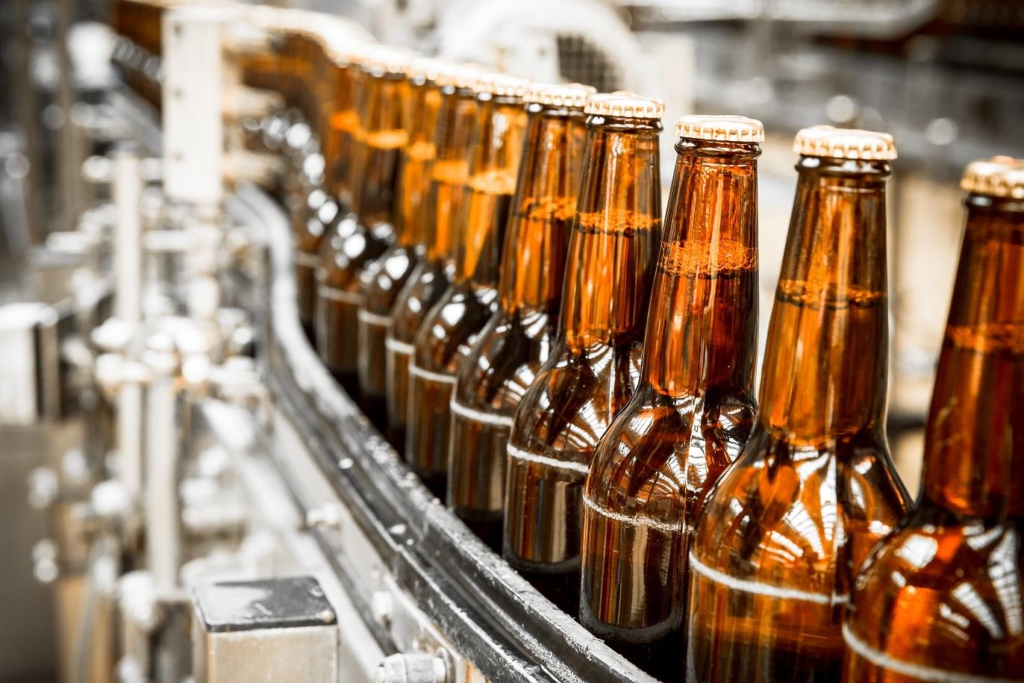
This was after local manufacturers had expressed worry that the cost of acquiring machinery to support the implementation of the policy will lead to the collapse of local manufacturing companies, as would be the case for any small-scale brewery in any part of the world.
The tax stamp policy has been implemented in many other African countries such as Zambia, Kenya, and Uganda.
In some of these countries, the tax stamp policy seems to enforce the government’s efforts to tax collection.
In other African countries, however, there has been a step-up from the digital stamp system for even better results.
In Tanzania, the tax stamps system that is used is the Electronic Tax Stamps (ETS). It has contributed to a 34% increase in revenue.
As at August 2019, the Tanzania Revenue Authority had rolled out the second phase of the project, which saw ETS being stamped on soft and carbonated drinks and bottled water.
According to the Deputy Commissioner General, Mr. Msafiri Mbibo, “the ETS replaces the former paper stamp system, which was cumbersome and prone to human error, allowing certain tax-related malpractices to slip through the cracks”.
The regulations require each manufacturer to install an electronic tax stamp management system.
For this, a swiss-based firm, SICPA was contracted by Tanzania Revenue Authority to install and enrol all manufacturers, producers and importers onto the system.
In a conversation with the General Secretary of FABAG, Samuel Aggrey outlined the processes the Association has undertaken to petition that a more efficient system be put in place.

According to him, the electronic tax system which FABAG proposed to Government, would have given GRA direct access to the manufacturer’s system.
He said, “This way, before the manufacturer starts production, GRA would have to give approval from their end of the portal, and will be able to track the count of the bottles manufactured.”
He went on to explain that with this process, the excise stamp will be printed directly on each bottle, eliminating the costs of printing QR coded stamps.
Conversations with the various stakeholders show that the paper tax stamp system may be challenging in terms of timely delivery, costs of doing business and profitability of small-scale beverage manufacturers than it is earning revenue to the Government.
There are also alternative options that seem to have promising results for both Government and small-scale beverage manufacturers.
As such, will the electronic tax system be a more efficient avenue for collecting excise tax stamps from small-scale manufacturers?
Latest Stories
-
Bono Region faces doctor shortage as only 7 of 20 posted doctors report – Deputy Health Minister
1 minute -
Mahama to cut sod for 160-bed referral hospitals in Oti, Savannah and Western North
3 minutes -
Dr Kwame Nkrumah’s birthday celebration: Africa must heed Nkrumah’s vision of unity – Prof. Lumumba
5 minutes -
Dr Nyaaba calls for green financing to help farmers switch to solar-powered irrigation
5 minutes -
Investor sentiment towards banking stocks to remain positive
10 minutes -
Ghana’s happiness index averages 4.70 as study flags concerns over governance, environment
10 minutes -
Parents urged to seek early treatment for childhood cancer
12 minutes -
AngloGold Ashanti Obuasi mine promotes inclusion through neurodiversity awareness programme
13 minutes -
TVET Service warns institutions against unauthorised fees during admissions
15 minutes -
Paramount settles lawsuit with US states, clearing way for $110bn merger with Warner Bros
16 minutes -
GIRSAL calls for affordable financing and technical support for Ghana’s smallholder farmers
16 minutes -
Kwame Danso 24-hour economy market project five percent complete – Minister demands improvement
17 minutes -
Ghana’s maternal mortality rate three times above SDG target – Mahama
19 minutes -
Afro Caribbean Creative Bridge forum: Stakeholders call for stronger intellectual property, copyright protection for creatives
21 minutes -
AFCON 2027Q: Antoine Semenyo withdraws from Ghana squad with ankle injury
24 minutes