

Audio By Carbonatix
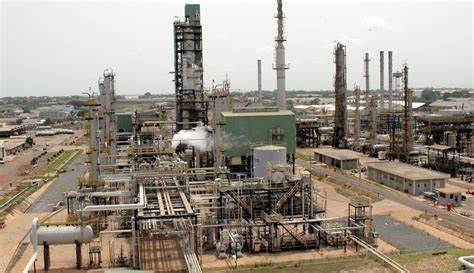
Ghana’s weak downstream oil sector ranks it 5th out of 19 Sub Saharan African countries, according to Fitch Solutions Downstream Oil & Gas Risk/Reward Index.
The nation is also ranked 57th globally out of 92 nations as its Petroleum Hub Development project has been described as overambitious.
“Although it [Ghana] scores slightly higher than the regional average, Ghana’s limited refining capacity and low utilisation rates, combined with its under-developed regulatory framework, mark it as an unattractive area for private investment.”
“However, if the necessary funding for the Petroleum Hub Development can be obtained, the project offers significant upside to Ghana’s RRI [Risk Reward Index] position and the future of its downstream sector”, it pointed out.
In October last year, parliament passed the Petroleum Hub Development Corporation Bill, which seeks to establish the Petroleum Hub Development Corporation and subsequently fuel the growth of the country’s downstream sector.
The integrated petroleum hub that will be built in Bonyere in Western Region will be constructed in three phases and is expected to be completed by 2030.
It is proposed to incorporate four refineries, crude oil storage tanks and two petrochemical plants.
But Fitch Solutions considers the project as a high risk given the existing dynamics across the nation’s downstream sector, citing Tema Oil Refinery as an example. A weakness is its limited projected growth in demand of its refined fuels.
Nonetheless, the Energy Ministry expects the three-phase project to attract total investments of about $60 billion with $12 billion needed to fund the first phase.
Each refinery is estimated to cost $5.4 billion, and the first phase is expected to construct 350,000 barrels of oil per day of refining capacity.
By November 2020, the Ministry had reportedly shortlisted three bids for the project, where one investor pledged $15 billion to fund the storage element of the project. The Energy Ministry expects that 90% of funding will come from the private sector and the remaining 10% from the government.
Latest Stories
-
Discipline must not become abuse in raising children – ARK Foundation
6 minutes -
Photos: Culture, technology and cuisine take centre stage at Russia’s youth festival
7 minutes -
‘Who approved Laboma structures?’ – Victoria Bright calls for review of permitting system
13 minutes -
“The Darkest Chapter”: Latif Abubakar’s 21st production brings President Mahama’s UN reckoning to the National Theatre stage
17 minutes -
Teacher, three others investigated over alleged kidnapping of suspected MoMo fraudster in Kumasi
18 minutes -
Afenyo-Markin mourns Bernice Offei, describes her songs as ‘sermons set to music’
18 minutes -
Don’t just learn AI tools, use them to improve productivity – ALX Enterprise
25 minutes -
Free rabies vaccination campaign targets 25,000 dogs and cats nationwide
31 minutes -
Ghana needs a system to track child protection funding to where risks are highest – ARK Foundation
33 minutes -
AI may not replace humans, but workers who fail to adapt could lose jobs – ALX Enterprise
35 minutes -
Gideon Boako: Bretton Woods is fraying; Ghana has built a bridge
37 minutes -
Ghana’s child protection system failing children despite laws and policies – ARK Foundation
38 minutes -
‘Future of Black Queens is safe for many years’ – Black Princesses boss Charles Sampson
41 minutes -
Titus Glover questions Laboma Beach demolition, proposes widening Kpeshie Lagoon outlet
41 minutes -
NACOC arrests 3 suspects linked to Dutch fugitive drug kingpin
1 hour