

Audio By Carbonatix
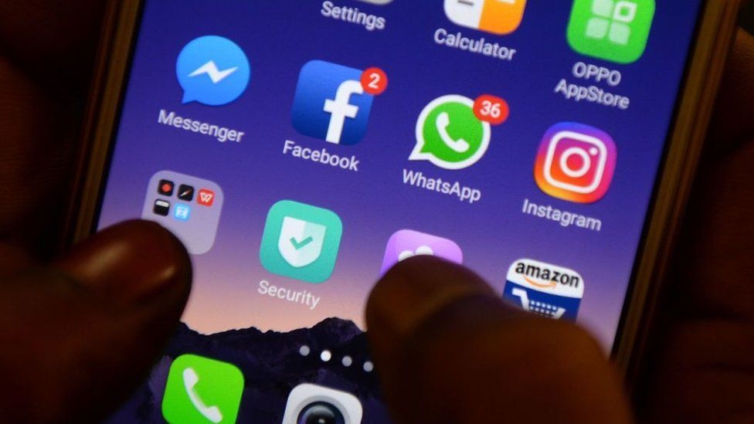
WhatsApp has said it blocked over two million accounts in India in May and June for violating rules.
The service said 95% of these users were blocked for violating the limits of the number of times messages can be forwarded in India.
The submissions were made by WhatsApp in its first monthly compliance report under India's controversial new IT rules.
India is WhatsApp's largest market with about 400 million users.
The Facebook-owned messaging service said its "top focus" has been to prevent accounts in India from sending harmful or unwanted messages at scale.
Using advanced machine learning technology, WhatsApp reportedly bans close to eight million accounts across the world every month.
Two million accounts in India sending a "high and abnormal rate of messages" were banned in India alone between 15 May and 15 June, the service said.
The service identifies an Indian account as one with a +91 (country code) phone number.
The Facebook-owned app often ends up being the focus of discussions on the spread of misinformation and fake news in India.
Such fake news and hoaxes are forwarded to tens of thousands of users in hours, and it's practically impossible to counter them.
Messages and videos circulating in bulk have in the past incited mob violence in India, even leading to deaths.
In addition to responding to user complaints, WhatsApp said it deployed its own tools to prevent abuse on the platform.
It said it relied on the "behavioural signals" from user accounts, or on available "unencrypted information", profile and group photos, and descriptions to identify potential offenders.
WhatsApp's submissions come at a time when tech companies are embroiled in an intensifying battle with the Indian government over the new IT rules.
The guidelines - announced in February and became effective in May - seek to regulate content on social media and streaming platforms, and have raised serious concerns about free speech and user privacy.
Critics say they give the government and law enforcement agencies powers to take down a wide range of content on the internet. But the government claims the rules are meant to prevent abuse and misinformation.
Latest Stories
-
AFCON 2027Q: There’s no problem with the Black Stars – Carlos Queiroz
5 minutes -
Ghana hotels see revenue per room fall by 19% between November 2024 and January 2025 – GSS
11 minutes -
Apple ordered to pay $5.7bn after losing vibration tech patent suit
13 minutes -
Hostels outperform hotels as accommodation demand shifts to lower-cost options – GSS
17 minutes -
Protect the school calendar while we address your concerns – Haruna Iddrisu appeals to striking teachers
20 minutes -
Jetour Africa Expedition 2026 takes guests on off-road adventure at Safari Valley
20 minutes -
S&P affirms Ghana’s “B-/B” credit ratings with stable outlook
32 minutes -
Alan Kyerematen urges Ghanaians to make a ‘strategic choice’ in 2028
34 minutes -
Akwasi Opong-Fosu proposes ‘3Vs’ plan for NDC grassroots empowerment and economic viability
36 minutes -
Government races to end teachers’ strike as Education Minister holds crunch talks with unions
36 minutes -
LA 2028: Black Queens to face Mauritius in Round Two of African qualifiers
47 minutes -
Three dead, including child, in Channel crossing attempt
50 minutes -
Woman charged with stealing from patients and staff at hospitals across Ontario
51 minutes -
Foreign tourists stay longer as domestic guests dominate Ghana’s accommodation market – GSS
52 minutes -
Ghana’s tourism accommodation market shows sharp regional disparities – GSS
57 minutes