

Audio By Carbonatix
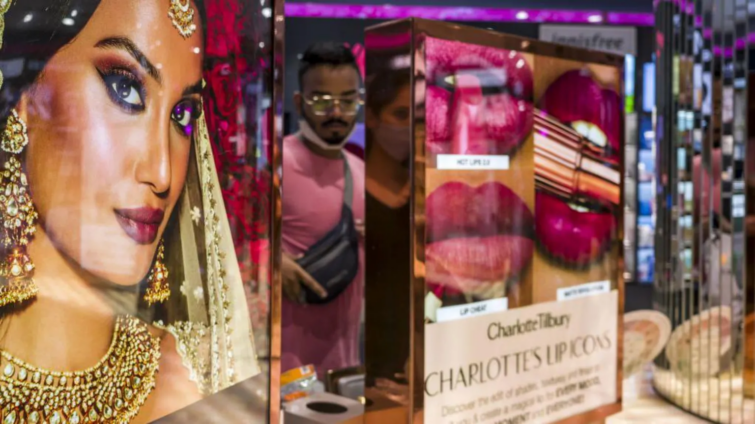
India's beauty brands have been attracting significant interest from global capital recently.
Earlier this year, in March, American luxury cosmetics maker Estée Lauder fully acquired the homegrown Ayurvedic company Forest Essentials. France's L'Oréal Group followed in June, taking a majority stake in the digital personal care brand Innovist. And Unilever has made at least four beauty investments in the country through its venture capital arm in the last couple of years.
Founded at the turn of the millennium in a garage in the Himalayan foothills by entrepreneur Mira Kulkarni - a single mother of two - Forest Essentials has grown from a fledgling startup into a billion-dollar company with a global presence over the last two decades.
Its rise mirrors the explosive growth being witnessed in the country's beauty industry, which was valued at about $23bn (£17.08bn) in 2025 but is expected to nearly double in size to $40bn by the end of this decade, growing at twice the rate of the country's GDP and the broader retail market.
Rising spending power in Asia's third-largest economy is partly driving this boom, according to experts.
India's per capita income crossed $2,000 in 2019, a threshold beyond which discretionary spending tends to grow exponentially, according to Redseer, a business consultancy. And by 2030, some 155 million households are expected to earn more than $9,500 annually, providing a further tailwind to growth.
"Historically, we've underspent on beauty because there was just no purchasing power for anything other than the very basic stuff - such as all-purpose soap or face powder," Kushal Bhatnagar, a partner at Redseer, told the BBC.
"But now, along with more spending power, there is improved access, distribution and product education. The internet broke these barriers, with brands leveraging the power of social media platforms and influencers to reach consumers directly."
In fact, e-commerce is expected to account for around 35% of overall beauty spending by 2030, up from just 8% five years ago, according to Reedseer's estimates.
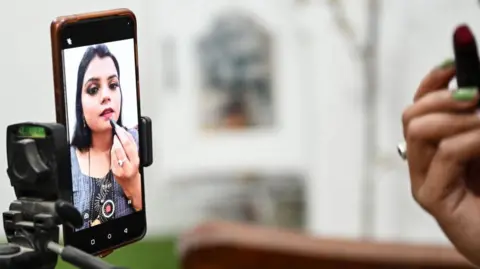
The pandemic also proved to be a major game-changer for the industry, according to Vaishali Gupta, whose two beauty ventures have witnessed breakneck expansion since their launches during COVID.
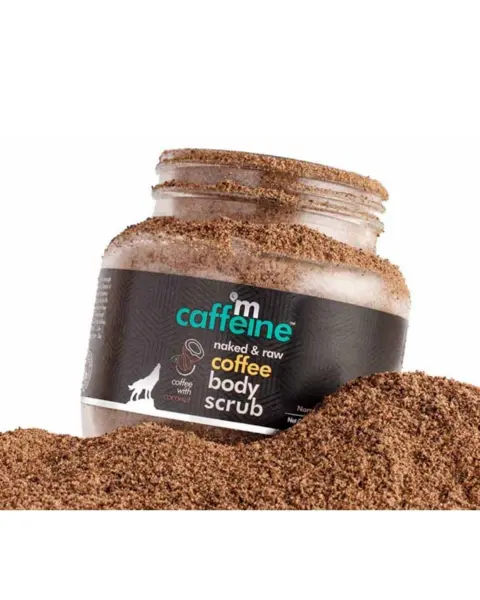
She co-founded the vegan skincare company Hyphen with Bollywood star Kriti Sanon in 2023 and also runs mCaffeine, which makes scrubs, washes and lotions and calls itself India's first caffeinated personal care brand.
"Covid pushed people inward and toward self-care, and it coincided with a massive wave of digital penetration in tier-one, tier-two and tier-three towns. Suddenly, Indian consumers had access to beauty and skincare education they'd never had before - such as what was trending in Korea or Europe, or what specific ingredients could do for brightening or acne control," Gupta told the BBC.
"That knowledge base created a consumer who knew exactly what they wanted. And that's really where the boom in Indian skincare began."
In the past year, Gupta's brands have grown their top line by 100%, and she anticipates strong double-digit growth going forward.
Both Hyphen and mCaffeine, she says, are now among the top 10 brands across their categories in India.
"This is a structural growth story - and we're just at the beginning of what this market can become," Gupta said.
It is no surprise then that a host of Bollywood stars - from Deepika Padukone to Katrina Kaif and Shilpa Shetty of Big Brother fame - have also jumped on the bandwagon and launched skincare companies in recent years.
The growth in customers is coming from all corners of the country and isn't restricted to big cities.
What's also striking, according to Gupta, is that Gen Z is driving it, spending roughly twice as much as millennials did on skincare and personal care.
Data from Walmart-backed Flipkart, India's largest e-commerce platform, corroborates this. Some 56% of its beauty and personal care shoppers are Gen Z, with 70% of them discovering the products they buy through social media.
Two out of three beauty searches on Flipkart also come from non-metro areas.
According to Redseer, Gen Z and Gen Alpha's share of beauty spending will grow from 32% in 2024 to around 50% by 2030.
It's an inflexion point, according to Priyanka Bhargav, who leads brand strategy at Flipkart. What was once an "aspirational category has now become a daily expression of self-care" for many young Indians, she says.
Going forward, the consumer is likely to become increasingly sophisticated as the market grows. And the next leg of growth will be driven by niche brands innovating with specific ingredients, dermatologist-backed products and a focus on skin nutrition, say experts.
While only a handful of individual brands have scaled meaningfully so far, at this pace of growth, at least 10-15 beauty companies will cross $200m in revenue in the next three to five years, according to Bhatnagar.
"And when that happens, we expect many of them to tap the public markets, and for IPO (initial public offering) and M&A (mergers and acquisitions) activity to really intensify in the sector," he said.
Latest Stories
-
‘Carlos Queiroz not the sort of coach Black Stars need’ – Nii Lante Vanderpuye
15 minutes -
AFCON 2027Q: ‘Our Black Stars team is gone’ – Former Sports Minister
34 minutes -
Prof. Prempeh calls for public review of draft constitutional reform bills
46 minutes -
AFCON 2027Q: ‘I have never seen a poor performance from Black Stars like against Gambia’ – Nii Lante Vanderpuye
51 minutes -
Nigeria set to launch National Digital Address System 9 years after Ghana showed the way
1 hour -
Policy rate decision takes time to reflect in lower lending rates – BoG
1 hour -
Western Regional Minister applauds Karpowership’s role in Ghana’s power sector
2 hours -
Livestream: Road safety crises: Where are we getting it wrong?
2 hours -
Enterprise Life celebrates 25 years of protecting families and building trust
2 hours -
ICC London rules in favor of Ghana against Tullow over $400m tax charge
2 hours -
We are disappointed in ICC’s ruling over our corporate income tax assessment in Ghana – Tullow Oil
2 hours -
Cost of building inflation for August 2026 increases to 4.6% – GSS
2 hours -
Today’s front pages: Wednesday, September 30, 2026
3 hours -
Bawumia highlights agricultural, compulsory insurance reforms in IBAG engagement
3 hours -
Ghana will secure Tullow tax revenues while protecting Jubilee, TEN investments – Ato Forson
3 hours