

Audio By Carbonatix
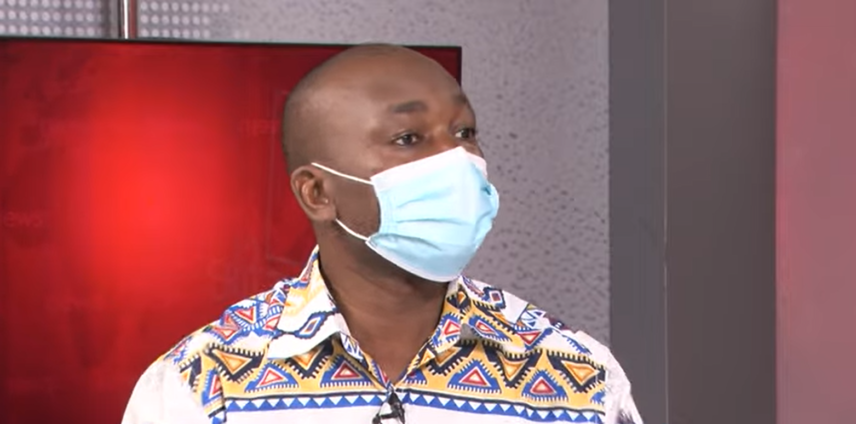
An economist with the University of Ghana Business School (UGBS), Prof. Godfred Alufar Bokpin, has warned of possible collapse of Ghana's economy.
Speaking on the Super Morning Show, as the country’s debt stock hits high distress levels, Prof. Bokpin reiterated that the current debt situation could get worse by the end of September, if proper interventions are not implemented.
"When you see the proportion of the debt payment, relative to the size of the revenue envelope and you look at your rising debt and you look at the rate of economic growth and the drivers of that growth, you can reasonably predict that it's just a matter of time that the economy will just collapse. We're probably going to run into a little bit more difficulties towards the end of September," he said.
Last week, independent ratings agency, Fitch, downgraded Ghana’s creditworthiness from a B to a B minus, with a projected 83% debt-to-GDP for the year ending December, 2021.
This will significantly affect the country’s access to loans on the international market even as the government’s local revenue mobilization campaign is threatened, as the controversial e-levy is yet to be approved by Parliament.
Ghana’s current public debt stock stands at a staggering 341.8 billion Ghana cedis with a corresponding debt to GDP ratio of more than 77% as of September ending 2021.
This means if the country should share this amount across the country’s 30.8 million population, everyone will owe approximately 11,000 Ghana cedis.
In terms of interest payments on our borrowings, Ghana has spent on average 147 billion Ghana cedis, which is 47 billion Ghana cedis more than our projected revenue plus grants for 2022.
In the first quarter of 2022, the government has indicated that it will borrow a total of GHS24.5 billion from the domestic market of which GHS20.7 billion will be used to service existing debt in the local market leaving the government with just GHS3.8 billion to finance other expenses.
Nonetheless, the Professor is optimistic that this could be averted if proper interventions are implemented.
"We have been too wasteful, we brought this upon ourselves, we are here because of our actions and inactions," he said. "[But] we must come to that point where we'll take charge of our own future, we can't continue like this," he added.
"It's going to be difficult, much more challenging. But of course, there are interventions available to the government in terms of certain cost-cutting measures that we have to do, also to signal confidence in the economy and then also how the revenue envelope responds to the 2022 budget, both at the policy level and the administration and compliance with revenue measures," he said.
Also, Bloomberg, in an article captioned – “Ghana Debt Moves Deeper into Distress as Investors lose Patience,” painted a gloomy picture of the economy.
However, government has has assured that the economy is still robust.
In a statement, the Finance Ministry noted that there are some serious factual errors in the article by Bloomberg, which may give investors some cause for concern, if not corrected.
Press Release on Bloomberg ... by Joseph Appiah-Dolphyne
"For example, Bloomberg stated 81.5% as of the end of year debt to GDP ratio. This is incorrect. Our provisional nominal debt to GDP, as of the end of November, 2021 was 78.4%, which is the latest data available," it said.
"December revenue collections are seasonally the largest for any year, it is unlikely that our financing requirements in December will result in us exceeding 80% debt to GDP by December, 2021," it added.
It further noted that "the Bloomberg article gave wrong historical debt to GDP figures. It is essential we make the correction that Ghana’s debt to GDP figures a decade ago was 39.67% and 47.80% for 2011 and 2012, respectively, and not 31.4% as stated in the Bloomberg publication."
Again, "it is important to note that for the period prior to the COVID-19 global pandemic, Ghana experienced an average debt-to-GDP ratio of 56.4% from 2015 to 2019. In 2020, Ghana's GDP grew by 0.4% because of the impact of the Covid-19 Pandemic on the economy. Financing of the additional Covid-19 related expenditures, in addition to revised revenue targets, due to the impact of the pandemic, led to an increase in debt-to-GDP from 62.4% in 2019 to 76.1% in 2020," The Finance Ministry said.
Latest Stories
-
Sir Rod Stewart calls off remaining tour dates after coronary stent procedure
42 minutes -
Oppong Nkrumah drags Chief Justice to Supreme Court over ‘selective justice’ during legal vacation
45 minutes -
‘It’s not Tinubu’ – Femi Kuti reveals Nigeria’s real problem
59 minutes -
No Nigerian singer has more hits than me – Davido boasts
1 hour -
Social media firms urge caution on early Australia under-16 ban data
1 hour -
Chad’s president pardons main rival and opposition leader in jail
2 hours -
The Office’s Lucy Davis ‘overwhelmed’ by kindness after cancer diagnosis
2 hours -
New Zealand break with OFC to withdraw Infantino support
2 hours -
Presidential vote counting halted in Zambia over alleged attacks on polling staff
2 hours -
Stolen Matisse artworks recovered by police in Brazil
2 hours -
Selena Gomez sued for alleged fraud over mental health company
2 hours -
Bishop Dr Agyei Lawson urges religious leaders to use their influence to protect Ghana’s peace
2 hours -
Religious diversity must not become a source of conflict – Peace Council
3 hours -
Accra Academy @ 95: Old Boys set to celebrate heritage with grand float and homecoming
3 hours -
Braces beyond treatment: Gen Z’s fashion craze and the hidden dental risks
3 hours