

Audio By Carbonatix
Only a few countries in sub-Saharan Africa can meet their planting material requirements, let alone planting material, to take advantage of regional and global programs.
This is because most of the seed collected from natural stands and remnant trees scattered in farmlands is the main source of planting in many African countries, but there is clearly an insufficient supply of seeds from native species in these countries.
The Executive Secretary of the African Forest Forum, Professor Godwin Kowero, explained that tree seed markets are also limited to smallholder farmers, non-governmental organisations, private forestry companies, and national governments as key stakeholders in the production of seeds and seedlings as well as selling excess germplasm for tree planting.
Germplasm is a seed, plant, or part of a plant used in crop selection, research, and conservation efforts. Plants, seeds, or cultures are germplasm when kept for the purposes of studying, managing, or using the genetic information they possess. Its maintenance involves seed germination testing and viability monitoring. Germplasm samples for storage are multiplied mainly during the post-rainy season to obtain better quality seeds.
Seed stored in a genebank becomes progressively less viable during storage. The gene bank tests the viability of fresh germplasm sample seeds and monitors seed viability at regular intervals based on initial viability, storage type, and cultivation.
These periods vary between eight and 25 years for active collection and 10 to 30 years for basic collection.
Lack of trained staff and lab facilities in many countries, according to Prof Kowero affects the genetic improvement of trees.
"Further, there is a widespread lack of trained personnel and laboratory facilities in many countries leading to inadequate attention being given to the genetic improvement of trees.''
Prof. Kowero also deplores the lack of a quality control system for the production of genetics to distinguish improved seeds from wild seeds.
According to him, many countries have cut investment in forestry research and development in the breeding and deployment of trees, causing the use of low-quality tree germplasm for planting as well as the minimal operation or even closure of national tree seed centres.
"It is, therefore, critical importance that Africa secures the production, distribution, and use of quality germplasm of known origin to safeguard the development of a successful forestry sector," he said.
He indicates that inappropriate germplasm will jeopardise the whole forestry industry.
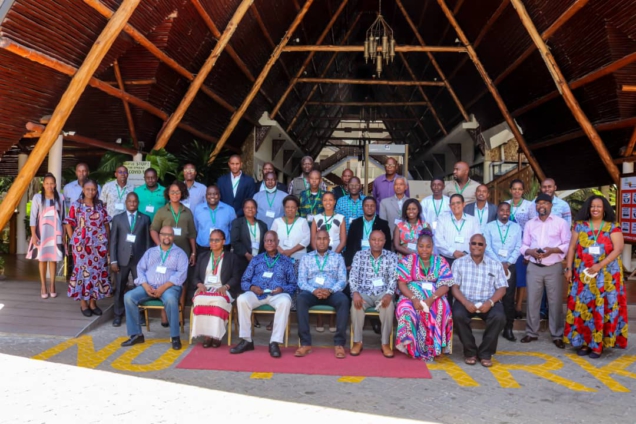
Prof Kowero was speaking at a regional workshop on sharing of information and experiences in Mombasa, Kenya on a theme, “Sharing Information and Experiences on Challenges and Opportunities in Forest Management for Sustainable Development in Africa in the Context of Climate Change.”
Latest Stories
-
New York Times executive fatally shot allegedly by elderly in-laws
1 hour -
Teacher Payment Crisis: GES races to protect academic calendar
1 hour -
US prosecutors reopen case of alleged gang rape at Cornell University
2 hours -
Journalist to be crowned king in Uganda after bitter succession dispute
2 hours -
OpenAI scraps rollout of new model over safety concerns
2 hours -
Nigerian attempts to break world record by dancing non-stop for seven days
2 hours -
GES urges government agencies to end blame game over teacher payments
4 hours -
GES sets Oct. 5 deadline to resolve teachers’ payment dispute
4 hours -
GES working around the clock to get teachers back to class, says Daniel Fenyi
5 hours -
French PM warns against escalation of school protests after 164 arrested
5 hours -
UK tries to stop Trump’s diesel export ban
5 hours -
Late Olise goal gives France win over Belgium
5 hours -
Mancini enjoys first win since return as Italy boss
6 hours -
Interest payments to average a high 20% of government revenue over next 4 years
6 hours -
Anthropic warns AI may pose ‘existential risks to humanity’ in IPO filing
6 hours