

Audio By Carbonatix
Scientists have created the first synthetic human embryos - using no eggs or sperm - provoking deep ethical questions, according to reports.
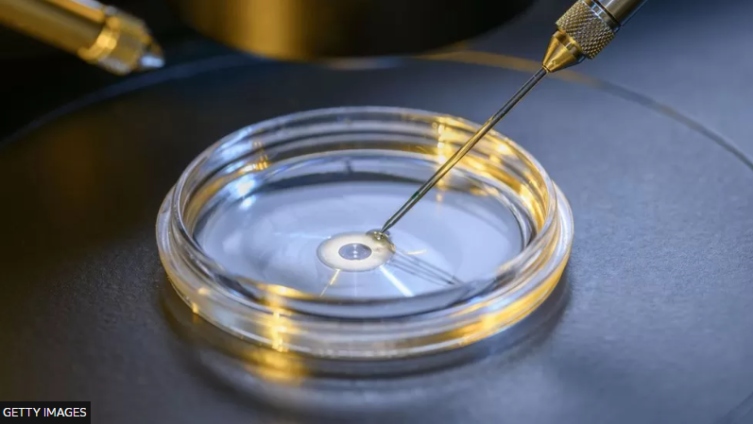
The synthetic embryos - only days or weeks old - could help researchers study the earliest stages of human development and explain pregnancy loss.
Nobody is currently suggesting growing them into a baby.
But the rapid progress has outpaced discussions on how they should be dealt with ethically and legally.
Prof James Briscoe, from the Francis Crick Institute, said the field needed to "proceed cautiously, carefully and transparently" to avoid a "chilling effect" on the public.
The development of human synthetic embryos was announced at the annual meeting of the International Society for Stem Cell Research.
Synthetic embryos are also known as "embryo models", as they resemble embryos, for the purposes of research, rather than being identical to them.
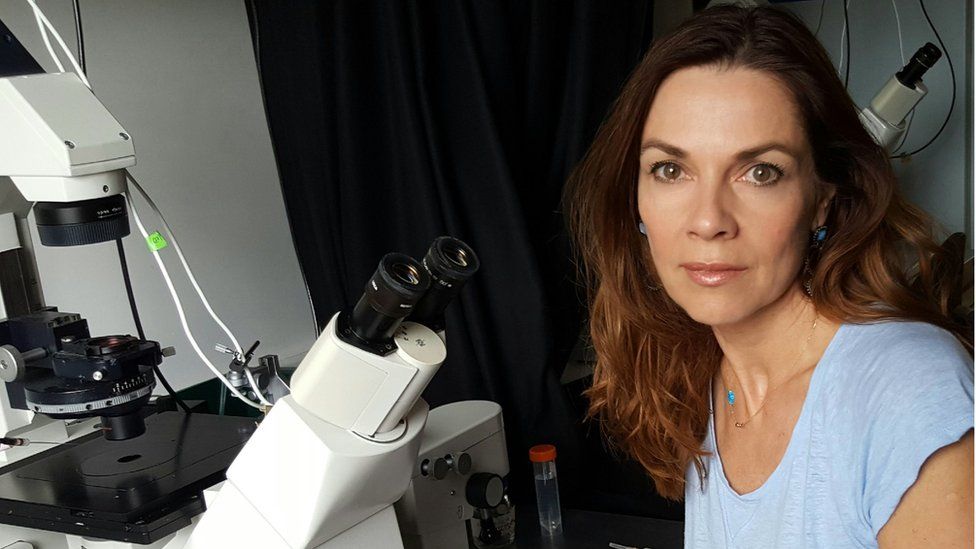
The work comes from the laboratories of Prof Magdalena Zernicka-Goetz, from the University of Cambridge and the California Institute of Technology.
The full details have yet to be published and made available for scientific scrutiny, leading many researchers to feel unable to comment on the significance of the reports.
But the principle is the synthetic embryos are made from a stem cell rather than a fusion of egg and sperm.
Beating heart
Stem cells have the capacity to become any cell-type in the body and if coaxed in just the right way can be persuaded to form embryos.
This is the first time that has been achieved using human material. Although, they are not truly "synthetic", as the starting material was cells cultured from a traditional embryo in the laboratory.
"It's beautiful and created entirely from embryonic stem cells," Prof Zernicka-Goetz told the Guardian newspaper.
She has already developed synthetic mouse embryos with evidence of a developing brain and beating heart.
Meanwhile, scientists in China have implanted synthetic monkey embryos into female monkeys - although, all the pregnancies failed.
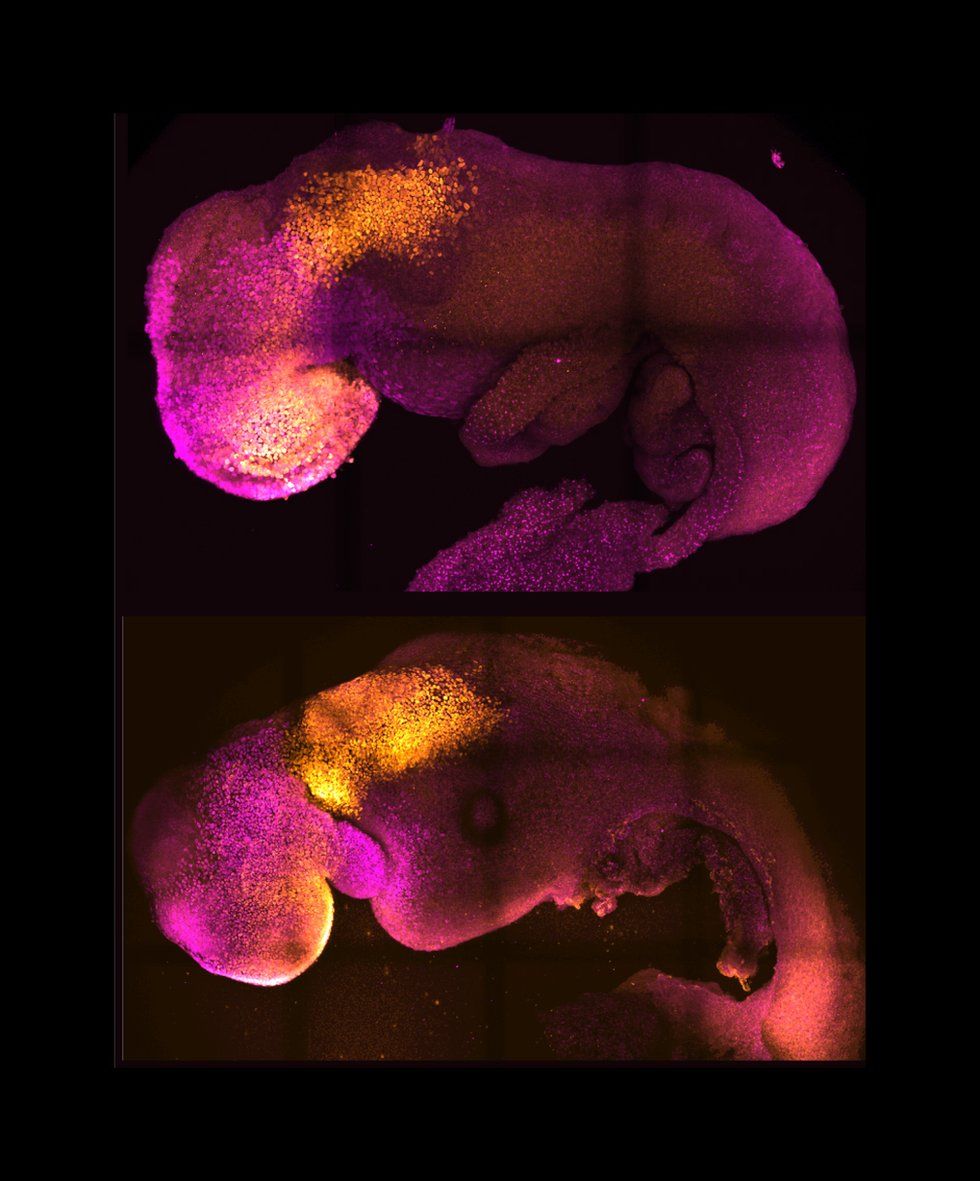
The synthetic embryos do not behave in exactly the same way as normal embryos. And it is unclear how their use in research should be governed.
Prof Briscoe said: "On the one hand, models of human embryos made of stem cells might offer an ethical and more readily available alternative to the use of IVF-derived [in-vitro fertilisation] human embryos.
"On the other hand, the closer stem-cell-derived models of human embryos mirror human embryos, the more important it is to have clear regulations and guidelines for how they are used."
Most countries use the 14-day rule in human-embryo research. This allows an embryo created by fertilising a human egg to be grown for 14 days.
However, these "embryo models" are not legally "embryos" and are not governed by the same laws.
Dr Ildem Akerman, from the University of Birmingham, said: "These findings suggest that we would soon develop the technology to grow these cells beyond the 14-day limit, with potentially more insights to gain into human development.
"Nevertheless, the ability to do something does not justify doing it."
'Understand infertility'
Legal and ethical experts in the UK are drawing up a voluntary set of guidelines for how to proceed.
Researchers hope these synthetic embryos will further understanding of the earliest stages of human's lives.
Prof Roger Sturmey, from the University of Manchester, said: "We know remarkably little about this step in human development but it is a time where many pregnancies are lost.
"So models that can enable us to study this period are urgently needed to help to understand infertility and early pregnancy loss."
Latest Stories
-
He entered at eight. He is now 16: Ghana’s children growing up in prayer camps
2 hours -
‘Development must not always begin from Accra’ — Anwelle Foundation launched in Jirapa
2 hours -
PKO trio eye victories at Odwira Festival
4 hours -
346 Ghana Navy recruits pass out after 26 weeks of intensive training
4 hours -
Newsfile to discuss EOCO-MP arrest, drug trafficking, speech arrests and $235m water debt
5 hours -
JoyNews gets results as listeners raise GH¢40,000 to help 17-year-old student with cerebral palsy attend SHS
5 hours -
Vice President calls for stronger local pharmaceutical production to reduce medicine imports
5 hours -
The brewing tension at KNUST; Beware the Ides of October….
6 hours -
Health Ministry moves to integrate traditional medicine into mainstream healthcare
6 hours -
550 pupils in Kintampo South get educational lifeline as ‘Seeds of Hope’ reaches farming communities
7 hours -
Opoku Mensah urges Christian Council, House of Chiefs to speak up on democratic freedoms
7 hours -
Teacher unions’ strike: Minority demands immediate payment of teacher arrears, 20% deprived area allowance
7 hours -
The Accra-Kumasi Expressway: Building it right
7 hours -
Beyond gold exports: Building value and economic resilience from Ghana’s gold
7 hours -
2027 AFCONQ: Ghana under pressure as Gambia beat Somalia 2-1
7 hours