

Audio By Carbonatix
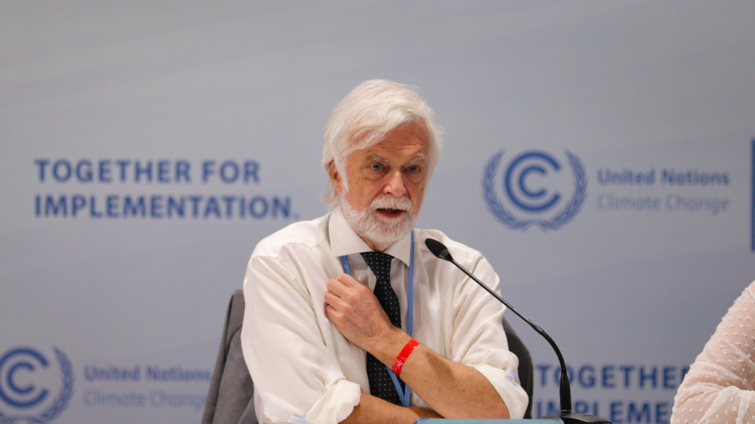
Jim Skea, Professor of Sustainable Energy at Imperial College London, has been elected Chair of the Inter-governmental Panel on Climate Change (IPCC) by a vote of 90 to 69 in a run-off against Thelma Krug.
Jim Skea has nearly 40 years of climate scientific experience and competence. The IPCC said in a statement that the 69-year-old will lead the organization during its seventh assessment cycle.
Skea was the Co-Chair of Working Group III, which assessed climate change mitigation, during the IPCC's just-ended sixth assessment cycle. Most of his career has been spent ensuring that the challenges of climate change are known and that efforts to mitigate them are implemented.
The election was held at the United Nations Environment Programme headquartered in Nairobi, Kenya, where the IPCC is having its 59th Session. Elections for other IPCC Bureau positions, including Co-Chairs of IPCC Working Groups, will take place on July 26-28.

Four people ran for the position of IPCC Chair. These were the first elections in the IPCC's history with female candidates running for this position.
The contenders for IPCC Chair, along with the countries that nominated them, were: Thelma Krug (Brazil), Debra Roberts (South Africa), Jim Skea (United Kingdom), and Jean-Pascal van Ypersele (Belgium).
Skea stated in his address to the IPCC delegates that climate change is an existential threat to the globe and that his objective is to lead an IPCC that is really representative and inclusive, an IPCC that looks to the future while capitalising on possibilities in the present.
“An IPCC where everyone feels valued and heard,” he said.
Skea's priority would be to improve inclusion and diversity, to protect the scientific integrity and policy relevance of IPCC assessment reports, and to make effective use of the best available science on climate change.
“My actions as the Chair of the IPCC will ensure that these ambitions are realised.”
The election of the new IPCC Bureau, which will consist of 34 members, including the Chair, marks the beginning of work on the IPCC's Seventh Assessment Report, which is scheduled to be finished within the next five to seven years. The Panel will also elect 12 members of the Task Force Bureau on National Greenhouse Gas Inventories (TFI).
In March 2023, the IPCC concluded its Sixth Assessment Report (AR6) and the key findings of the AR6 Synthesis Report are as follows: the pace and scale of climate action are insufficient to tackle climate change; multiple, feasible, and effective options to reduce greenhouse gas emissions and adapt to human-caused climate change, and enabling conditions include finance, technology, capacity building, and international cooperation.
Latest Stories
-
Examination malpractice is rising, not declining – EduWatch
21 minutes -
Credit Unions encouraged to use technology to improve service
22 minutes -
GBA President calls for reasonable, proportionate bail conditions
27 minutes -
NAGRAT calls for end to political influence on WAEC results
29 minutes -
GBA to announce position on Tribunals Law soon – GBA President
30 minutes -
WAFU B U-17 Girls Cup: Joe Nana Adarkwa eyes title defence with Black Maidens
32 minutes -
GFA opens disciplinary case against GoldStars CEO Kwasi Adu
32 minutes -
Education Ministry welcomes Catholic Bishops’ call for CSSPS review
35 minutes -
2026 Women’s Super Cup set for September 23 to September 29 in Prampram
43 minutes -
Rennes register Ghana defender Alidu Seidu for Europa League amid Nice interest
48 minutes -
Deliberate VAT evasion will attract penalties — GRA
51 minutes -
If the Ghana Premier League is financially weak and structurally fragile, Africa will expose its weaknesses
1 hour -
Accra-Kumasi Expressway: 48 Engineer Regiment can deliver if well resourced – Political Lecturer
1 hour -
Businesses above GH¢750,000 turnover must register for VAT – GRA
1 hour -
Kenya confirmed hosts of World Athletics Championships 2029
2 hours