

Audio By Carbonatix
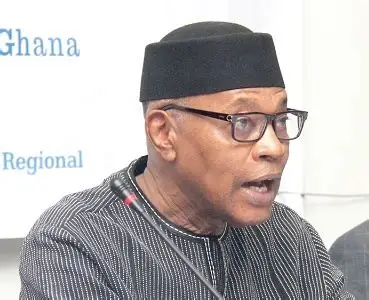
The African Union High Representative for Silencing the Guns, Dr Mohammed Ibn Chambas, has called for a fundamental shift in Ghana’s education system, urging a move away from rote learning towards a model that empowers students with practical, future-ready mindsets.
Speaking at the 2026 Public Lecture Series at the University of Education, Winneba on Friday, April 10, Dr. Ibn Chambas outlined what he described as three critical pillars for transforming education: relevance, resilience, and responsibility.
“We must move from a model of information transmission to one of mindset empowerment,” he stated, emphasising that education must go beyond the mere delivery of content to shaping how learners think, adapt, and contribute to society.
According to him, repositioning Ghana’s education system along these three principles is essential if the country is to meet the demands of a rapidly evolving global economy.
Focusing on relevance, Dr Ibn Chambas stressed the need for curricula to reflect Ghana’s unique context and development priorities.
“Education must reflect context and purpose,” he said, adding that learning should be aligned with “the realities of the 21st century and the specific opportunities of Ghana’s resource endowments.”
He criticised the disconnect between classroom teaching and real-world application, describing it as one of the most significant shortcomings of the current system.
“For too long, the disconnect between the classroom and the community has been our greatest failure,” he noted.
To illustrate his point, he cited examples of students learning abstract or foreign concepts without practical application to their immediate environments.
“A child in the northern region is learning about Icelandic glaciers, but not about the sustainable management of the shea tree,” he said.
“A student in the western region is memorising the periodic table, but is unable to test the quality of water in her own community.”
He added that students in coastal areas should not only study geography but also understand issues such as coastal erosion, fisheries sustainability, and ecotourism potential.
Dr Ibn Chambas also called for greater emphasis on Technical and Vocational Education and Training (TVET), urging a shift in national attitudes towards skilled trades.
“We must elevate technical and vocational education and training, recognising artisans and skilled workers as central to national development,” he said.
He stressed that Ghana’s development ambitions cannot be realised without a workforce equipped with practical and technical skills relevant to industry and local economies.
Highlighting challenges in higher education, Dr Ibn Chambas revealed that fewer than 18 per cent of university students in Ghana were enrolled in STEM-related programmes as of 2024—far below the national target of 60 per cent.
This gap, he warned, poses a significant threat to Ghana’s industrialisation agenda and its ability to compete in a technology-driven global economy.
Dr Ibn Chambas explained that without a deliberate shift towards relevance, resilience, and responsibility, education risks remaining disconnected from the needs of society, ultimately limiting the country’s capacity for sustainable growth and transformation.
Latest Stories
-
Ga Mantse to co-host 5th edition of ‘A Night with the Diplomats’
6 minutes -
Stirling Centre launches 4th cohort of its flagship COLP qualification, welcomes learning leaders from Ghana, other countries
10 minutes -
IMF/World Bank Annual Meetings: Africa must help shape global AI rules – BoG Governor
23 minutes -
GMTF takes fight against crippling treatment costs to Volta Region
39 minutes -
GMTF targets Volta healthcare gaps with equipment, specialist training and patient support
1 hour -
Telecel Ghana wins 2 awards at the CCIFG Gala and Awards 2026
2 hours -
Petrol, diesel prices set to fall from Oct. 16 as LPG faces 18.5% hike
2 hours -
Bank of Ghana engages stakeholders in Techiman
2 hours -
PIAC unable to verify GH¢21m petroleum-funded projects in Ayawaso West
2 hours -
Ketu North MP led delegation petitions government over deteriorating Weta Irrigation Scheme
2 hours -
Unpaid contractor delays KATH Mother and Baby Unit as materials deteriorate
2 hours -
Kofi Adams says Ghanaians ignored warnings over World Cup visa payments
2 hours -
Banks to charge 20% VAT on payments for Netflix, Zoom, TikTok and others
2 hours -
Education Minister appeals to GAUA to call off strike, resume work on October 19
2 hours -
Mahama assures Assemblies of God of support for World Congress
3 hours