

Audio By Carbonatix
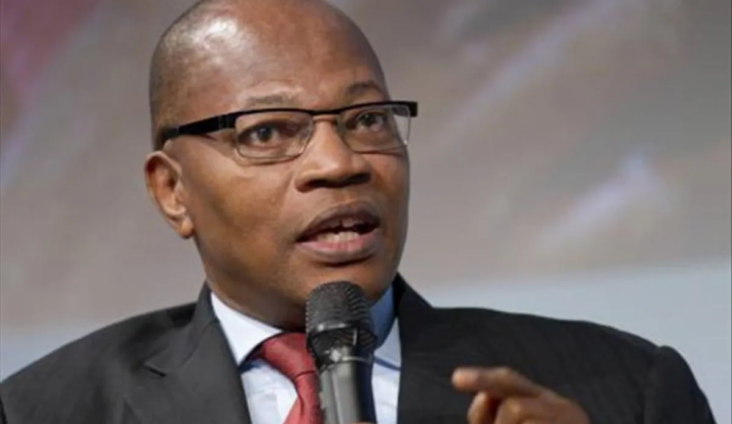
The African Union High Representative for Silencing the Guns, Dr Mohammed Ibn Chambas, has called for a balanced approach to science and technology education, warning that technical advancement without human-centred values could limit Ghana’s development.
Delivering a keynote address at the 2026 Public Lecture Series at the University of Education, Winneba, on Friday, April 10, Dr Ibn Chambas highlighted the growing importance of Science, Technology, Engineering and Mathematics (STEM) as a driver of national progress in an increasingly digital world.
Dr Ibn Chambas described STEM as essential to powering Ghana’s future, noting that the government has already taken significant steps to strengthen the sector.
“A foundational learning builds the roots. STEM builds the wings,” he stated, underscoring the complementary role of early education and advanced technical skills.
He pointed to key policy interventions, including the establishment of STEM-focused senior high schools, the integration of STEM at the basic education level, and the introduction of tuition-free STEM programmes in public tertiary institutions.
According to him, these initiatives—backed by an estimated annual investment of 1.2 billion cedis from 2025/2026—are already “shifting enrolment patterns and strengthening innovation ecosystems” across the country.
Despite the emphasis on STEM, Dr Ibn Chambas cautioned against an overly technical approach to education, stressing the need to incorporate the humanities into scientific learning.
“Yet, we must remember, a robot can calculate, but it cannot dream. An algorithm can predict, but it cannot judge,” he remarked.
He argued that Ghana must move towards a more holistic model—often referred to as STEAM—which integrates the arts and humanities with science and technology to ensure innovation is guided by ethics, creativity, and cultural awareness.
“This is why Ghana must embrace STEM, integrating the hearts and humanities to ensure that innovation is guided by ethics, creativity, and cultural awareness,” he added.
Dr Ibn Chambas also emphasised that meaningful education reform cannot be achieved in isolation, calling for stronger collaboration among stakeholders.
“No education system transforms in isolation,” he said, highlighting the role of partnerships in driving progress within Ghana’s education sector.
He credited Ghana’s gains to sustained collaboration between government, educators, parents, civil society organisations, and development partners.
These partnerships, he noted, include support from institutions such as the African Development Bank, the World Bank, and various United Nations agencies, alongside bilateral partners and international non-governmental organisations.
He further stressed the importance of public-private partnerships in supporting infrastructure development and digital innovation, describing them as critical to preparing students for the demands of a modern economy.
Dr Ibn Chambas noted that while investments in STEM are necessary, the future of Ghana depends on an education system that produces not only technically skilled graduates but also thoughtful, ethical, and innovative citizens.
Latest Stories
-
Trump says he is considering firing US ambassador to Greece
27 minutes -
Man City bananas ‘brought fun back’, says Varadi
31 minutes -
Meta releases Muse Wonder AI models to challenge Anthropic and OpenAI
40 minutes -
Daily Insight for CEOs: The CEO as Chief Decision Maker
41 minutes -
Burnham had formal meeting with Man City chair while mayor
48 minutes -
Is Ghana producing too many lawyers? What is the best lawyer-to-citizen ratio?
50 minutes -
NDC sinking Ghana’s democracy with Emelia Agbenyo’s appointment – Miracles Aboagye
59 minutes -
Seedorf back in football as Corinthians head coach
1 hour -
Hincapié and Zubimendi injured in post-match training session
1 hour -
Fridges in French supermarkets hit by cyberattack
2 hours -
Qantas flight grounded after bedbug outbreak
2 hours -
Reality Zone with Vicky Wireko: International Day of the Girl, shaping today’s girl for tomorrow’s future – ZONTA Clubs lead the way
2 hours -
Global health must be led by countries, not designed for them – Mintah Akandoh
3 hours -
Mahama honoured at 2026 World Health Summit in Berlin for global health leadership
3 hours -
Breast cancer is not a death sentence – Besease Kontire Obaapanin, Magmina Foundation lead awareness campaign
3 hours