

Audio By Carbonatix
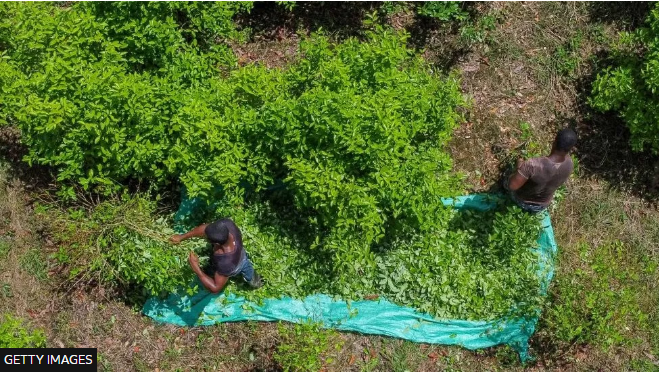
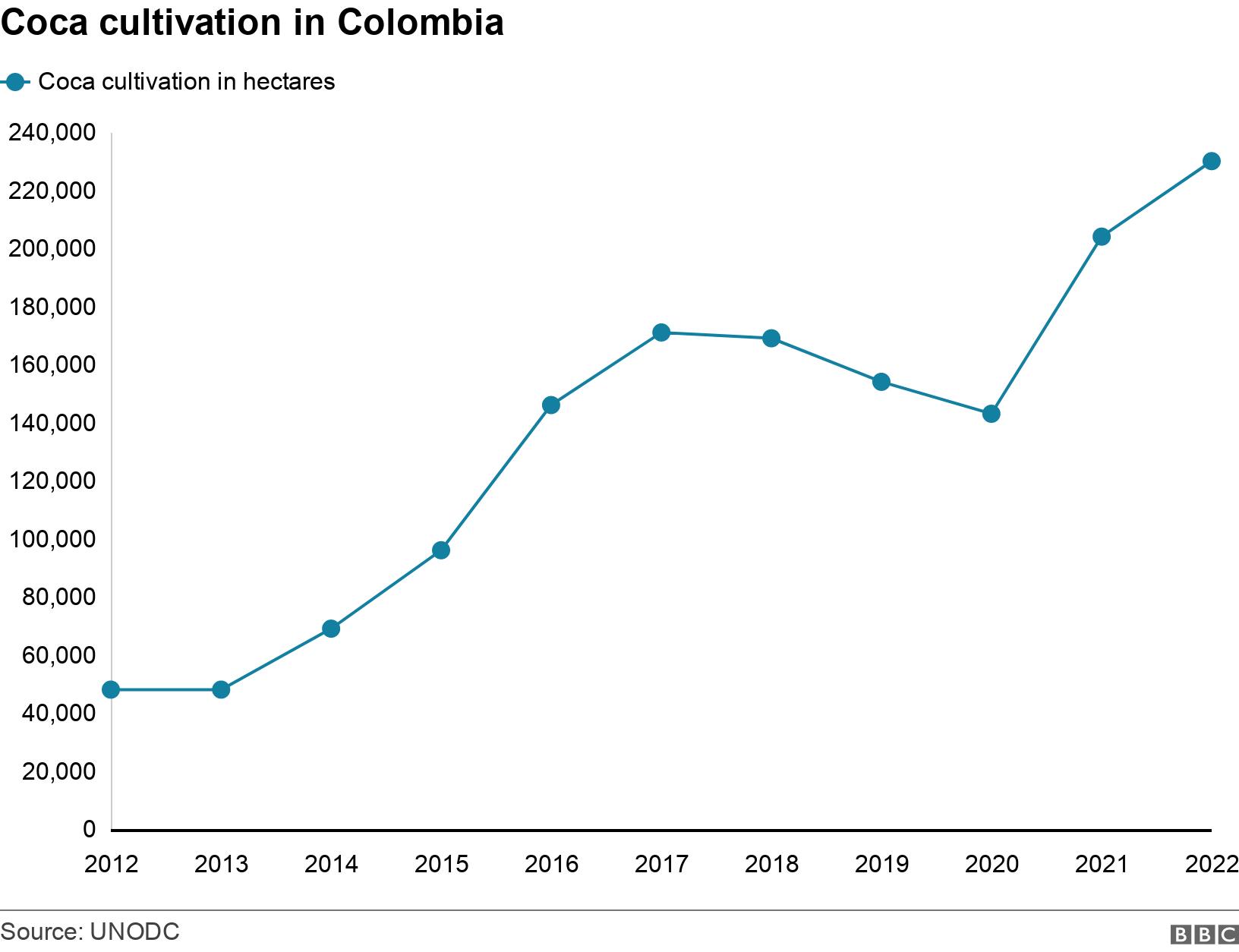
The area planted with coca bushes in Colombia reached a record high last year, an annual UN report says.
The United Nations Office on Drugs and Crime (UNODC) said that potential coca production had risen by 24% since 2021.
Coca leaves are the key ingredient in cocaine and Colombia has long been the top producer of the illegal drug.
The area planted with coca bushes rose by 13%, and the biggest increase was recorded in Colombia's border areas.
Almost two-thirds of the coca crops are found in the provinces of Nariño and Putumayo, which border Ecuador, and in Norte de Santander, on the Venezuelan border.
There has been a 77% rise in in coca cultivation in Putumayo, which shares a border with Peru and Ecuador.
Candice Welsch, UNODC's regional director, said that it was "worrying that each year there is an increase in coca crops in the country".
Colombian Justice Minister Néstor Osuna said that his country was "flattening the curve" and that the rate of increase was much lower than in 2021.
The UNODC's Leonardo Correa however warned that there had been a sharp rise in potential coca production in 2022.
"The crops that were young last year have now reached maturity and are now productive. In other words, the rate of growth in hectares is decreasing. But the rate of cocaine production is increasing," he said.
Both the size of the area planted with coca in Colombia and the potential coca production are at their highest since the UN began monitoring in 2001.
Colombia is the top coca cultivator in the world, producing 60% of the world's cocaine, followed by Peru and Bolivia.
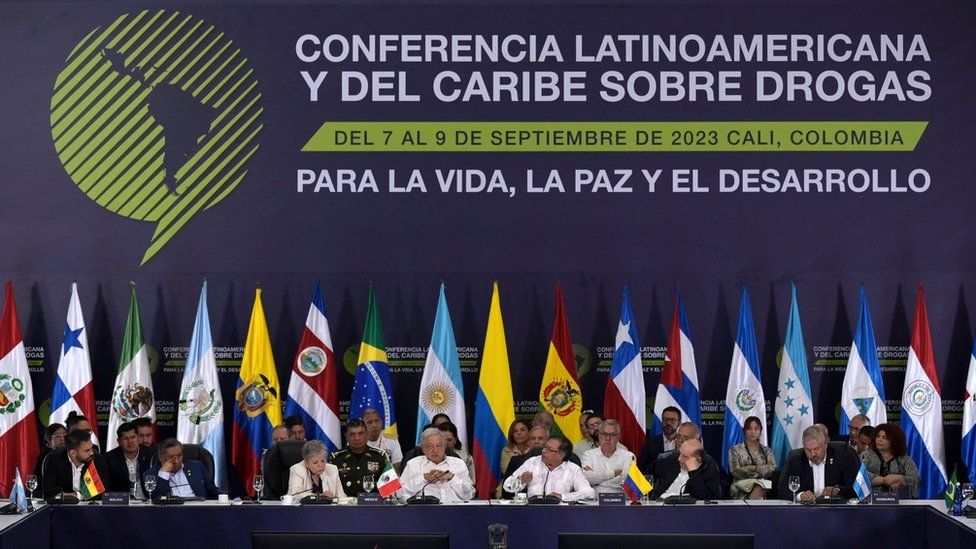
President Gustavo Petro on Saturday appealed to his regional counterparts to turn away from a militarised approach to fighting drug use and instead see it as a public health issue.
"It is time to rebuild hope and not repeat the bloody and ferocious wars, the ill-named 'war on drugs', viewing drugs as a military problem and not as a health problem for society," he said at the Latin American and Caribbean Conference on Drugs in Cali.
His Mexican counterpart, Andrés Manuel López Obrador said it was key to "fight first and foremost against poverty and inequality, and to offer work and good salaries".
He said growers needed to be convinced "to switch from sowing marijuana, poppies and coca to planting beans, corn, cocoa and fruit trees".
Mexico is the base for some of the most powerful transnational drug cartels that control trafficking routes from South America to the United States and Europe.
It also produces large amounts of heroin, cannabis, methamphetamine and synthetic opioids such as fentanyl.
Latest Stories
-
Fidelity Bank completes renovation of multipurpose auditorium at Police Public Safety Training School
41 minutes -
Oil prices slide 2% on Iran-Oman talks to reopen Strait of Hormuz
48 minutes -
Telecoms operator MTN eyes banking licences as it pushes deeper into lending
55 minutes -
Show us how allegations involving MPs end – Dr Dramani demands clear path from probe to resolution
1 hour -
Mass arrests in global crackdown on West African cyber-crime networks
1 hour -
Ethiopia submits official bid to host Afcon 2028
1 hour -
We need leaders with integrity – Dramani warns supermajority Parliament over Afenyo-Markin allegations
2 hours -
Parliament scrutinises govt but cannot scrutinise itself – Dramani challenges MPs to apply their own standards
2 hours -
Partisan solidarity overrides accountability – Dr Dramani accuses Parliament of protecting its own
2 hours -
This goes beyond Afenyo-Markin – CDD warns fresh allegations could damage Parliament
3 hours -
Parliament is in crisis of confidence – CDD’s Osae-Kwapong warns fresh allegations could ceepen public distrust
3 hours -
Nigeria’s president orders rescue after mass kidnapping exposes security failings
3 hours -
Meta, US states have discussed settling teen social media harm case, Bloomberg News reports
3 hours -
All the best Savinho – welcome Savio… new club, new name for Spurs signing
4 hours -
Baleba completes £70m Man Utd move from Brighton
4 hours