

Audio By Carbonatix
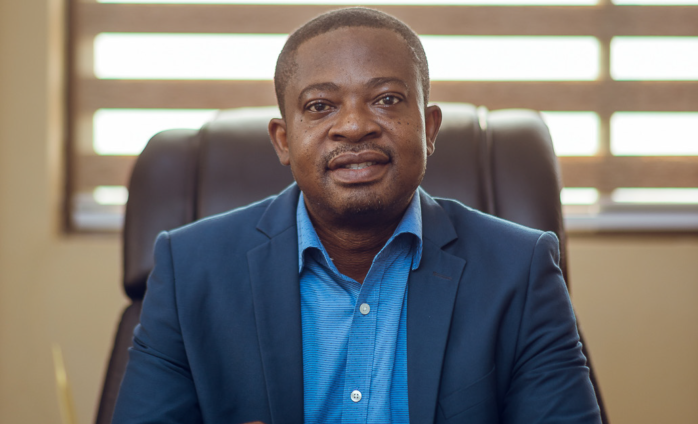
The President of the Association Ghana Industries (AGI), has painted a gloomy picture of the country’s manufacturing sector under the current regime.
Although government has repeatedly stated that it acknowledges the critical role of the manufacturing sector in Ghana’s industrialisation agenda, the sector still faces numerous challenges, thereby stifling growth.
The current government in particular had promised to move from taxation to production, an assurance that gave much hope to the manufacturing sector with the rolling out of policies like the government’s One District, One Factory initiative.
But in the view of Seth Twum Akwaboah, CEO of the Association of Ghana Industries, “The tax system in Ghana today, is not favouring manufacturing at all.”
Speaking on JoyNews’ PM Express on Wednesday, November 9, Mr Akwaboah said, “There has been imposition of additional taxes. We have the Growth and Sustainability Levy which has just been introduced. We’ve always complained about the straight levy, where you charge 15% on VAT, meanwhile, you’re paying 21.9% to the government by way of VAT. So if you’re unable to recover, then that additional 6% or so, also adds to your cost of doing business.
"Of course, some of the big trading companies pay a similar VAT system, but a lot of them that are competing even at the SME level pay the flat rate, so that becomes a challenge. So, a lot of the taxes are not going in favour of manufacturing, so if you add it to all the other cost areas that I have mentioned, it makes manufacturing very vulnerable, and it affects their cost of production," he noted."
The AGI CEO expressed concern about the country’s porous borders which make it difficult for local manufacturers to compete favourably with imported products that get into the country through unapproved routes and the importers escape taxes.
“Even some are smuggling the goods in and are not paying the right duties, and therefore they undermine the very capacity of local industries to produce and supply, and that has been a big challenge."
According to him, local manufacturing firms are struggling to expand due to these challenges, which means they cannot employ more people.
“I have had the opportunity to visit a number of our companies lately. From the beginning of this year, I have done a lot of company visits and all of them the message is the same, that there are challenges in the system.
“And indeed, they’re not expanding. Either they’re downsizing or they’re at best trying to sustain what they can manage now. So, it’s really a big challenge. Even though the intention is there to grow, some of these challenges are not helpful," he reiterated.
If you consider the fact that over 300,000 students are coming out of our tertiary institutions every year, these are the sectors that should absorb a lot of our people, but there are serious challenges in this area.”
He said all other challenges that affect the growth of the sector such as high cost of capital must also be addressed simultaneously to get the best holistic results.
Latest Stories
-
US seeks changes to rejected $109m health compact with Ghana – Mahama
51 seconds -
Nine dead in mass shooting at Pennsylvania home
18 minutes -
‘Time for Ukraine to get new president,’ says Trump after Zelensky condemns diesel deal
21 minutes -
Hincapie injury adds to Arsenal issues after Guimaraes rescue act
30 minutes -
Henderson scores twice as Chelsea thumb Bournemouth
39 minutes -
Photos: Mentapulse Africa convenes health and labour summit to address talent retention
51 minutes -
Mahama inspects Nkokɔ Nketenkete plant, eyes Bechem as chicken capital
58 minutes -
Ghana not seeking full BRICS membership, applying as Partner Country – Ablakwa
59 minutes -
Woman injures three people in third Poland school knife attack in a week
1 hour -
Ghana should join BRICS as partner, not member – NPP Bono East Regional Secretary
1 hour -
Ghana High Commission warns nationals in South Africa over protests in Johannesburg, Durban
1 hour -
Mahama praises Roads Minister for keeping Big Push contractors on their toes
1 hour -
World Cup Visa Scandal: ‘My client has not collected money for visas’ – Ampofo Ankrah’s lawyer
1 hour -
US immigration officials defend ICE agents who shot man in same car as child
1 hour -
Commentator Katie Zacharia picked as new White House press secretary
2 hours