

Audio By Carbonatix
A senior commander of an Iran-backed militia has been killed in a US drone strike in Baghdad.
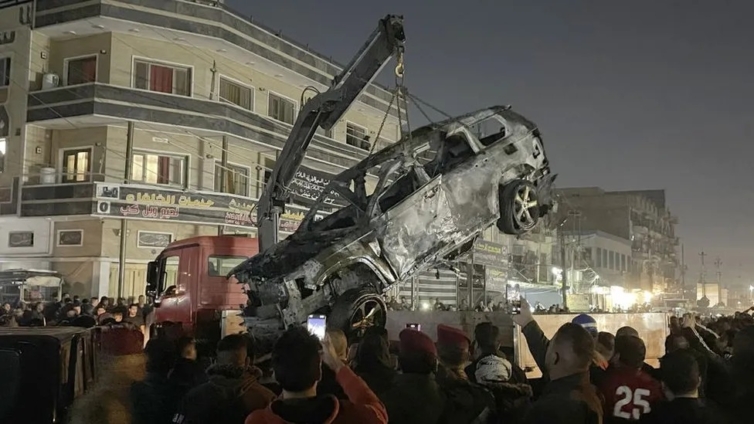
A leader of Kataib Hezbollah and two of his guards were in a vehicle when it was targeted in the east of the Iraqi capital. All three of them died.
The Pentagon said the commander was responsible for directing attacks on American forces in the region.
The US has linked the militia to a drone attack in Jordan that killed three US troops last month.
In the wake of that attack, Kataib Hezbollah said it was suspending attacks on American troops to prevent "embarrassment" to the Iraqi government.
Wednesday night's drone raid happened in Baghdad's Mashtal neighbourhood, sparking several loud explosions.
It was a precise strike on a moving vehicle in a busy street and the car was reduced to a fiery wreck.
One of the victims has been identified as Abu Baqir al-Saadi, a senior commander in Kataib Hezbollah.
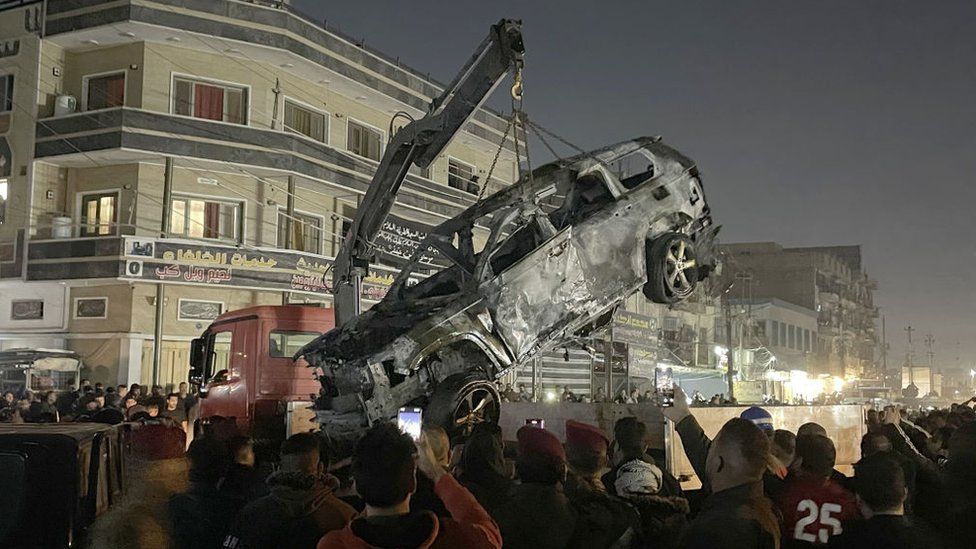
US Central Command (Centcom) said the attack was carried out at 21:30 local time (18:30 GMT), and had killed the "commander responsible for directly planning and participating in attacks on US forces in the region".
"There are no indications of collateral damage or civilian casualties at this time," the Centcom statement said.
When a BBC team reached the scene, crowds of protesters gathered chanting: "America is the biggest devil."
There was a heavy police presence, joined by Swat teams from Iraq's interior ministry.
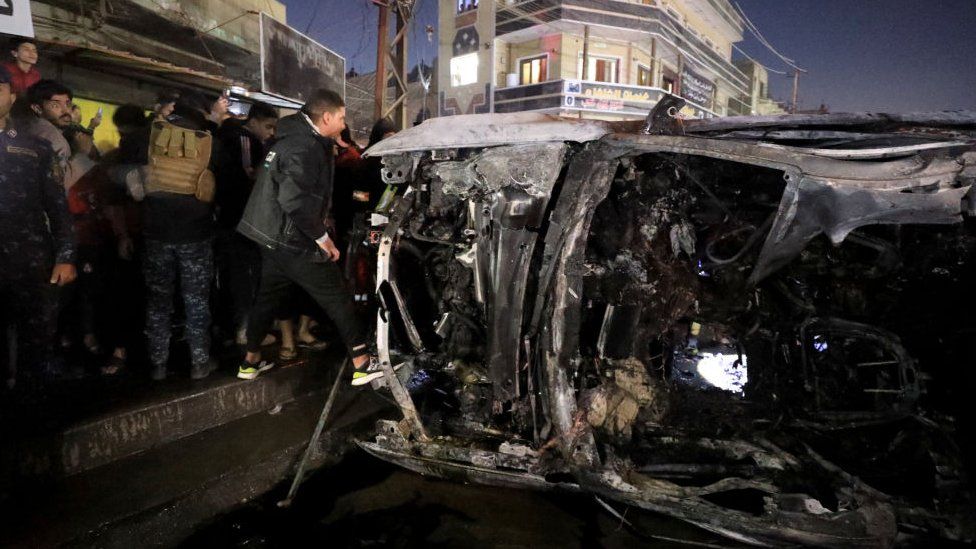
The BBC team tried to get close to the burnt-out vehicle, but were driven back by onlookers who insisted that journalists were not welcome.
"You are foreigners," one man shouted, adding "and foreigners are to blame for this".
There were reports of crowds heading to the heavily fortified US embassy to protest.
The raid comes days after the US launched 85 strikes in Syria and Iraq in retaliation for the fatal 28 January drone attack on US troops.
President Joe Biden described last Friday's wave of attacks as just the beginning of the US response.
The drone raid in the Iraqi capital will be seen as a major escalation in the US response. Previous strikes have only targeted the Iraq-Syria border area.
But it was perhaps inevitable that the American strategy would include targeting not only infrastructure used by the groups, but also their senior leaders.
Shortly after Wednesday's attack, militias in the country called for retaliation against the US.
American forces have been hit with near-daily rocket and drone strikes since the Israel Gaza war began on 7 October.
On 4 January, the US launched an airstrike in Baghdad against the leader of Harakat al Nujaba, a group also blamed for attacks against American troops.
The US has some 2,500 troops in Iraq and 900 in neighbouring Syria in a mission to combat the Islamic State terror group.
Latest Stories
-
A person stopped by police can record for evidence – NRSA
33 minutes -
New Road Traffic Law introduces separate licensing regime for commercial drivers
46 minutes -
Ghana must move beyond enforcement to tackle road deaths – Appiah Kusi Adomako
1 hour -
Kusi Adomako calls for road crashes to be declared a public health emergency
1 hour -
Ghana makes history with international karting debut
2 hours -
Playback: The Law discussed new road traffic rules
2 hours -
What’s driving men to get penis fillers, despite the risks?
2 hours -
The world’s oldest president left for a ‘brief stay’ in Europe, he hasn’t returned in two months
3 hours -
Trapped driver rescued after accident on Kintampo–Tamale highway
3 hours -
Civil Service must put citizens at centre of decision-making – Vice President
3 hours -
Firefighters battle blaze at Accra New Town apartment
3 hours -
Ghana receives five new envoys to strengthen diplomatic relations – Ablakwa
4 hours -
Europe’s tallest Virgin Mary statue unveiled in rural Poland
4 hours -
Sammi Awuku denies reports of EOCO arrest
4 hours -
Stonebwoy makes history at OVO Arena Wembley with monumental BHIM Festival
4 hours