

Audio By Carbonatix
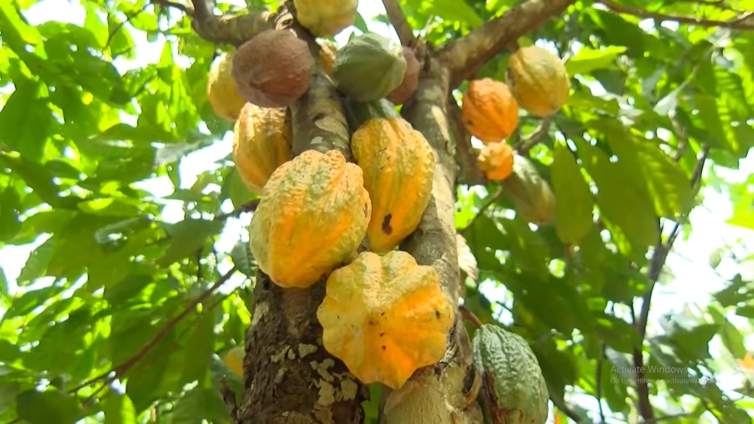
Ghana’s COCOBOD will use part of a $200 million World Bank loan to rehabilitate plantations destroyed by the cocoa swollen shoot virus, which causes drops in yields and kills trees, the regulator’s deputy Chief Executive in charge of operations said on Thursday, February 15, 2024.
The disease has wiped off about 500,000 hectares of farmlands and reduced cocoa output from the West African nation, the world’s second biggest cocoa producer after neighbour Ivory Coast.
Ghana’s output declined to 600,000 metric tons last year after peaking at 1.048 million tons in the 2020/21 season, as the cocoa swollen shoot virus, aging plantations, illegal mining and smuggling took a toll on the sector.
A total of $132.8 million of the loan secured by the government last year and the counterpart funding will finance Cocobod’s rehabilitation of farms and help to enhance knowledge on the virus strains, a project information document showed.
“The rehabilitation will take a minimum of five years to start getting economic production,” Cocobod’s Emmanuel Opoku told Reuters, adding that efforts had been hampered by the country’s economic crisis and the board’s limited funds.
The board will take over disease-infested farms, cut and replace sick cocoa trees, aiding growth to a fruiting stage before handing them back to farmers.
In 2018, Cocobod used part of a $600 million Africa Development Bank (AfDB) loan to rehabilitate aging plantations and those affected by the disease.
But the programme, originally meant to cover 156,000 hectares of plantations, was caught up in Ghana’s worst economic crisis in a generation during which inflation spiralled and the cedi currency depreciated sharply, Opoku said.
He said the AfDB facility benefited more than 88,000 hectares of farmlands, of which 40,000 hectares were ready to be given back to farmers in “the coming days”.
Alhassan Bukari, president of the country’s Cocoa, Coffee and Sheanut Farmers’ Association, told Reuters that rehabilitation efforts needed to be aggressive as many farmers were affected.
Ghana’s graded and sealed cocoa arrivals fell by 35% between the start of this season on Sept. 1 and Jan. 31 this year due to the intensity of the seasonal dry Harmattan wind and what Cocobod described as production.
Latest Stories
-
Hohoe flood: About 5,000 affected as NADMO begins emergency relief
17 seconds -
Why must I renew my vehicle’s registration number every 2 years?
3 minutes -
Parliamentary Privilege and the Limits of Personal Liberty: A study on the immunity of members of parliament from arrest in Ghana
4 minutes -
Kwabenya Court denies bail to six accused in alleged 3.9-tonne cocaine shipment
4 minutes -
Ghana opposes calls to abolish ICC, urges stronger action against crimes against humanity
11 minutes -
Cedi remains under pressure due to Christmas demand; going for GH¢11.90 at forex bureaus
13 minutes -
NDC opens nominations for 2026 regional executive elections on October 6
14 minutes -
Ghanaian nurses to receive higher pay, health insurance and rent allowance under new Saint Kitts and Nevis agreement
22 minutes -
JoyNews’ Emmanuel Adu Gyamfi named ‘Digital Tourism Icon of the Year’ in Ahafo Region
26 minutes -
Hurricane Polo makes landfall on Mexico’s Pacific coast
30 minutes -
US ban on Canadian alcohol and dairy comes into effect as trade war drags on
32 minutes -
GES orders SHS heads to refund unauthorised fees collected from parents
40 minutes -
AFCON 2027Q: ‘We don’t need to cry over spilled milk’ – Damba on Ghana injury concerns
44 minutes -
NDC communicator blames documentation, payroll validation for teachers’ promotion arrears delay
45 minutes -
2026 JoyNews Impact Maker Award winner brings clean water to Yoko Tsume after years of cattle dugout dependence
52 minutes