

Audio By Carbonatix
Low-income countries reportedly consume significantly fewer materials and produce far fewer climate impacts, with a consumption rate six times lower and climate impacts ten times lower in comparison to high-income countries.
Over the last five decades, upper-middle-income countries have seen a more than twofold increase in resource consumption due to their expanding infrastructure and the transfer of resource-intensive activities from high-income countries. Despite these trends, per capita resource usage and associated environmental impacts in low-income countries have remained relatively low and stable since 1995.
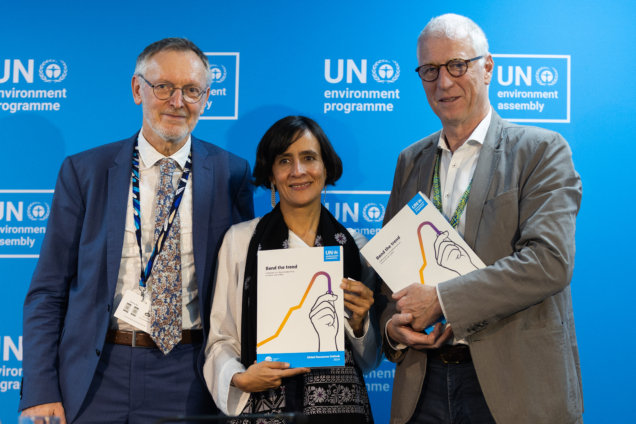
This was captured in the 2024 Global Resource Outlook, released by the International Resource Panel during the sixth session of the UN Environment Assembly.
The report advocates for significant policy changes to enable humanity to live sustainably within its means and urges for a reduction of projected resource use by one-third while simultaneously promoting economic growth, enhancing well-being, and mitigating environmental impacts.
The report highlights a significant increase in resource use since 1970, rising from 30 to 106 billion tonnes, or from 23 to 39 kilograms of materials utilised on average per person per day. This growth has resulted in profound environmental consequences, with resource extraction and processing contributing to over 60 per cent of planet-warming emissions and 40 per cent of health-related impacts from air pollution.
Specifically, the extraction and processing of biomass, such as agricultural crops and forestry, are responsible for 90 per cent of land-related biodiversity loss and water stress, as well as one-third of greenhouse gas emissions. Similarly, the extraction and processing of fossil fuels, metals, and non-metallic minerals, including sand, gravel, and clay, collectively account for 35 percent of global emissions.
“The triple planetary crisis of climate change, nature loss and pollution is driven from a crisis of unsustainable consumption and production. We must work with nature, instead of merely exploiting it,” said Inger Andersen, Executive Director of UNEP. “
"Reducing the resource intensity of mobility, housing, food and energy systems is the only way we can achieve the Sustainable Development Goals and ultimately a just and liveable planet for all.”
Latest Stories
-
British couple on honeymoon killed in helicopter crash on Greek island
3 minutes -
Man, 20, drowns while helping travellers cross Ghana-Togo border river
12 minutes -
Top 10 online bill payment platforms in Nigeria
17 minutes -
Fire destroys more than 27 wooden structures at Spintex Coastal junction
20 minutes -
GoldBod: Day of reckoning will come – Afenyo-Markin
23 minutes -
In Photos: Defence Ministry welcomes Kenneth Gilbert Adjei as new Defence Minister
33 minutes -
CSA fines EY Ghana GH¢360,000 for providing cybersecurity services without a licence
41 minutes -
Bonsu Baah scores and assists in Al Qadsiah big win in Saudi King’s Cup
41 minutes -
The Galamsey war and GWL’s fictitious and inaccurate rebuttal
54 minutes -
Afenyo-Markin demands answers over alleged GH¢22bn GoldBod loss
55 minutes -
GoldBod ‘Losses’: We’re not ignorant, we know our job – Afenyo-Markin
58 minutes -
GoldBod cannot hide behind agency role to escape accountability – Afenyo-Markin
1 hour -
‘You don’t get to keep the fees and disown the costs’ – Afenyo-Markin challenges GoldBod
1 hour -
GNPC turns 40, targets oil production recovery and $3.5bn fresh investment
1 hour -
Minority will speak boldly on GoldBod losses despite attacks – Afenyo-Markin vows
1 hour