

Audio By Carbonatix
Consumer prices in the US rose faster than expected last month, in a sign that the fight to slow inflation has stalled.
Prices rose 3.5% over the 12 months to March, up from 3.2% in February, the US Labor Department said.
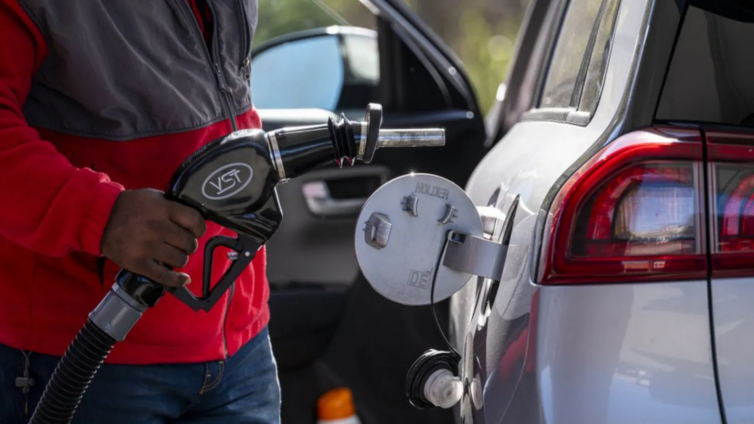
Higher costs for fuel, housing, dining out and clothing drove the increase.
Analysts warned the lack of progress will force the US central bank to keep interest rates higher for longer.
Higher interest rates help stabilise prices by making it more expensive to borrow for business expansions and other spending. In theory, that in turn slows the economy, and eases the pressures pushing up prices.
But the Federal Reserve's key interest rate is now set at the highest levels in more than two decades, in the range of 5.25%-5.5%.
Forecasters had expected the bank to start lowering borrowing costs this year, reflecting the fact that the inflation rate, which tracks the pace of price rises, has fallen significantly since hitting 9.1% in 2022.
But recent economic data, including strong jobs creation figures last week, has raised doubts about how soon those cuts might come.
Analysts, who once expected rate cuts as soon as March, have been rapidly revising bets, with many now not expecting any until later this summer and some predicting the bank could wait until next year.
What the Fed decides to do is likely to shape decisions by central bankers all around the world, said Neil Birrell, chief investment officer at Premier Miton Diversified Funds.
"The Fed has got some head scratching to do and if other central banks were waiting for the Fed to move, they have got a conundrum on their hands now," he said.
Inflation cooled rapidly over 2023 as pandemic-era supply issues healed and the spike in food and energy prices sparked by the war in Ukraine faded, but it still remains higher than the bank's 2% target.
An uptick in oil prices prices in recent months has also pushed energy costs higher, while prices for services show little sign of stabilising.
The Labor Department said prices jumped 0.4% from March to February, the same as in February.
Higher petrol and housing costs accounted for more than half the increase.
Car insurance, medical care and costs for internet also contributed.
So-called core inflation, which is seen by economists as a better indicator of future trends because it does not include more volatile food and energy prices, stood at 3.8%, the same as in February.
"We shouldn't overreact to the jump in headline inflation - which was all about energy," said Brian Coulton, chief economist at Fitch Ratings. But he added: "The details are not at all reassuring for the Fed."
Latest Stories
-
Édouard Mendy annonce sa retraite internationale avec le Sénégal
2 hours -
Lamine Yamal scores twice as Barcelona maintain perfect start
2 hours -
Haaland scores controversial winner for 10-man City at Man Utd
2 hours -
Ghana’s narcotics crisis deepens as drug seizures linked to country top US$1bn – Minority
2 hours -
CAF CC: Nations FC bow out after draw with FC Diarra in Accra
2 hours -
Kenyans dominate 2026 KGL Millennium Marathon as race champions mental health
2 hours -
Minority demands full-scale probe into Ghana’s alleged emergence as narcotics transit hub
2 hours -
NaCCA trains teachers to implement new Chinese language curriculum
4 hours -
Ghana, China deepen cooperation on galamsey and mining sector
4 hours -
JoyNews–Republic Bank Habitat Fair ends on a high note after 3 days of strong patronage, expert engagement
5 hours -
Emma Ofosua takes West African spoken word to three UK cities
5 hours -
Traditional artists will become more expensive because of AI – Aewura Arts
5 hours -
Clients would disappear after I finished their artworks – Aewura Arts recounts challenges
5 hours -
Turkish police detain dozens in raids on gay bars and homes of LGBTQ+ activists
5 hours -
Trump doubles down on united Ireland comments on day two of visit
5 hours