

Audio By Carbonatix
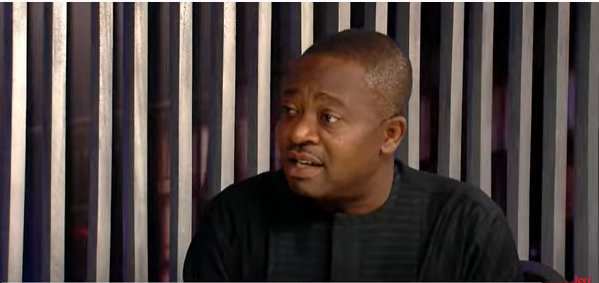
The CEO of the Association of Ghana Industries, Seth Twum Akwaboah, says government's flagship 'One District One Factory' (1D1F) initiative, while beneficial, is not a complete solution to the country's industrialisation challenges.
According to him, the policy must be complemented by a conducive environment where factories can operate independently of government support, engage in significant business activities, export, expand, and thrive.
Speaking on JoyNews' PM Express, he emphasised that a multifaceted approach is necessary for sustainable industrial growth, including the provision of good incentive rates and a working value chain.
“The incentive rate is very important, and indeed the idea of providing incentives to attract investment into some of these areas that may not be that attractive to the typical private sector operators. So that is important. Another aspect that makes it feasible and very important is the value chains working,” Mr Akwaboah said.
“If you only set up a factory and you don't have the raw materials provided in a consistent, reliable, and regular manner, you have a problem with the production volumes.
"And we've experienced this in several sectors and several products. So setting up One District, One Factory alone is not enough. The value chains must work,” he added.
He noted that currently, some major companies rely on local sourcing of materials but face shortages, sometimes resulting in the need for imports of these raw materials needed for the factories to operate, including those in the agricultural sector.
The CEO stressed the necessity of a robust agricultural sector that produces and supplies raw materials at competitive prices to support industrial activities.
“So if you want to have a working One District, One Factory, it is good that you have manufacturers that are concentrating on the safety of the factory, but we must have agriculture that is working and producing or farming the products and supplying them at a competitive price.”
"The transportation from the farm gate to the factory must work, the volumes you are producing should be commercial agriculture that is not just relying on rain-fed agriculture, but also irrigation, and so many things must work. If you set up only the factory, it will not be the solution," he added.
Mr Akwaboah acknowledged the efforts of the Ministry of Agriculture but pointed out that the linkage between industry and agriculture needs strengthening.
While the Ministry focuses on food security, he suggested that the strategy should also include producing to feed the industry.
"When you do all this and the value chains are working, and then the macroeconomic environment is good, then the factories on their own, without any government interference or support, they will be able to stand the test of time and become competitive," he stated.
The One District One Factory (1D1F) initiative was launched by President Akufo-Addo to change the nature of Ghana’s economy from one which is dependent on the import and export of raw materials to one focused on manufacturing, value addition and export of processed goods.
The policy was also to support the private sector to establish at least one industrial enterprise in each of the administrative districts of the country.
The concept of the One District One Factory (1D1F), among other initiatives of the Government, is designed to transform the industrial landscape of the country and build the capacities of local enterprises to produce quality products and services for both domestic and foreign markets.
But also on the show, Member of Parliament for Bole Bamboi, Yusif Sulemana, said that the implementation of the policy was not well thought out.
He explained that despite the promise to build factories across the country, the policy was mainly implemented in the Greater Accra Region, followed by the Ashanti and Central Regions.
Additionally, Mr Sulemana believes that for the industrialisation drive to truly succeed, there is a need to focus on select factories that not only have the capacity to grow but also reduce the importation of said product.
“If we are concentrated on working on producing rice, today, we would have gotten a good story to tell. What the NDC government will do is select some of these products, and some of these crops, and concentrate on them. We're not going to just say that we're going to establish factories in every district.”
Latest Stories
-
Djokovic in tears during US Open first-round exit
2 minutes -
Yusuf Sulemana celebrates Gonja unity at Damba festival
3 minutes -
A Minister under watch: Zanetor’s burden of expectations
16 minutes -
Don’t make funding your starting point for green businesses – Entrepreneurs urged
23 minutes -
Skills gap in electric vehicles presents jobs opportunity for Ghanaian youth
29 minutes -
Mahama heads to Serbia for 65th anniversary of Non-Aligned Movement
34 minutes -
National Children’s Day 2026: Child Online Africa calls for child-led digital protection in Ghana
40 minutes -
Manasseh sets the record straight on Northshore Apparel GH; dispels 1D1F claim
40 minutes -
Supreme Court dismisses injunction bid seeking to halt Skytrain trial
45 minutes -
AU Chairperson reaffirms commitment to global African unity
53 minutes -
Air Pollution in Accra is not random; it is a burden carried by the poor
59 minutes -
GEXIM Bank grows loan portfolio to GH¢1.56bn as equity hits GH¢2.1bn in 2025 – SIGA Report
1 hour -
Ghana Shippers’ Authority grows surplus by 272% as assets reach GH¢979.92m
1 hour -
Government designates 13 blocked-out areas for small-scale mining to curb illegal mining
1 hour -
Number of advertised jobs increased significantly in half-year 2026 – BoG
1 hour