

Audio By Carbonatix
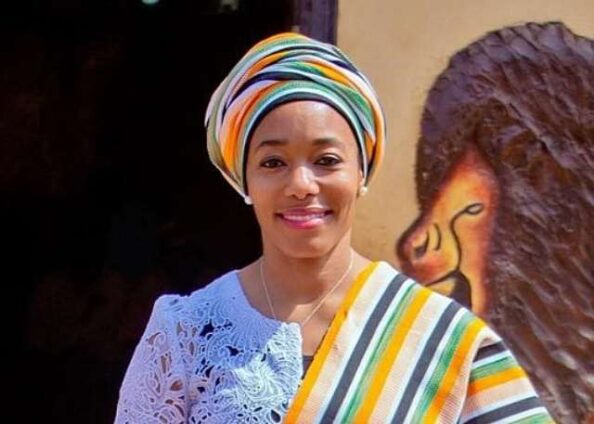
Dr. Zanetor Agyeman-Rawlings’ swearing-in as Minister for Environment, Science and Technology on 29 August 2026 was more than a constitutional formality; it was a moment loaded with symbolism, expectations, and political risk.
As the eldest daughter of former President Jerry John Rawlings and former First Lady Nana Konadu Agyemang-Rawlings, her appointment carries a weight that few ministers in Ghana’s Fourth Republic have ever borne.
For many citizens, she represents continuity of a storied legacy, a disciplined humanitarian voice, and a potential bridge between generations. Yet for others, her appointment is seen as a trap; a test designed to measure whether she can rise above the shadows of her parents and deliver results in one of the most difficult ministries in government today.
Indeed, public perception of the Rawlings family is complex and deeply divided. Jerry John Rawlings is remembered as both a charismatic democrat who ushered Ghana into multiparty politics and a military ruler whose years in power were marked by repression and executions.
Nana Konadu Agyemang-Rawlings is admired for her activism on women’s rights and social justice, but often viewed as politically ambitious and divisive.
Against this backdrop, Dr. Zanetor Agyeman-Rawlings enters national leadership with a reputation for discipline, professionalism, and humanitarian service.
Her family name gives her visibility and influence, but it also subjects her to relentless scrutiny. Citizens expect her to embody the best of her parents’ qualities: principled leadership, fairness, and resilience, while avoiding the mistakes critics associate with them. This dual burden magnifies the responsibilities of her office.
Every decision she makes will be judged not only on its merit but also on how it reflects the Rawlings legacy.
The Ministry of Environment, Science and Technology is at the center of Ghana’s response to climate change, deforestation, pollution, and the urgent need for scientific innovation. It is a ministry that demands vision, technical expertise, and political courage. From enforcing environmental regulations to promoting renewable energy and advancing scientific research, the challenges are immense. For Dr. Zanetor, the expectations are even higher.
Citizens see her as a fresh face capable of bridging generational divides and advancing modern governance. Yet they also expect her to deliver decisive leadership in tackling complex issues that have long defied political will. The weight of responsibility is therefore magnified: her success will elevate her credibility and strengthen her family’s legacy, while failure will cast a shadow over both.
Illegal small-scale mining, popularly known as galamsey, has become Ghana’s most destructive environmental and governance challenge. Rivers such as the Pra, Ankobra, and Birim are heavily polluted with mercury, leaving millions of people exposed to unsafe drinking water. Ghana has lost about 30% of its forest cover in the past decade, biodiversity has collapsed, and mercury levels in rivers exceed WHO safety limits by 400%.
The Environmental Protection Agency warns that 60% of Ghana’s water bodies are seriously polluted, rendering many treatment plants ineffective. The human toll is devastating. Mercury poisoning is affecting children and pregnant women, leading to neurological damage and long-term health risks. Confrontations between miners and security forces have resulted in many deaths, while illegal firearms are routinely seized at mining sites.
Economically, galamsey costs Ghana billions annually in environmental damage. Politically, it has entrenched corruption, with local chiefs, party financiers, and politicians shielding perpetrators.
At her swearing-in, President John Dramani Mahama himself underscored the urgency of confronting galamsey, describing it as one of the most pressing national crises. He emphasized that tackling galamsey would be a defining measure of her leadership, urging her to act with integrity, urgency, and firmness. By placing galamsey at the center of her ministerial responsibilities, he effectively set it as her most critical Key Performance Indicator.
His words were not ceremonial; they were a direct challenge to her capacity to lead decisively in the face of entrenched impunity and political interference.
Her appointment is seen by many as both an opportunity and a potential trap. This is because a lot of prominent Ghanaians, actors from the governing party and opposition parties, and even the public had criticized the government when she was initially denied a ministerial role, arguing that her pedigree and experience made her a natural fit. That rare history of government criticism and advocacy for her means her eventual appointment comes with heightened scrutiny.
If she succeeds, she will silence critics, strengthen her credibility, and elevate the Rawlings legacy. But if she fails, the narrative of her appointment being a trap will gain traction, and her political future could be severely compromised. The dilemma is stark: she must prove that she can lead not because of her name but because of her vision and ability to deliver results.
To avoid being drawn into the pool of uninspiring, visionless, corrupt, and failed leaders that Ghanaians have grown weary of, Dr. Zanetor must begin her journey with a huge blank sheet. That blank sheet represents freedom from political baggage, partisan compromises, and the shadows of past failures. It must symbolize a fresh vision, a willingness to listen, and the discipline to chart bold, innovative solutions. Her ability to adopt innovation and to deliver results in the face of immense challenges will determine not only her career but also the enduring reputation of the Rawlings legacy.
The nation will be watching closely. For Dr. Zanetor Agyeman-Rawlings, this appointment is not just a promotion. It is a defining test of leadership, integrity, and destiny.
I wish you the very best, Madam.
Latest Stories
-
The 7-foot giant of Ngleshie Amanfro: Seven-foot Ghanaian Ephraim Saawa dreams of joining the national basketball team
30 seconds -
Government promises support for Kumasi Central Market fire victims
7 minutes -
Vibes The Movie: Big Ghun’s Ghanaian film earns five nominations at 2026 REFFA
37 minutes -
MamaCare CEO warns unresolved conflicts among health workers could undermine maternal and neonatal care
1 hour -
Health professionals urged to translate medical knowledge into practice to save mothers
1 hour -
Conflicts among care providers linked to maternal, neonatal deaths – Expert
3 hours -
GIS marks 10th TIME conference, champions improved teaching practices
3 hours -
BRICS Or Balance? What Ghana’s bid really means
3 hours -
GPRTU wants full TRAFFITECH-GH implementation to start in 2027
4 hours -
Mahama announces plans to import electric wheelchairs for PWDs
4 hours -
KGL U17 Colts 2026: Western beat Prempeh Elite Academy to set up final final with Greater Accra Region
4 hours -
Late Solanke strike salvages 10-man Spurs draw at Man United
4 hours -
Gender Ministry to monitor welfare of Nana Akua Addo’s children amid domestic violence case
4 hours -
Benedict Okyere Yeboah: Ghana’s football problem goes beyond sacking a coach
4 hours -
GPL 2026/27: Darkwah Wiafe’s winner sees All Blacks beat Kotoko
4 hours