

Audio By Carbonatix
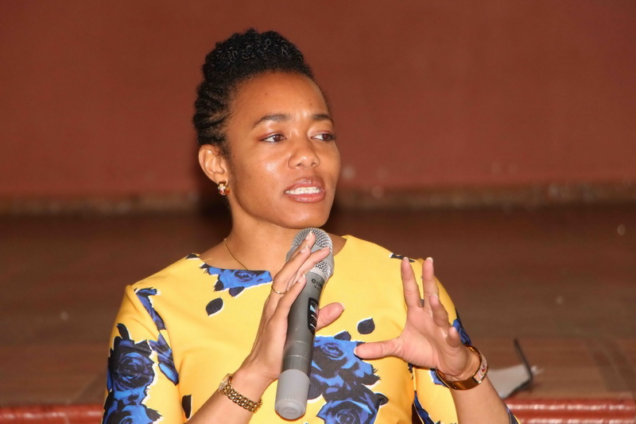
The Chairperson of Parliament's Security and Intelligence Committee, Dr Zanetor Agyeman-Rawlings, has called for closer collaboration among Ghana's security and justice sector institutions to strengthen the country's response to terrorism and violent extremism.
According to her, improving coordination among the various agencies and adopting standardised procedures for collecting and preserving evidence in conflict situations will help secure successful prosecutions and ensure justice is effectively served.
Dr Agyeman-Rawlings made the remarks on the sidelines of the Second Plenary Expert Group Meeting on the Finalisation of the Standardised Operating Procedures (SOPs) on the Collection, Preservation and Sharing of Information Gathered in Conflict Zones by First Responders, held at the Alisa Hotel in Accra on Thursday, July 2.
She explained that the meeting was intended to finalise practical guidelines for personnel who are often the first to respond to incidents in conflict areas.
"This programme here today is about trying to finalise the standard operating procedures for first responders in conflict situations, which basically is a slightly different scenario than what you would normally know as a normal crime scene."
Dr Agyeman-Rawlings noted that conflict zones present unique challenges because the first responders are not always police officers, making it crucial for all personnel to understand how to preserve crime scenes and protect evidence.
"The difficulty sometimes with a crime scene in a conflict area is that the first responders are not always the police, and as a result of that, you may have a scenario where those who are the first on the scene of a crime may not understand the importance of ensuring that the crime scene is not disrupted and also may not understand how to collect evidence in such a way that the integrity of the evidence is protected and the continuity in terms of custody is maintained."
She said the SOPs have been designed to be simple and practical so that first responders can easily apply them during emergencies.
"It is important that in training our personnel these SOPs are meant to be quite simple, straightforward, and easy to follow in order to ensure that at the end of the collection of evidence, at the end of perhaps arrests of persons in a specific context, which is normally in a conflict area or in a scenario where there's been some terrorist attack or some violent extremism, when cases are brought before the court because there's been proper chain of custody, there's proper integrity of the evidence protection, and of course the scene of the crime was actually taken care of properly."
She expressed optimism that the new procedures would improve the quality of prosecutions by ensuring evidence remains admissible in court.
"As a result of that, the hope is that we will have a better prosecution rate and that the judges will not deem evidence inadmissible because of the way evidence was collected."
She added that the overall objective is to simplify the handling of evidence while ensuring it meets the highest legal standards before the courts.
"So this is to simplify the process by which evidence is collected, protected, and presented to the courts in a form that meets the gold standard as far as evidence submission before our courts is concerned so that the judges are able to successfully preside over cases and we can have successful prosecutions of criminals who come before the courts."
On the importance of collaboration among security agencies, Dr Agyeman-Rawlings said the country's National Security Strategy already emphasises an "all of society" and "all of government" approach to addressing security threats.
"Well, I think that if we make reference to our national security strategy, the underlying concept is to have an all-of-society and all-of-government approach, and that's what we are trying to do."
She said greater harmonisation among the security services would improve outcomes by reducing gaps that arise when institutions work in isolation.
"The greater the harmonisation there is between the various agencies and the services involved, the better the chance of a better outcome because operating in silos means that there might be things that one agency might be missing out on."
Dr Agyeman-Rawlings further noted that the meeting had brought together stakeholders from the judiciary, the Attorney-General's Department, the Ministry of Justice, and defence and intelligence agencies to build a common understanding of the SOPs and strengthen cooperation across institutions.
"We have the judiciary here present as well as the attorney general and the justice department as well and all of that, including our security intelligence agencies defence to ensure that we all are speaking to the same issues and that we all understand the framework with which we're working, and it makes it easier even between the different agencies for there to be greater collaboration and cooperation because the language is similar because now we understand what we're talking about when we're making reference to the standard operating procedures with regard to the collection of evidence by first responders."
She said adopting a common framework would help eliminate institutional rivalries and reinforce the country's criminal justice system.
Latest Stories
-
Imagination Africa, Mentors Chess Academy to host second African Genius Chess Championship at Ghud Park
22 minutes -
Nana B passport claims a diversionary tactic — Abu Jinapor
1 hour -
Pope Leo diagnosed with cancer as doctors remove lobe of lung, Vatican says
1 hour -
Legal Aid Commission takes free legal services to Techiman main lorry terminal
1 hour -
Nana B denies seeking passport favour, accuses Ablakwa of failing to account for GH¢16.4m
1 hour -
Young girls demand climate action, stronger protection against child marriage
2 hours -
Ex-gang boss sentenced to 40 years for orchestrating Tupac Shakur’s murder
2 hours -
From near-deferral to three awards: UMaT graduate’s academic journey
2 hours -
Atta Akyea denies seeking presidential pardon for Wontumi in galamsey case
2 hours -
Photos: Mahama commissions 85-bed Police Hospital ward, donates two ambulances
2 hours -
GTEC directs Ghana’s public universities to reopen by October 16 and begin lectures on October 19
2 hours -
Star Oil donates GH¢1million towards construction of new CID facility
3 hours -
Court hands Adjetey Sowah, two others lifetime bans after Amputee Football legal dispute
3 hours -
NDC appoints Julius Kwame Anthony as a Deputy Communications Director
3 hours -
Ghana repatriates 120 Nigerians rescued from suspected cybercrime centres
3 hours