

Audio By Carbonatix
Orbis International, a non-governmental organization, has revealed that refractive errors, particularly myopia (nearsightedness), are a leading cause of visual impairment and blindness in children.
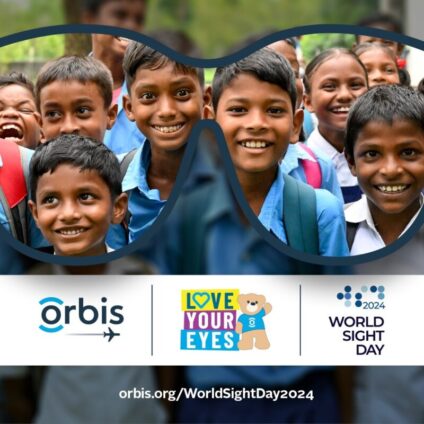
In a press release issued to mark World Sight Day 2024, the organization highlighted that this condition affects approximately 448 million children and adolescents globally.
It added that the prevalence of myopia among the youth is rapidly increasing in various parts of the world, largely attributed to lifestyle changes.
“Refractive errors—vision problems where the shape of the eye prevents light from focusing correctly on the retina—are very common among children. Myopia, the most prevalent type of refractive error in children, causes distant objects to appear blurry. Treatments for myopia include corrective glasses, contact lenses, or surgery.”
While the report noted a decrease in the number of children blinded by eye conditions worldwide, this decline is primarily due to reduced cases of corneal blindness caused by vitamin A deficiency and measles.
The statement clarified, “However, this does not include refractive errors.”
The organization emphasized the importance of addressing squinted eyes (strabismus), which can lead to lazy eyes (amblyopia) if untreated.
“Squinted eyes can be treated before age 7. Without intervention, children may lose vision in the affected eye. No child is too young to wear spectacles; even babies can wear glasses following a thorough examination and prescription.”
To ensure the optimal eye health of children, Orbis International urged parents to adopt proactive measures, including:
Attend regular eye exams: Schedule comprehensive eye examinations for children before they enter pre-school and primary school. If no eye problems are detected, aim for check-ups every two years.
Boost visual engagement for toddlers and babies: Use high-contrast colours and engage in activities like games of catch, pat-a-cake, and peekaboo to improve hand-eye coordination.
Provide a balanced diet: Nutrients such as zinc, lutein, omega-3 fatty acids (found in fish), and vitamin A (from leafy greens) are crucial for preventing dry eyes and night blindness.
Vitamins C and E (from fruits like oranges and mangoes) also support eye health, while eggs and nuts are excellent sources of essential nutrients.
Limit digital screen time: Keep screens at a distance of 18 to 24 inches from your child’s eyes to minimize strain.
Look out for warning signs: Parents should be vigilant for signs of vision problems, including bumping into objects, squinting, disinterest in distant objects, head tilting, holding items very close, eye rubbing, light sensitivity, and poor hand-eye coordination.
Latest Stories
-
GNFS contains fire outbreak at Teshie Lekma Road near Lekma Hospital
6 hours -
Samia Nkrumah rejects the narrative that Ghanaians were happy after Nkrumah’s overthrow
7 hours -
A Mother’s pain: Tribute by Ivan Baidoo’s mother
7 hours -
‘Forgive us for staying away’ — Samia Nkrumah leads family back to Nkroful, pledges to preserve Nkrumah’s legacy
7 hours -
Ernest Nuamah scores twice as Lyon beat Rennes
7 hours -
‘My dear Ivan’ – A father’s tribute to a son tragically killed
8 hours -
GNPC Explorco advances Voltaian Basin drilling preparations with 13.5km access road
8 hours -
Cabinet approves facility manager for Borteyman Sports Complex – Kofi Adams
8 hours -
Sanitation is improving; critics may be ‘living in another world’ – Salaga South MP replies Bekwai MP
9 hours -
Government must do more to tackle sanitation crisis – Bekwai MP
9 hours -
World Cleanup Day: GFF begins sanitation education in local communities
9 hours -
EU Ambassador, IGP discuss stronger cooperation on policing and security
9 hours -
Africa Nations Volleyball Championship: Ghana set up quarterfinal clash with Cameroon after beating Chad
9 hours -
Meet Dr Benjamin Appiah Osei — Ghana’s three-time tourism awards winner
10 hours -
UEFA & CONCACAF demand Fifa pays $10m to all 211 members
10 hours