

Audio By Carbonatix
All student unions in Ivory Coast are being shut down, the government has announced, after the killing of two students which is being blamed on the powerful Student and School Federation (Fesci).
Several Fesci members have been arrested in connection with the murders of Khalifa Diomandé and Zigui Mars Aubin Déagoué, which took place in August and September.
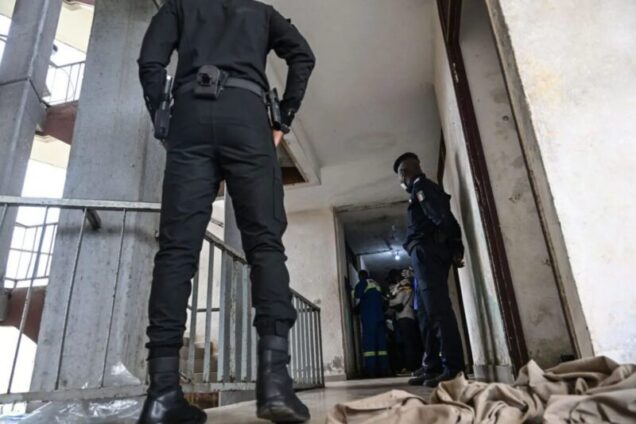
An underground tunnel used for torturing people and a brothel were found during investigations at Félix-Houphouët-Boigny University in the main city of Abidjan, the authorities say.
Students tell the BBC it was an open secret that Fesci ran both illicit sites but that everybody was too afraid to speak out.
"You wouldn't have believed you were in a university in an organised country," said a former student who has asked to remain anonymous.
"I was threatened by Fesci many times, they tried to rape me," she tells the BBC. "My boyfriend tried to stand up for me, and he was beaten up," she alleges. On other occasions, she says she had to pay Fesci members to leave her alone.
She says she is still traumatised and has not set foot on the campus since dropping out after her ordeal eight years ago.
"I don’t know how it lasted so long but now I feel relieved for the victims," she adds.
Extortion was common, say students.
"I was supposed to pay $100 (£77) per month for my room," explains Jose Aristide, "but they were forcing me to pay $250 per month.
"There was no other option. Everyone feared them."
On Thursday, Ivory Coast's Security Council said it had carried out a series of raids on universities in Abidjan and the central city of Bouaké in which more than 100 machetes and grenades were seized.
They also found and expelled 5,000 undeclared residents at university campuses across Abidjan, Bouaké and Daloa.
When the student union ban was announced that same day, people celebrated.
One lecturer tells the BBC he welcomes the ban, saying he hopes it will bring some peace to the campuses.
Originally set up in the 1990s as a student body, Fesci soon became an anti-government protest group and has long been suspected of involvement in organised crime.
It has also served as a springboard into politics for some.
Former Fesci leaders include Guillaume Soro - a rebel leader-turned-prime minister, and Charles Blé Goudé - a former youth minister who was accused then acquitted of massive human rights violations during post-election violence that happened a decade ago.
Latest Stories
-
The grass is greener somewhere is an illusion – Barfuor Adjei-Barwuah tells Ghanaian youth
9 minutes -
My marriage will be secret – Singer Joeboy
19 minutes -
KATH hails Ghana Medical Trust Fund after GH¢4m equipment boost
28 minutes -
Free Primary Healthcare reaches 135 districts
37 minutes -
Tunisian journalists protest over media crackdown after colleague’s arrest
48 minutes -
Equatorial Guinea police pull guns on migrants deported by Trump, witnesses say
57 minutes -
Singaporean man pleads guilty in US to massive crypto heist
1 hour -
WHO says staff shortage, funding challenges hamper Congo Ebola response
1 hour -
IMF is not Father Christmas; Ghana must take charge – PUWU
1 hour -
More UK flight delays expected after hundreds cancelled by air traffic control glitch
2 hours -
Very hot drinks may damage the food pipe and increase cancer risk
2 hours -
Fix IPP pricing, not just ECG, PUWU tells IMF, World Bank
2 hours -
OpenAI says it cracked 90-year-old maths problem in 88 hours
3 hours -
Meta continues to run ads promoting child sexual abuse material in India – Report
3 hours -
‘The first game was weird’ – Sampson reflects on Black Princesses’ Ecuador defeat
3 hours