

Audio By Carbonatix
The Education Ministry through its agencies, the National Council for Curriculum and Assessment (NaCCA) and Ghana Education Service (GES), has announced its readiness to roll out the new secondary education curriculum for Senior High School (SHS), Senior High Technical School (SHTS) and Science, Technology, Engineering and Mathematics (STEM) across the country when schools open this month.
Over the past two years, NaCCA, the agency responsible for developing curricula in the country has been meticulously planning and working with GES for the development and rollout of the new curriculum.
The preparation has involved extensive stakeholder engagements to gather insights on what the curriculum should emphasise and achieve and a collaborative process which saw the involvement of over 300 experts from across the country, all contributing to the development of a robust curriculum designed to shape the future of education in Ghana.
A critical component of the planning phase has been the focus on teacher preparation.
Weekly Professional Learning Community (PLC) sessions are continuously organised to equip teachers with the necessary skills to implement the curriculum effectively.
Additionally, teacher manuals that align with the new curriculum across all subjects have been developed through a partnership of the Ministry of Education and various subject associations. This is to ensure that educators have the right tools to guide their students.
The new curriculum has been designed with three primary outcomes. First, it aims to equip learners with essential 21st-century skills, ensuring that they are well-prepared for the demands of modern life.
Second, it lays the groundwork for learners to pursue further education by providing them with a strong academic foundation.
Lastly, the curriculum is focused on preparing learners for the world of work, instilling in them the competencies and character qualities needed to thrive in their future careers and contribute positively to society.
Ultimately, the curriculum will prepare learners to live responsible adult lives, further their education and enter the world of work.
One of the most laudable aspects of the new curriculum is its emphasis on Shared Ghanaian values. It seeks to instil a sense of pride and responsibility in learners, ensuring they understand and appreciate the cultural heritage of our country.
The curriculum also offers flexible learning pathways, allowing students to choose subjects that suit their interests and career goals.
Furthermore, intervention programmes in Mathematics and English have been introduced to support students who may need additional help in these core subjects.
A significant shift in the approach to assessment is another highlight of the curriculum. The new assessment methods are more focused on learners’ holistic development, moving away from traditional exam-based evaluations to more comprehensive approaches that assess critical thinking, creativity and problem-solving abilities.
With the comprehensive planning and wide-reaching objectives of the new curriculum, Ghana’s education system is set for a transformative change that will better prepare learners for the demands of the modern world while grounding them in the values that are key to the country’s development.
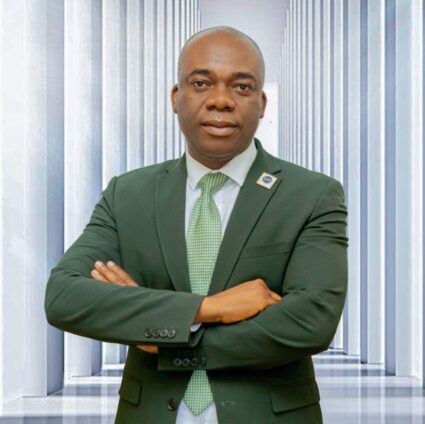
Speaking about the new curriculum, the Director-General of the National Council for Curriculum and Assessment (NaCCA), Prof. Yayra Dzakadzie, said, “The new curriculum is very transformative and designed to shape the next generation of Ghanaian leaders.
"The new curriculum is not just an update but a groundbreaking shift towards equipping learners with the essential skills needed to succeed in the fast-paced modern world.
"At the heart of the curriculum lies a commitment to nurturing critical thinking, fostering creativity, and honing problem-solving abilities,”
He further explained that this is the first time that Ghana has developed a Senior High School Curriculum that focuses on Shared Ghanaian values, attempting to educate a generation of Ghanaian youth who would love and be proud of our country as well as contribute effectively and efficiently towards its development.
The curriculum implementation will commence at the beginning of the 2024/25 academic year, and it is expected to redefine the future of Ghana’s education.
Latest Stories
-
Awaken to the North Mission combines faith, sport and community development in Lonto
25 seconds -
AFCON 2027Q: Somalia, Niger to play home matches at Accra Sports Stadium as CAF clears facility
3 minutes -
Opare Addo says youth programmes are preparing Ghanaians for global opportunities
6 minutes -
ADB Ghana Medicals leads engineering works, joins donor partners for $100m Otumfuo Cancer Centre
11 minutes -
Afenyo-Markin warns of NDC misinformation and disinformation strategy ahead of 2028 elections
16 minutes -
Rhythms on Da Runway returns on 28th November with 16th edition
32 minutes -
Zonda Tech expansion shows 24-hour economy taking shape – Mahama
42 minutes -
US Embassy brings World Cup winner Amy Griffin, Kofi Sarkodie to empower Ghana’s female coaches
42 minutes -
Sam Okudzeto faults AG for lack of consultation on proposed Standard Board Bill
43 minutes -
Report anyone demanding money for school placement – Education Ministry
46 minutes -
Over 100 CSOs, labour groups demand binding law and timelines for constitutional reforms
50 minutes -
Minister for Youth Development urges Russia to expand Ghana partnership to rural communities
1 hour -
Mahama says 80% of DACF will go directly to district assemblies to accelerate development
1 hour -
Adisadel College 2002 Year Group launches GH¢4.6m clean water legacy project
1 hour -
GHIPO moves to secure global protection for Ghana’s Akpeteshie
1 hour