

Audio By Carbonatix
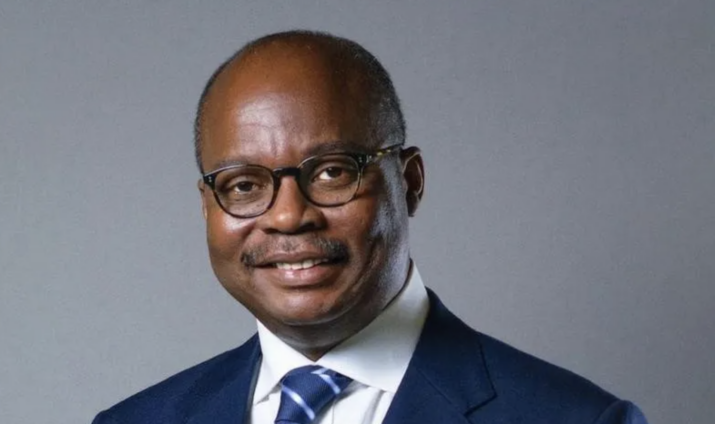
Governor of the Bank of Ghana (BoG), Dr Ernest Yedu Addison, has firmly dismissed claims linking the central bank’s independence to the government’s debt exchange programme.
Speaking on Joy News’ PM Express Business Edition on January 2, he clarified that the debt exchange program was a direct response to a severe national crisis and had no bearing on the autonomy of the BoG.
“The debt exchange programme has nothing to do with the independence of the central bank,” Dr Addison stated unequivocally.
He described the programme as a “pure crisis issue,” stressing its urgency during a time when Ghana was on the brink of economic collapse.
“It was a life-and-death matter for all Ghanaians. At that point, nothing else mattered. Salaries were not going to be paid. There was going to be chaos because nobody was getting their investment returns,” he said.
Drawing comparisons to Sri Lanka’s economic collapse, Dr Addison highlighted the role of the BoG in averting a similar fate for Ghana.
“In Sri Lanka, the central bank could not step in because they had run out of foreign exchange reserves. In the case of Ghana, we were lucky that we still had reserves,” he noted.
Responding to questions about the economic shocks that led to the debt exchange program, Dr Addison explained that the BoG’s involvement was not a shock but rather a solution.
“The IMF’s approach to the crisis was clear: the Bank of Ghana had to continue financing the government to maintain stability while we worked on the program,” he said.
He elaborated on the timeline, stating that the IMF’s prescribed solution involved declaring a debt standstill, followed by a debt exchange.
“At that point, those holding government instruments were the ones impacted. What happened in October during the debt standstill could have happened much earlier in the year, but it would have been disorderly without the appropriate policies in place,” Dr Addison explained.
The governor pushed back against suggestions that the BoG could have done more to minimize the economic shocks.
“This was the solution given the situation the country found itself in,” he said, adding that the measures implemented were necessary to stabilise the economy and prevent a total breakdown.
Dr Addison also rejected the idea that the central bank’s independence was compromised during the crisis, reiterating that its actions were aligned with the IMF’s framework to restore stability.
Dr Addison’s remarks reflect his commitment to addressing misconceptions about the BoG’s role in the debt exchange program.
By emphasising the program’s crisis-driven nature, he sought to shift the focus from questions of independence to the broader context of Ghana’s economic recovery.
“The recent economic challenges were about survival. Let’s not oversimplify the situation,” he concluded.
Latest Stories
-
BSIFF 2026 brings four days of African cinema to Kumasi
2 minutes -
Krachi East Assembly hails Zoomlion’s IRECOP intervention at Yabram
4 minutes -
No criminal charges in death of black Mississippi teenager, grand jury says
5 minutes -
Parliamentary Sanitation Committee impressed by Zoomlion IRECOP progress in Oti Region
5 minutes -
Protect strategic assets, prioritise local ownership in PPPs – Hassan Ayariga
6 minutes -
NSMQ and Science Digest Show: A partnership advancing science and health education in Ghana
8 minutes -
MSDA President calls for national political heritage centre in Saltpond
10 minutes -
Four dead after powerful Typhoon Dujuan lashes Japan
10 minutes -
Frequency, magnitude of recent drug trafficking cases worrying – Security analyst
13 minutes -
Autopsy shows Hayden Panettiere died from a drug overdose
15 minutes -
Ghanaian interest comes first in 2027 Budget – Dr Ato Forson
21 minutes -
Government must answer how 80 bags of cocaine passed through Ghana’s ports – Miracles Aboagye
41 minutes -
Ghana Women’s Movement announces protest over alleged intimidation of women
43 minutes -
‘I was waiting for the list to believe my Black Stars call-up was real’- Ronald Donkor
46 minutes -
Mahama has ordered NACOC back into port container inspections – Tanko-Computer
49 minutes