

Audio By Carbonatix
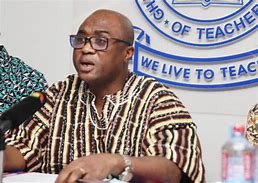
The General Secretary of the Ghana National Association of Teachers (GNAT), Thomas Musah, has welcomed the proposal to cover academic user fees for first-year tertiary students but has expressed concern about sustainability.
While he acknowledges the benefits of easing the financial burden on students and parents, he warns that the country’s stretched education budget may not be able to bear the weight of such an initiative without careful planning.
Speaking on JoyNews’ AM Show, he recognised the proposal by Haruna Iddrisu, the Minister of Education nominee, as a step in the right direction, offering much-needed support for new students.
However, he stressed that while the idea is commendable, the reality of financing it could pose significant challenges for the already fragile national budget.
"While it's a great move for students, we need to ask ourselves: how much do we actually have to fund these initiatives?" he asked, underscoring the importance of a sustainable funding strategy.
He highlighted the ongoing financial struggles within the education sector, including arrears owed to the West African Examinations Council (WAEC), unpaid bills to school feeding suppliers, and long-overdue payments to food vendors in Senior High Schools (SHS).
To make matters worse, capitation grants have been in arrears for over two years, raising serious concerns about the government's ability to meet its educational commitments.
Mr Musah also pointed to the need for a broader, more long-term strategy to secure reliable funding for education in Ghana, something GNAT has long advocated for but has yet to see fully implemented.
Without this, he warned that any effort to support first-year students could be short-lived and add even more strain on the system.
Mr Musah agreed that paying first-year university students’ fees is a positive development, and emphasised that its success hinges on the government’s ability to secure sustainable funding.
"Without a solid financial plan, the initiative could face significant challenges and deepen the financial pressures already plaguing the education sector" he concluded.
Latest Stories
-
JoyNews-Republic Bank Habitat Fair finale turns homeownership dreams into real possibilities
12 minutes -
Bamiri chief commissions KG block, guest house to boost education and revenue
29 minutes -
NSMQ 2026: Yaa Asantewaa Girls’ going ‘beck’ to Tanoso after Bishop Herman deals them early exit
53 minutes -
Data Protection Commission acquires two vehicles to strengthen data protection enforcement
1 hour -
NSMQ 2026: Holy Child School storms back from two-year NSMQ absence to book One-Eighth ticket
3 hours -
GNFS dismisses reports of unpaid 2025 rent allowance
4 hours -
Gordon Asare-Bediako steps down from NPP Communications Director race, backs Dennis Aboagye
4 hours -
GES dismisses requirement for newly promoted teachers to submit documents for salary adjustments
4 hours -
Meko Bono 2026: Vice President pledges agricultural revival as Atebubu hosts grand homecoming
5 hours -
Russian skydiver Sergey Boytcov sets world record with 11,551-metre stratosphere jump
5 hours -
Ablakwa-led committee submits five reports to Mahama ahead of 2027 AU chairmanship
5 hours -
Africa not seeking Western cash in reparations campaign – Ablakwa
5 hours -
Production decline, reserve depletion threaten Ghana’s upstream sector – Jinapor
6 hours -
Surveyors caution against treating compensation disputes as professional misconduct
6 hours -
Mahama calls for AU dialogue on migration after South Africa xenophobic tensions
6 hours