

Audio By Carbonatix
An initiative to connect 300 million Africans to electricity in the next six years has won new pledges worth more than $8 billion from lenders including the Islamic Development Bank and the Asia Infrastructure Investment Bank.
The Mission 300 initiative, launched by the World Bank and the African Development Bank in April, is projected to cost $90 billion. Its implementation faces challenges because the economies of countries in the region are severely constrained, mainly due to sluggish revenue and high debt service costs.
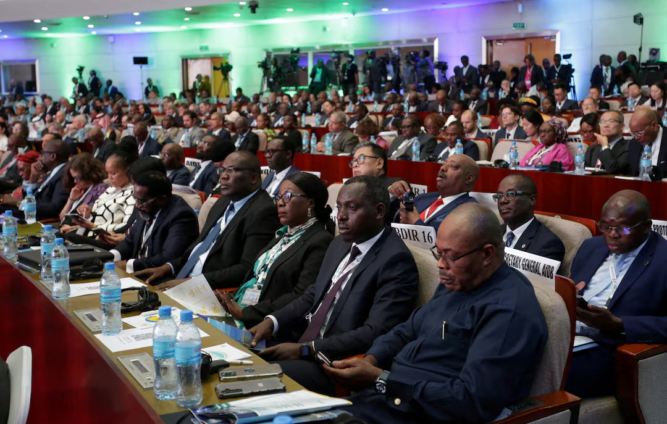
"Our national balance sheets are insufficient... to achieve Mission 300's objectives," Zambian President Hakainde Hichilema told an Africa energy summit in Tanzania.
Funding for the project is expected to come from multilateral development banks, development agencies, private businesses and philanthropic organisations such as the Rockefeller Foundation, opens new tab, which is part of the initiative.
Muhammad al Jasser, chairman of the IsDb, said in a statement released during the summit that ended on Tuesday that the Jeddah-headquartered bank was committing $2.65 billion in project financing and another $2 billion to insure power projects in Africa.
Beijing-based AIIB is set to provide $1-1.5 billion in financing.
"Six hundred million people in Africa without access to electricity is intolerable," said AIIB President Jin Liqun.
Others funding the project include the French Development Agency (AFD), which committed to providing 1 billion euros ($1.04 billion), and the OPEC Fund for International Development, which made an initial commitment of $1 billion, the AfDB said in a closing statement.
The additional finance builds on commitments of up to $48 billion from the World Bank and the AfDB, officials at the summit said. The two organisations' contributions could be increased during implementation, they said.
Provision of 300 million people with access to electricity, half of those currently without power on the continent, is a crucial building block for boosting Africa's development by creating new jobs, said World Bank President Ajay Banga.
Half of the targeted new connections will get electricity from existing national grids, officials said at the summit, while the other half will be from renewable energy sources, including wind and solar mini-grids.
Apart from lighting up homes and businesses, Mission 300 is expected to boost the provision of clean cooking energy to homes, cutting reliance on wood and charcoal which are harmful, said Tanzania's president, Samia Suluhu Hassan.
Latest Stories
-
‘He always comes to our aid’ – Fr. Campbell recounts Bawumia’s support for Church, poor
6 minutes -
Remittances drop marginally year-on-year to US$3.65bn in half-year 2026
25 minutes -
T-bills: Government exceeds target by 139%, interest rates tumble
27 minutes -
Why Chelsea need more than a new goalkeeper to be title challengers
32 minutes -
Outlook of Ghana’s external sector remains positive for second-half of 2026 – BoG
34 minutes -
Prisoners freed early are returning to jail at rapid rate, governors tell BBC
36 minutes -
Two charged after €2.3 million worth of drugs seized in Dublin
42 minutes -
Head teacher evacuated 900 children minutes before Nepal floods hit school
42 minutes -
Chelsea beat Brithon in seven-goal thriller to maintain perfect start
49 minutes -
Fernandes hat-trick helps Man Utd recover to beat Ipswich
54 minutes -
Former Agriculture Minister Ibrahim Adam passes on
55 minutes -
“A giant leap forward”: Nasa launches powerful new space telescope to explore mysteries of the Universe
59 minutes -
Eight killed and others missing after ferry capsizes off northern Cyprus
1 hour -
Education Ministry reschedules 2026/27 CSSPS results to September 4
1 hour -
Trump says US will refill Strategic Petroleum Reserve using Venezuelan oil
1 hour