

Audio By Carbonatix
As an advocate for menstrual health and gender equity, I commend the Ghanaian government for allocating GH¢292.4 million in the 2025 budget to provide free sanitary pads to female students in primary and secondary schools.
This is a significant step in addressing period poverty, reducing school absenteeism, and ensuring that no girl is forced to stay home simply because she cannot afford menstrual hygiene products.
At Alive Today, a youth-led non-profit organisation, we have been distributing free sanitary pads to schools across Ghana for years. We have seen firsthand how a simple pack of sanitary pads can restore a girl’s confidence and keep her in school. While we welcome this initiative, we must ensure that its implementation is inclusive, decentralised, and sustainable.
One of our biggest concerns is the risk of urban bias in distribution. Too often, well-intentioned programs concentrate resources in cities while rural and underserved communities are left behind. A needs-based, community-driven model is essential to ensure that every girl, regardless of location, has access to sanitary products.
At Alive Today, we believe that collaborating with civil society organizations (CSOs) and community-based groups is the best way to achieve this. These organisations have the experience, networks, and deep-rooted connections to ensure equitable distribution, especially in hard-to-reach areas.
Another critical aspect we must consider is sustainability. As we provide free sanitary products, we cannot ignore the environmental impact of single-use plastic pads. We urge the government to promote biodegradable and reusable sanitary products where possible. Sustainable options not only reduce plastic waste but also provide long-term solutions for girls who may struggle to access disposable pads regularly.
Beyond sustainability, we must also think about local production. A long-term strategy that invests in young Ghanaian entrepreneur in the menstrual hygiene sector will create jobs and boost our economy. Instead of relying on imported products, let us build local capacity to produce eco-friendly sanitary solutions for our girls.
Alive Today stands ready to work with the government, development partners, and other stakeholders to ensure the success of this initiative. If done right, this program can transform menstrual health management in Ghana, ensuring that no girl is forced to miss school because of her period.
We look forward to meaningful engagement and action that will make this initiative not just a short-term intervention but a lasting solution to period poverty in Ghana.
********
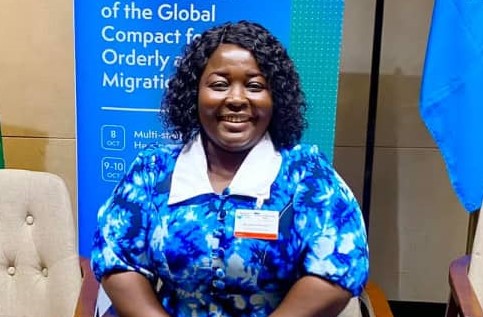
Sandra Teiko Lewu, Executive Director, Alive Today
Latest Stories
-
Too early to say if Iran involved in Dubai-Tel Aviv flight attack, Israeli PM says
4 minutes -
Ghana’s trade surplus shrinks by 70% to US$1.3bn in quarter 2, 2026 – GSS
7 minutes -
KMA orders traders and garage operators to vacate Abrepo ahead of Suame Interchange works
8 minutes -
Ankrah’s removal should not end accountability over World Cup visa controversy – Ekow Assafuah
9 minutes -
You have 24 hours to vacate – AMA Mayor warns squatters after Avenor fire outbreak
11 minutes -
Western Region teacher unions reaffirm strike over unpaid allowances and promotion concerns
14 minutes -
Prof. Emmanuel Sarpong replaces Yaw Ampofo Ankrah as National Sports Authority boss
18 minutes -
Agric Committee in Parliament calls on Finance Minister to fund timely completion of Farmers Service Centres
20 minutes -
GABET raises concerns over teacher training and resources for new SHS curriculum
22 minutes -
Daily Insight for CEOs series
31 minutes -
Government moves to make public institutions buy from Ghanaian farmers
35 minutes -
Diesel price to remain below GH¢20 per litre in October after government intervention – NPA
39 minutes -
Yaw Ampofo Ankrah suspended as NSA Director-General amid World Cup visa controversy
44 minutes -
SSNIT increases stake in Societe Generale Ghana to 24.36%
59 minutes -
Africa cannot rely on government budgets alone to finance climate ambitions – Deputy Finance Minister
1 hour