

Audio By Carbonatix
Across sub-Saharan Africa, including Ghana, the true burden and scale of sepsis remain masked owing to inadequate to no documentation of cases.
Sepsis is a life-threatening condition in which the body's response to an infection attacks its own tissues and organs, yet there are no accurate data to effectively allocate resources and develop treatment protocols.
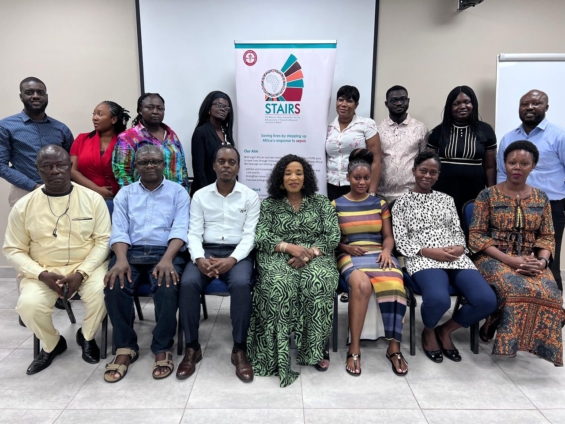
The Sub-Saharan Consortium for the Advancement of Innovative Research and Care in Sepsis (STAIRS) is placing an urgent call on stakeholders to seek targeted interventions and policy changes to combat sepsis in Ghana and across the region.
Over fifty million people with infections progress to sepsis, of which eleven million are unable to survive.
Sepsis is a disease condition in which the body’s response to infection is so extreme and rigorous that it starts to damage or harm itself or organs of the body.
Normal infections like malaria or diarrhea can progress into sepsis and can damage the brain, lungs, kidneys and the immune system.
According to Dr. John Adabie Appiah, Principal Investigator of Sub-Saharan Consortium for the Advancement of Innovative Research and Care in Sepsis (STAIRS), the compounded effects of sepsis are borne by low-income countries.

"The burden of the affected rests on low-resource countries like Ghana. We are bearing the most brunt and our health care is weak to handle such cases. We need to have the resources to be able to manage the organ that's failing. If the kidney is failing, you'd need machines that can sustain the person’s life in the process of treatment. So it’s important that we gather as stakeholders and citizens to deliberate on this and come up with solutions,” he said.
Without accurate data, hospital managers, doctors, nurses, and policymakers struggle to allocate resources, develop treatment protocols, and address the crisis effectively.
STAIRS aims to conduct high-quality research addressing critical knowledge gaps in the epidemiology, diagnosis and quality care of patients hospitalized with sepsis in resource-constrained settings of the region.
Speaking at a sepsis capacity-building event in Kumasi, Dr. Adabie Appiah indicated that the research will help bridge documentation and information gaps of sepsis conditions.
“The data WHO relies on is modelling data to conclude or estimate. For us to understand the magnitude of the problem, we need to start counting so we can reliably refer to the numbers. It even helps hospital managers, doctors and nurses and policy makers to understand and out resources as needed, come up with protocols and guidelines on how to treat sepsis well. Even in the community, we would know the level of burden, the section of population etc, to determine the next step of action,” he said.
The STAIRS forum assembled health care practitioners, pharmacists and media personnel.
Regional Vice Secretary of the Chemical Sellers Association, Gladys Appiah Badu, says the awareness and training will inform their operations, especially over-the-counter pharmacies.

“I believe this education is as essential as our operations. Now I have realized I don’t have to entertain a customer who is unresponsive to a trace of treatment. The best way now is to refer them to seek care at the hospital. This topic is new, and I have learned a lot,” she said.
Participants were introduced to power relations and governance for health, legal empowerment, citizen-led advocacy in health, publicity and media advocacy – practical approaches, health rights related to sepsis prevention, recognition and management, building and sustaining national-level “fight-sepsis” campaigns.
Latest Stories
-
Finance Minister advises African governments to strengthen regional tax cooperation
37 minutes -
NPP accuses NDC of master-minding demolition of Ho regional office fence
37 minutes -
Ghana plans stronger regional power trade with Nigeria
38 minutes -
GRA Commissioner-General calls for stronger tax cooperation to boost regional revenue mobilisation
38 minutes -
NACOC needs more personnel to tackle drug trafficking – Toobu
42 minutes -
Railway workers resist KMA eviction order, demand consultation
44 minutes -
Legacy Leadership Africa Institute to host boardroom women’s leadership programme
56 minutes -
Ghana needs a law to sustain constitutional reforms – CDD-Ghana
4 hours -
COVID fumigation audit: Auditor-General has a lot of questions to answer – Akwatia MP
4 hours -
Stranded Ghanaian medical graduates in Cuba appeal to Mahama for immediate return
4 hours -
GNFS contains fire outbreak at Teshie Lekma Road near Lekma Hospital
10 hours -
Samia Nkrumah rejects the narrative that Ghanaians were happy after Nkrumah’s overthrow
12 hours -
A Mother’s pain: Tribute by Ivan Baidoo’s mother
12 hours -
‘Forgive us for staying away’ — Samia Nkrumah leads family back to Nkroful, pledges to preserve Nkrumah’s legacy
12 hours -
Ernest Nuamah scores twice as Lyon beat Rennes
12 hours