

Audio By Carbonatix
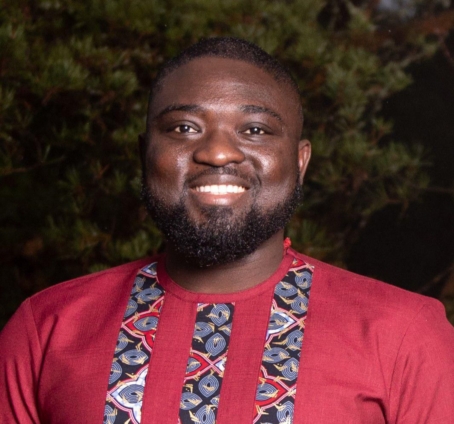
In the evolving global energy landscape, hydrogen is increasingly being explored as a clean alternative to fossil fuels. Among the many researchers contributing to this field is Dr. Eric Komla Fangnon, a Ghanaian scientist who has advanced technical knowledge in the field of hydrogen-material interactions and structural engineering — work that could eventually support the growing energy and infrastructure needs of West Africa.
Now based at the Technical Research Centre of Finland (VTT), Dr. Komla recently received the Best Doctoral Thesis Award (2025) from Aalto University in recognition of his rigorous and impactful research on hydrogen embrittlement in modern high-strength steels — a critical topic for ensuring material safety in hydrogen storage and transport systems.
Academic Path and Technical Contributions
Dr. Komla’s academic path began at Tema Technical Institute in 2006, where he trained in Mechanical Engineering Craft Practice. He later attended Accra Technical University in 2011, continuing his focus on practical engineering disciplines. In 2015, he moved to Finland to pursue a Bachelor of Engineering at Vaasa University of Applied Sciences, followed by a Master of Science and Doctor of Science at Aalto University, one of Finland’s most prominent technical institutions.
While at Aalto, he also served as a Teaching Assistant, supporting courses in mechanics and materials science — a role that further deepened his engagement with both academic and applied engineering research. Dr. Komla’s doctoral dissertation, titled "Evaluation of Hydrogen Embrittlement Effect on Mechanical Strength of Modern Martensitic High Strength Steels: Experimental Analysis and Artificial Neural Network-based Prediction", sought to understand how hydrogen affects the durability of steels used in energy systems.
He focused on hydrogen embrittlement (HE) — a phenomenon where hydrogen atoms penetrate steel and weaken it, sometimes leading to catastrophic failure. His research combined experimental testing with machine learning models, enabling improved prediction of hydrogen-induced degradation in impact-resistant martensitic steels. To support this work, he developed and used custom-built thermal desorption spectroscopy (TDS) equipment integrated with cryogenic chambers, allowing for highly sensitive measurements of hydrogen concentration in metallic samples.
This setup enhanced the accuracy of desorption analysis, offering insights into hydrogen trapping and diffusion behaviors under various loading and thermal conditions. One of his key contributions was to show how grain morphology and retained austenite structures influence susceptibility to hydrogen embrittlement — knowledge that is highly relevant for designing safer pipeline, automotive, and pressure vessel materials.
Research Involvement and Broader Impact
Since the start of his PhD in 2019, Dr. Komla has co-authored over 16 scientific publications and has an H-index of 7, reflecting his growing recognition in the field. He has contributed to several collaborative Nordic and European research projects, where his role involved both hands-on experimentation and broader technical coordination. In the Hydro-Real project (2020–2024), funded by the European Commission, Dr. Komla with other scientists studied the role of retained austenite in hydrogen uptake, diffusion, and embrittlement in industrial-grade steels.
He is also part of Mathias and Hydromat, two ongoing Nordic and Finnish projects, respectively, where he contributes to understanding and developing coatings for hydrogen permeation barriers in steel. Additionally, he supports training and technical development within the H2SIIP project at Aalto University, which focuses on safety procedures and hydrogen infrastructure standardization. Earlier in his career, Dr. Komla was involved in the ISA-Aalto and TUTL-QUCAM projects, leading experimental setups for hydrogen charging and spectroscopic analysis — efforts that laid the groundwork for many of his current technical insights. His involvement in these consortia reflects his ability to contribute meaningfully within multidisciplinary teams addressing hydrogen's role in energy systems.
Relevance to West Africa’s Energy Goals
Although based in Finland, Dr. Komla remains closely connected to the African scientific community. He has emphasized, in forums such as the 2024 IEC (International Electrotechnical Commission) Conference, the importance of developing hydrogen-compatible infrastructure and the need for standardized testing frameworks — elements essential to establishing a safe and scalable hydrogen value chain in Africa. In 2017, he co-founded Computer Aided Engineering Africa (CAE-Africa), an initiative aimed at strengthening local capacity in design, simulation, and modern manufacturing techniques.
Through this platform, he has supported students and early-career engineers from Ghana and neighbouring countries in gaining practical exposure to tools that are often inaccessible in under-resourced institutions. Looking Ahead, Dr. Komla’s ongoing research at VTT continues to explore the challenges of hydrogen-material compatibility, focusing particularly on steels and their performance under mechanical loads and hydrogen exposure. His unique academic trajectory — from technical training in Ghana to cutting-edge research in Europe — positions him to bridge advanced scientific methods with the practical needs of developing countries aiming to enter the clean energy transition.
As a leading expert in hydrogen-material interactions, Dr. Eric Komla Fangnon has established himself at the forefront of global hydrogen research, driving advancements critical to the clean energy transition.
His pioneering work on hydrogen embrittlement, recognized through prestigious awards and extensive publications, has set new standards for material safety in hydrogen storage and transport systems.
Leading high-impact projects at the Technical Research Centre of Finland (VTT) and fostering scientific collaboration through initiatives like CAE-Africa, Dr. Komla’s expertise bridges advanced research with practical applications, positioning him as a key influencer in shaping sustainable energy solutions worldwide, particularly for the Global South.
Latest Stories
-
Nana Kwaku Bonsam appeals to Mahama, Ablakwa for help to faciliate his US travel for skin graft
4 minutes -
Baffour Awuah arrested after surrendering to EOCO
6 minutes -
Baffour Awuah cooperating with investigators after surrender and arrest – EOCO
25 minutes -
Destruction of aspirants’ posters breaches democracy—Ashanti NPP Communications Director
35 minutes -
BNI investigates Ampofo Ankrah over alleged $623,000 World Cup visa scheme
47 minutes -
NPP National Delegates Conference: Police announce road closures, diversions around Baba Yara Stadium
55 minutes -
Agric Committee demands financing plan for Pwalugu Irrigation Project before 2027 Budget
57 minutes -
Minority calls for the immediate suspension of Ghana-Colombia maritime agreement
1 hour -
Ghanaian professional Sydney Hushie appointed UNFPA Chief of Digital Centre of Excellence
1 hour -
GHS urges health managers to use community scorecards to improve healthcare delivery
1 hour -
Ekyeamamfrom-Pivot irrigation project 90% complete but stalled over unpaid certificates
1 hour -
When the Gavel speaks, where is the choir that once sang for Wontumi?
1 hour -
NPP does not need a new chairman: It needs a brand architect
1 hour -
GNFS contains fire at Avenor North Industrial Area in Accra
1 hour -
NITA appoints Anthony Owusu-Ansah as Acting Deputy Director-General
2 hours