

Audio By Carbonatix
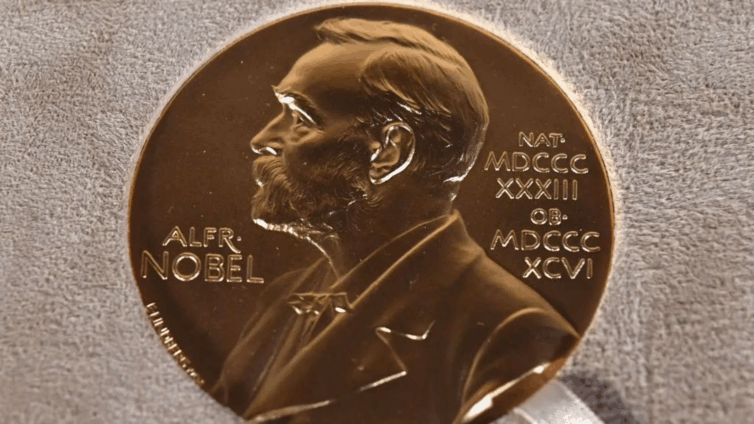
The Nobel Prize in Physiology or Medicine 2025 has been awarded for discoveries that explain how the immune system attacks hostile infections, but not the body's own cells.
The prize is shared by Japan's Shimon Sakaguchi and US researchers Mary Brunkow and Fred Ramsdell.
They discovered "security guards" that eliminate parts of the immune system that could attack the body.
Their work is being used to develop new treatments for autoimmune diseases and cancer.
The winners share a prize fund worth 11m Swedish kronor (£870,000).
"Their discoveries have been decisive for our understanding of how the immune system functions and why we do not all develop serious autoimmune diseases," says Olle Kämpe, chair of the Nobel Committee.
The trio's research is critical to understanding how the immune system works – how does it protect us from thousands of different infections that are trying to invade the body? But, at the same time, leaves our own tissues unscathed?
Our immune system uses white blood cells that look for signs of infection – even viruses and bacteria that it has never met before.
The cells use sensors – called receptors – that are made randomly in a quadrillion different combinations.
This gives the immune systems the capability to attack a wide variety of invaders, but the randomness of the process inevitably makes white blood cells that can attack our body.
Scientists already knew that some of these problematic white blood cells were destroyed in the thymus – where white blood cells mature.
The Nobel prize this year goes to the discovery of regulatory T-cells – known as the immune system's security guards – which travel the body to disarm any other immune cells attacking the body.
We know this process fails in autoimmune diseases like type-1 diabetes, multiple sclerosis and rheumatoid arthritis.
The Nobel panel added: "The discoveries have laid the foundation for a new field of research and spurred the development of new treatments, for example for cancer and autoimmune diseases."
In cancer, the regulatory T-cells stop the body from fighting the tumour so research is focused on reducing their numbers.
In autoimmune diseases, trials are looking at boosting regulatory T-cells so the body is no longer being attacked. A similar approach could also be effective in reducing the risks of an organ transplant being rejected.
'Striking'
Prof Shimon Sakaguchi, from Osaka University, Japan, performed experiments on mice which had their thymus removed to make them develop autoimmune disease.
He showed that injecting immune cells from other mice could prevent the disease – suggesting there was some system for preventing immune cells attacking the body.
Mary Brunkow, from the Institute for Systems Biology in Seattle, and Fred Ramsdell now at Sonoma Biotherapeutics in San Francisco, were exploring an inherited autoimmune disease in mice and people that led to the discovery of a gene important for how regulatory T-cells function.
Professor Annette Dolphin, president of the UK's Physiological Society, said: "Their pioneering work has revealed how the immune system is kept in check by regulatory T cells, preventing it from mistakenly attacking the body's own tissues.
"This work is a striking example of how fundamental physiological research can have far-reaching implications for human health."
Latest Stories
-
Education Ministry commends Ghanaian teachers on World Teachers’ Day 2026
2 minutes -
NPP can reconcile with aggrieved members who want to return – Nana Akomea
14 minutes -
Tamale Child Deaths: Vehicle owner arrested as IGP deploys homicide team
29 minutes -
From ShattaFest to MoMo Fest: Entertainment takes centre stage in youth engagement
35 minutes -
Nigerian military aircraft crashes, killing 32
40 minutes -
MTN encourages Ghanaians to use MoMo for saving, investing and financial planning
40 minutes -
Absa Bank Ghana names Stephen Ato Frimpong as Board Chair
48 minutes -
Pickford ‘almost caused crash’ with careless driving
50 minutes -
Author and former politician Jeffrey Archer dies aged 86
1 hour -
No education reform can succeed without teachers – Education Ministry
1 hour -
Gauff condemns racist abuse after China Open win
1 hour -
Medvedev disqualified for hitting spectator with ball
2 hours -
Oliseh scores twice in late comeback win for France
2 hours -
Pentagon stops using Anthropic AI tools after blacklisting company, BBC told
2 hours -
From despair to dance: Family of nurse Salomey Baffoe rejoices after GH¢100k bail granted
2 hours