

Audio By Carbonatix
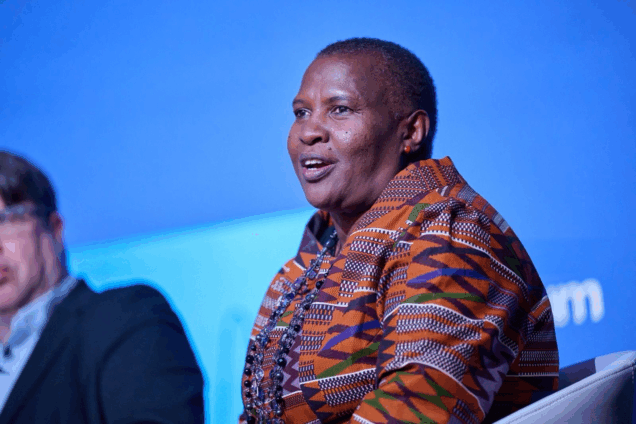
AGRA President Alice Ruhweza says artificial intelligence (AI) is a defining force that is already reshaping the future of the agricultural sector, and Africa must be at the forefront of that.
Speaking on the sidelines of the World Economic Forum in Davos, Switzerland, she said, “AI is the big subject. And AI for agriculture and AI for food have been in many discussions. I think the future of food systems will be very much technology- and data-driven.
In many panels I attended, we kept talking about the need to embrace this. It is coming,’ she said.
Ms Ruhweza, however, cautioned that while AI will transform food systems, its value will ultimately depend on how equitably and practically it is applied.
“We need to make sure that when it comes, the benefits are spread. And that everybody understands it. But importantly, it solves the problem. Because we don’t want farmers to adopt AI unless it solves a problem,” she said.
The AGRA president identified access to financing and decision-making information as two areas of the food system where AI could help improve. “We want to make sure AI makes access to information easier. It makes credit scoring easier for women farmers who need access to finance,” she said.
“We need to make sure that the regenerative agriculture that we want to introduce, that we are getting the data that we need that tells us these are the farming practices that we need to do.
"So, I think the future of food systems will be data-driven. But that future is in Africa,” the AGRA President added.
The World Economic Forum's Annual Meeting 2026 in Davos, Switzerland, was under the theme “A Spirit of Dialogue.”
World leaders from government, business, civil society and academia convened to engage in forward-looking discussions to address global issues and set priorities.
The conversations about artificial intelligence gained traction at the meeting. The world’s richest man and Tesla CEO, Elon Musk, argues that if AI, robotics, and solar power are deployed more broadly, they could unlock an era of unprecedented global abundance.
“If you have ubiquitous AI that is essentially free or close to it and ubiquitous robotics, you will have an explosion in the global economy that is truly beyond all precedent,” he said.
He said robots could perform industrial tasks, care for ageing populations and support families, addressing labour shortages while lowering costs.
Latest Stories
-
GES threatens removal of SHS heads over illegal fees
3 minutes -
Youth power to explode at 2026 Global Changemakers Summit in Accra
10 minutes -
SIU community remembers Kofi Akamani at vigil as memorial fund is announced
11 minutes -
Shot and killed in the US: Who was Dr Kofi Akamani?
20 minutes -
Sosu challenges EOCO’s basis for attempted arrest of Manhyia South MP
26 minutes -
KMA plans to convert Adum railway enclave into cargo truck terminal
28 minutes -
2026/27 cocoa season: COCOBOD engages international trading partners in London
45 minutes -
Fire contained at Dansoman’s Dayspring School, no casualties reported
49 minutes -
Nyankyerenease gets furnished CHPS compound to improve healthcare access
59 minutes -
Sky Train trial moves to defence as Asamoah, Ameyaw-Akumfi file witness statements
1 hour -
AFCON 2027Q: Ghana will face Ivory Coast, Gambia unscathed – Sports Minister
1 hour -
Heavy security at Accra High Court ahead of Salomey Baffoe bail hearing after EOCO’s attempted arrest of Manhyia South MP
1 hour -
Teen rocker Nene Royal becomes first Thai to win America’s Got Talent
1 hour -
Skills Bridge Ghana Foundation trains 50 professionals in solar energy
1 hour -
Photos: Mahama Ayariga inspects waste evacuation exercise at Agbogbloshie
1 hour