

Audio By Carbonatix
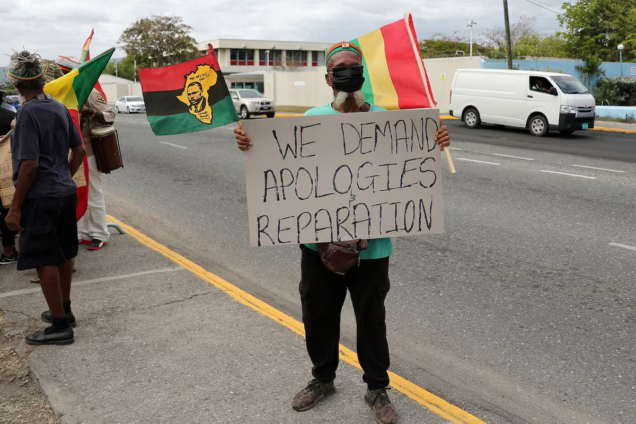
Yaw Nsarkoh has thrown cold water on growing optimism around reparations, challenging advocates to clearly explain how Africa intends to secure what some describe as “cool cash.”
Speaking on Joy News’ PM Express on Tuesday, the business executive and former Unilever Executive Vice President questioned the practicality of expectations surrounding financial reparations.
“Well, they should show us the route to that cool cash,” he said, warning that without clarity, the campaign risks becoming detached from reality.
“If we are not careful, this becomes an escapist route.”
Mr Nsarkoh acknowledged the moral basis of the argument for reparations, but he insisted that moral clarity alone is not enough.
“But then you must also place what we are trying to do in the real world.”
He raised fundamental questions about beneficiaries and feasibility.
“To whom, as the return from reparations go, why shouldn’t it be given to the people in the diaspora, who, in a sense, were the most dislocated?”
He also questioned whether the targeted economies, saying, “Are the economies that we are demanding this from, even in a position to pay those sorts of monies that we are talking about?”
For him, the campaign lacks precision.
“So what exactly the reparations campaign wants needs to be articulated much better.”
He argued that engagement could go beyond cash transfers.
“There are different ways in which you can structure things so that you benefit from knowledge systems and so on.”
However, he dismissed the idea of a financial windfall.
“But to merely, as one person said to me, sit down and think that there’s a box of money that is going to be handed over you so you build handed over to you, so that you build railways and so on, is, in my view, in 2026 exceedingly utopian.”
While noting the support the agenda enjoys across parts of Africa, he cautioned against reducing the debate to price tags.
“If it becomes this neoliberal discussion about, how have you been putting the price tag?”
He questioned the logic of attaching monetary value to historical trauma.
“You went through the humiliation of disruption, and your people were captured in tens of thousands. Who is going to sit down and say that, if you give me $50 million for that, that then solves the issue?”
Mr Nsarkoh said the conversation must broaden and mature.
“So they are very complex dimensions, and the reparation discussion itself must open up, become much more democratic, be willing to be challenged and contested.”
He also called for a reframing of the narrative around slavery and responsibility.
“We have now allowed, because the media has not properly harnessed the resources of true historians, to tell the story.”
“We have allowed the discussion around this thing to be about guilt tripping people in the diaspora, saying, you sold us.”
“This is a minority of people who were involved in indigenous slavery and who did this.”
He argued that reparations could instead drive cultural renewal and solidarity.
“There are many elements of the discussion on repatriations that can lead to cultural identity, more solidarity amongst people of Africa and people of African descent, tracing exactly what happened, what binds us.”
Ultimately, he said Africans must define their own path.
“And then the people of Africa must themselves articulate this is what we think is the way forward.”
Latest Stories
-
Israel-bound flight diverted after fight between pilots
13 seconds -
EchoWave earns praise for sound quality at 10th Women in Worship
10 minutes -
Crackdown on South Africa’s unsafe streets ordered by president to keep women safe
21 minutes -
Banks are responding to improved monetary policy conditions – John Awuah
41 minutes -
Judges’ conference forces further adjournment of Salomey Baffoe case to Oct. 5
52 minutes -
GRA assures Tullow of collaboration to settle $393m tax liability without disrupting its petroleum operations
1 hour -
South Korea demands apology from Pyongyang for landmine blasts that injured three
1 hour -
Carlos Queiroz not the sort of coach Black Stars need – Nii Lante Vanderpuye
2 hours -
AFCON 2027Q: ‘Our Black Stars team is gone’ – Former Sports Minister
2 hours -
Prof. Prempeh calls for public review of draft constitutional reform bills
2 hours -
AFCON 2027Q: ‘I have never seen a poor performance from Black Stars like against Gambia’ – Nii Lante Vanderpuye
3 hours -
Bawumia backs insurance sector reforms after engagement with IBAG
3 hours -
Nigeria set to launch National Digital Address System 9 years after Ghana showed the way
3 hours -
Policy rate decision takes time to reflect in lower lending rates – BoG
3 hours -
Polytanks Ghana supports GNFS with water storage tanks
3 hours