

Audio By Carbonatix
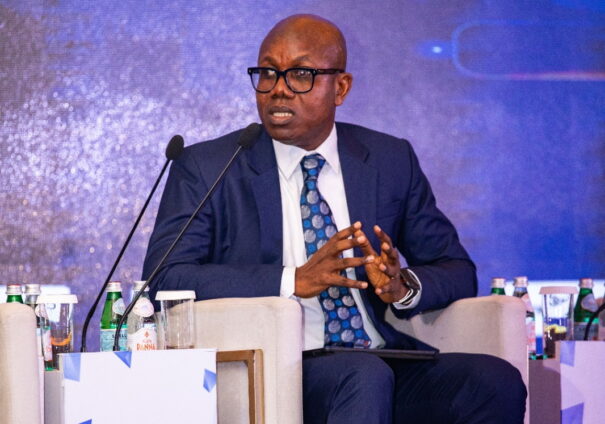
Accra — Technology leaders must move beyond “firefighting” and build systems and teams that endure beyond their tenure, Prudential Bank CIO Leopold L. L. Armah has said.
Speaking as a panellist at the Global CIO Summit – Ghana Edition 2026, Mr. Armah said the 24/7 nature of today’s digital environment is pushing CIOs and CISOs to their limits, and sustainable leadership is the only way to manage the pressure without burning out.
“Sustainable leadership is building people, systems and purpose that remain effective long after the leader has left the room,” he told delegates.
From operations to strategy
Mr. Armah noted that the CIO role has expanded far beyond managing infrastructure. Today’s technology leaders oversee digital transformation, cybersecurity, regulatory compliance, customer experience and emerging technologies like AI. With that expanded remit comes the risk of constant crisis mode.
He urged organisations to reward prevention, not just quick fixes. “Successful leadership is not about working endlessly; it is about leading sustainably and intelligently,” he said. “Stop rewarding firefighting and start rewarding prevention. ”
Balancing innovation with wellbeing
To avoid burnout, Mr. Armah called for a culture where balance is embedded, not delegated to Human Resources.
He said resilient teams, clear documentation and strong governance reduce dependence on any single person.
“If a key person leaves and operations fail, then sustainability has not yet been achieved,” he warned.
He also flagged the sustainability challenge posed by artificial intelligence. While AI drives efficiency and threat detection, it significantly increases energy and infrastructure demands.
“The conversation cannot only be about innovation — it must also be about responsible innovation,” he said, advocating for value-driven AI and efficient infrastructure.
Lessons for the wider economy
Drawing on banking’s experience, Mr. Armah said the sector offers lessons in operational resilience, governance and trust-building. However, he cautioned against the pitfalls of excessive bureaucracy and over-reliance on legacy systems.
Looking ahead, he said the CIO is evolving from a technical operator to a strategic business architect.
“Technology is no longer a support function; it is a primary engine of value creation,” he said.
The next generation of CIOs, he added, must combine visionary thinking, ethical leadership and the ability to influence beyond IT.
Mr. Armah argued that true legacy lies in what continues to thrive after a leader exits: “Legacy is not what leaders achieve alone; it is what continues to thrive because of the systems, culture and people they built.”
Latest Stories
-
Mahama’s proposed airline looks to South America, Caribbean as Ghana confronts mounting drug trafficking cases
7 minutes -
5% progress on Suame Interchange Phase One inadequate – Roads Minister tasks contractor to speed up work
10 minutes -
Photos: Vice President joins GAAS Awards to celebrate outstanding women leaders
11 minutes -
OSP vs Ken Ofori-Atta, SML and others: Court gives OSP four more weeks to serve Ofori-Atta with summons
13 minutes -
High Commission sends caution to Ghanaians in South Africa ahead of planned protests
16 minutes -
Okai Mintah outlines vision for NDC Youth Wing as he engages MMDCEs
21 minutes -
Mahama Ayariga leads renewed push for stronger local governance through partnerships
25 minutes -
NDC youth organiser aspirant Okai Mintah consults MMDCEs ahead of elections
26 minutes -
PHOTOS: Ayikuma Methodist Basic School wins National Juniors Challenge
28 minutes -
Silence has entered our homes : Salomey Awiti Bafoh and the chilling effect of free expression in Ghana
29 minutes -
UG Pro-VC calls for stronger research funding to curb brain drain
31 minutes -
Woman in critical condition after shooting at funeral grounds in Yeji
33 minutes -
Breast Cancer awareness must lead to action – Deputy Health Minister
36 minutes -
UK identified as leading destination for Ghana’s illicit cannabis exports – Report
37 minutes -
Drug money allegedly finances Ghana’s political parties and real estate – Global Organised Crime Index
42 minutes