

Audio By Carbonatix
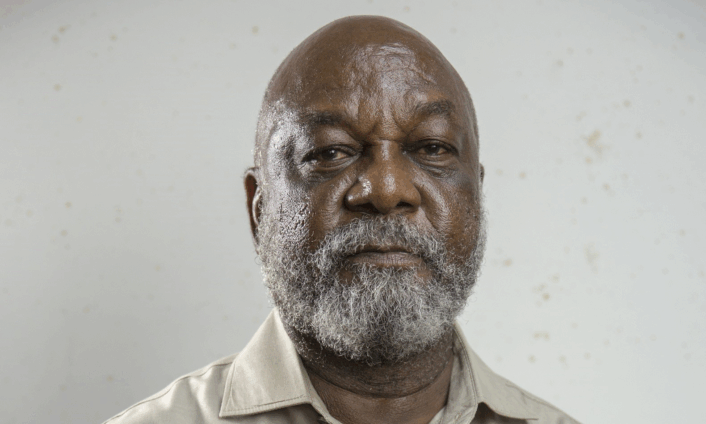
A former Executive Director of the Media Foundation for West Africa, Professor Kwame Karikari, has raised concerns about declining moral and ethical standards in Ghana’s Fourth Republic, saying leadership across key sectors has failed to uphold integrity and merit.
Speaking at the commemoration of World Press Freedom Day on Monday, May 4, 2026, Prof Karikari noted that ethical conduct in professions such as journalism cannot be separated from the broader moral climate of society.
According to him, professional ethics are shaped by the values demonstrated by leaders of major institutions.
“But ethics and the observance of ethics in any and every occupation take place in the general context and environment of prevailing moral standards as manifested in practice by leaderships of vital institutions in real society,” he said.
“It derives from the wider moral standards of the larger society. So if the larger society’s moral standards are of a certain level, the different professions, the different activities in the different sections may reflect that,” he added.
Reflecting on Ghana’s Fourth Republic, Prof Karikari argued that public life has increasingly been dominated by commercial interests and political opportunism.
“In our Fourth Republic Ghana, public life and public affairs suffocate under the weight of and are overwhelmed by crass commercialism, bankrupt political opportunism, which is distinguished in its disdain for merit, and backward social and cultural values,” he said.
He described what he sees as a worrying decline in leadership standards over the years.
“As far as I’m concerned, and I’ve lived in this country for well over seven decades, I’ve seen that in this Fourth Republic, the moral standards of people who are in leadership in all sectors, traditional or otherwise, have fallen very low,” he stated.
“We live in times when leadership at all levels and in all sections of society, traditional or otherwise, is reduced to banal supplication and prostitution before the god of illicit money,” he added.
Despite these concerns, Prof Karikari noted that Ghana continues to be recognised as a strong defender of freedom of expression and media freedom.
Turning to the media, he said, while the press cannot be absolved of lapses in professionalism, its challenges reflect broader societal issues.
“While not excusing the media of their waywardness, in a sense, it may be surmised that the tormented professionalism of the Ghanaian media is an affliction of the generalised bankruptcy in public life and affairs that frustrates the country’s democratic governance and stifles its social, economic and cultural progress and development,” he said.
Latest Stories
-
Turning invitations into arrests is making citizens reluctant to assist police – Twumasi Ankrah
13 minutes -
The Traffitech-GH SMS spot-fine system: The good, the sad, and the funny – Bright Simons writes
25 minutes -
Hawa Koomson pledges experienced and mature leadership of NPP women’s wing
2 hours -
Young woman found dead at Kasoa Peace Town
2 hours -
Playback: The Law examined lawful arrest in Ghana
2 hours -
Mahama urges African governments to treat healthcare as an investment, not budget cost
3 hours -
Bawumia congratulates John Boadu and new NPP executives, pledges support ahead of 2028
3 hours -
Aksa Energy delegation pays courtesy call on GRA Commissioner-General
3 hours -
‘No talent should be left out’ – Bawumia pledges inclusive NPP campaign for 2028
3 hours -
Prof. Mike Oquaye recounts how he blocked the Special Prosecutor’s attempt to arrest Bawku Central MP
3 hours -
Make health sovereignty a priority for Africa – Mahama
4 hours -
Dorimon Naa, Wa West DCE lead massive clean-up exercise; threaten sanctions against recalcitrant residents
4 hours -
Photos from Adom FM Y2K Jam
4 hours -
Praye Tiatia steals the show at Adom FM Y2K Jam [Watch]
4 hours -
Boakye Agyarko congratulates John Boadu, pledges support for NPP leadership
4 hours