

Audio By Carbonatix
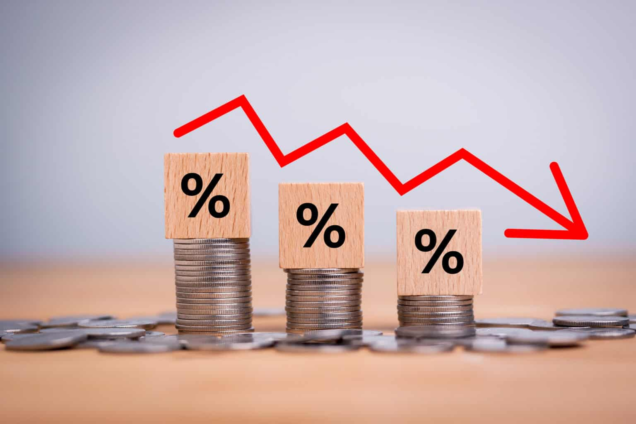
Ghana's inflation rate fell further to 3.3 per cent in February 2026, down from 3.8 per cent in January and a dramatic decline from 23.1 per cent recorded in the same month last year, the Ghana Statistical Service (GSS) has announced.
The latest Consumer Price Index (CPI) data, released by the GSS, shows the country's general price level continues to ease, offering some relief to Ghanaian households who have endured years of high living costs.
"The February figure marks the 14th consecutive decline in year-on-year inflation since January 2025 and represents the lowest rate recorded since the CPI rebasing in 2021," the GSS stated in its report.
In practical terms, the CPI stood at 264.4 in February 2026, compared to 255.9 in February 2025 — a year-on-year increase of 3.3 per cent.
On a month-on-month basis, prices rose by just 0.8 per cent between January and February, suggesting the pace of price increases remains modest.
Overall, inflation has fallen by 19.8 percentage points over the past year — a significant turnaround for an economy that was grappling with one of its worst cost-of-living crises in recent memory.
One of the clearest signs of easing pressure came from the food basket. Food inflation — which covers food and non-alcoholic beverages and carries a weight of 42.7 per cent in the CPI — dropped sharply to 2.4 per cent in February from 3.9 per cent in January, a 1.5 percentage point decline. Month-on-month, food prices rose by just 0.2 per cent.
Non-food inflation, however, crept slightly higher, rising to 4.0 per cent in February from 3.8 per cent in January.
On a month-on-month basis, non-food prices rose by 1.2 per cent, reversing the -0.5 per cent recorded in January.
Prices of imported goods showed notable stability. Year-on-year inflation for imported items eased significantly to 0.6 per cent in February from 2.0 per cent in January.
On a month-on-month basis, imported goods actually recorded a marginal decline of -0.02 percent — suggesting the cedi's relative stability in recent months may be filtering through to consumer prices.
Locally produced goods, by contrast, recorded year-on-year inflation of 4.5 per cent in February, marginally higher than the 4.4 per cent in January, with a month-on-month reading of 1.2 per cent.
The inflation story was uneven across the country. The Savannah Region recorded the lowest inflation rate at -2.6 percent, meaning prices there were actually lower than a year ago. The North East Region, on the other hand, recorded the highest rate at 8.9 per cent — more than double the national average.
The sustained disinflation trend is expected to influence the Bank of Ghana's upcoming monetary policy decisions.
Latest Stories
-
Ghana’s Constituency Games at a governance crossroads
59 seconds -
CSSPS placement results to be released tomorrow – Education Ministry
19 minutes -
His Excellency Professor Yaw Safo Boafo
19 minutes -
NSA Board Dissolution: Olympic, Paralympic representation expected to remain on new board
30 minutes -
When English became the safest Ghanaian language
43 minutes -
Nurses and midwives indispensable to resilient health system – Bawumia
46 minutes -
About 565,000 BECE candidates qualify for SHS placement – CSSPS
47 minutes -
Virtual InfoSec Africa renews partnership with Cyber Security Authority
50 minutes -
TMA is highest authority in Tema, TDC must comply with its regulations — President
1 hour -
Cyanide, unregistered cigarettes hidden under bags of millet, soya beans in major highway bust in Techiman
1 hour -
Security agencies call on civilians to volunteer information to combat crime
1 hour -
New maternal units commissioned in North Tongu to improve access to care
1 hour -
Enterprise Insurance reaffirms industry leadership with 4 wins at 6th CIIG
2 hours -
GES release national harmonised prospectus for 2026/27 SHS admissions
2 hours -
Presidency orders TMA, TDC to end dispute over Tema development authority
2 hours