

Audio By Carbonatix
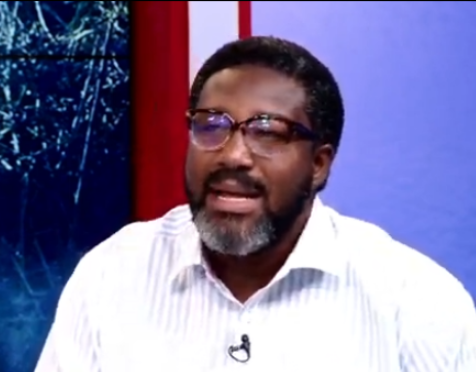
Lawyer and energy expert Lom-Nuku Ahlijah has underscored the critical role of local assemblies in monitoring construction activities and enforcing building regulations to prevent avoidable structural failures.
Speaking on JoyNews AM Show on Monday, 30 March, Mr Ahlijah stressed that no building project should commence without proper authorisation, including the acquisition of permits and structural approval.
His comments follow a tragic incident on Sunday, 29 March, when an uncompleted building collapsed within the premises of Accra New Town Experimental Basic School—a site also used by Christian worshippers—killing three people and leaving several others injured.
Addressing the issue, Mr Ahlijah explained that the building permit process is a vital safeguard to ensure that structures are safe and fit for purpose.
“You can’t build without getting a permit. We walk around and see ‘stop work, produce permit’. When you produce the permit, it means you have gone through the process to get authorisation to build. If you can’t produce a permit, you have to go through the process to obtain it,” he said.
He emphasised that no structure should be erected without undergoing the necessary technical assessments, including the review of architectural designs and structural integrity checks.
“No one should be able to build a structure that has not been authorised. It means your designs have been reviewed and your structural integrity has been confirmed. Once that has not been done, you cannot place the blame entirely on private developers,” he added.
Mr Ahlijah further stressed that the state plays a central role in regulating construction, as it is responsible for granting approval for buildings. He noted that many structures in Accra and other parts of the country are built without permits, describing it as a known reality that must be urgently addressed.
He argued that tackling the problem requires a broader conversation involving both public institutions and private developers.
Linking this to enforcement, he highlighted the importance of metropolitan, municipal and district assemblies, noting that their proximity to communities places them at the frontline of monitoring building activities.
“When it comes to the assemblies, their role is critical because they are localised. They don’t wait for a minister to come from the capital to inspect buildings. They are within the municipality and should know what is happening on the ground,” he explained.
According to him, assembly officials are mandated to conduct routine inspections, issue stop-work notices where necessary, and ensure that developers fully comply with regulatory requirements before construction proceeds.
Mr Ahlijah questioned how such incidents continue to occur despite existing regulations, insisting that the recent collapse should not have happened.
“This kind of situation should not occur. It should not even be possible,” he stressed.
Reflecting on the collapsed structure, he pointed to visible signs of possible structural weakness, noting that the beams and pillars appeared too small for a building of that scale.
“If you look at the structure, the beams and pillars look too small for a two- to three-storey building. That is significant,” he observed.
He also lamented the loss of life and injuries resulting from the incident, warning against the tendency for such tragedies to fade quickly from public attention.
“Typically, we will have this conversation today; tomorrow, there will be a new topic, and we will forget this has happened. Next week, next month, or next year, we might sit here and have the same discussion again,” he cautioned.
Mr Ahlijah concluded that recurring building collapses can only be prevented through strict enforcement of regulations and sustained attention to the issue.
“For me, it cannot be a recurring cycle; we must put a stop to it,” he said.
Latest Stories
-
Afoko can give NPP ‘new identity’ ahead of 2028 to overcome NDC – Political scientist, Dr Amakye-Boateng
1 minute -
2 injured amid gunshots during raid at Nawara Mining office at Nsuapemso
6 minutes -
St Augustine’s College retains 2026 National Investment Quiz title
10 minutes -
KNUST Nursing and Midwifery School staff recognised at 2026 Health Ministry Excellence Awards
18 minutes -
JoyNews’ Esther Esi Nkrumah selected for UK Media Excellence for Emerging Technology Fellowship
23 minutes -
Five NDC youth organisers in Western Region pay courtesy call on Armah-Kofi Buah
36 minutes -
NACOC demands tighter port controls to prevent Tema Harbour drug trafficking
38 minutes -
Ghana’s startup ecosystem must build sustainability into innovation – Ghana Hubs Network
49 minutes -
Friday’s beachfront demolition was carried out at Labadi Beach Hotel’s request, not for flood mitigation – Stan Dogbe
51 minutes -
LA 2028: Mukarama returns to Black Queens squad for Olympic Games qualifiers
52 minutes -
Fusaini Yakubu Abanga leads NPP National Youth Organiser race with 45% in Global InfoAnalytics poll
1 hour -
Suame Methodist JHS marks 120 years with a call for STEM innovation
1 hour -
Global fashion coalition launches in the heart of Kantamanto Market
1 hour -
‘No concrete commitments from government’ – Brong Ahafo teacher unions maintain strike
1 hour -
Finance Minister demands greater returns from NLA after GH¢10 million dividend presentation
2 hours