

Audio By Carbonatix
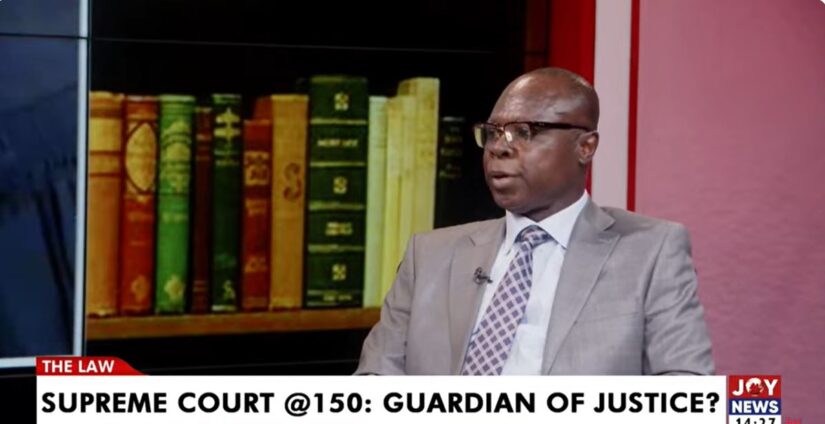
A Justice of the Supreme Court, Justice Richard Adjei-Frimpong, has acknowledged growing public concerns about judicial independence and perceptions of partisanship, describing them as “unfortunate” but not unexpected given the Court’s role as a policy-influencing institution.
Speaking on JoyNews' The Law on Sunday, April 12, during discussions on the Supreme Court@150 celebrations, he stressed the need for deeper public engagement to improve understanding of how the judiciary operates.
“This allegation of partisanship sometimes is an unfortunate development. I think if we’re able to engage the public well… the perception may be a bit different," he said.
Justice Adjei-Frimpong explained that because the Supreme Court functions as a policy court, some of its decisions may naturally align with the policy direction of a sitting government—without any political intent.
He cautioned that such alignment should not be misconstrued as bias or political influence.
“That would never mean that somebody sat and decided to please a particular power or political party or particular government.”
Referencing past decisions such as the university fee-paying case, he noted that rulings based on practical realities may sometimes mirror government policy simply because both respond to the same national challenges.
“Some of these things are bound to happen… but generally, yes, we need to disabuse the minds of the public.”
To address these perceptions, the Justice called for greater transparency and public education about internal judicial processes—many of which are not widely known.
He revealed that after hearings, judges hold “judgment conferences” where cases are thoroughly debated before decisions are reached.
According to him, this structured deliberation process is designed to protect independent thinking and ensure that decisions are based strictly on law and reason.
“After you have heard the case, you go and sit and you argue, starting with juniors, so that seniors don’t influence their opinions.
Beyond deliberations, he highlighted existing accountability mechanisms within the judiciary, including a code of conduct for judges and magistrates, as well as formal disciplinary and complaint procedures.
“We have disciplinary procedures… where people have petitions, they are investigated, and then when judges or staff are found culpable, they are punished.”
He disclosed that sanctions can be severe, including dismissal in proven cases of misconduct.
“I have had the occasion of sitting on a disciplinary… where a judge at the end of the day was dismissed.”
However, he admitted that many of these processes are not publicly visible, which may contribute to mistrust.
“Some of these things are not published.”
Justice Adjei-Frimpong concluded that increasing openness and sustained engagement with the public will be key to strengthening confidence in the judiciary.
“We must move away from this whole mishap about the court to a more engaging process… and I think the public will appreciate it.”
Latest Stories
-
NPP’s 2024 Bolgatanga Central Parliamentary Candidate elected Upper East Regional Chairman
5 minutes -
Incumbent Northern NPP Chair wins as new faces break through in party executive elections
9 minutes -
Former Health Minister Okoe Boye elected NPP Greater Accra Regional Chair
24 minutes -
Joseph Kobinah Esibu elected NPP Central Regional Chairman
34 minutes -
Fernandez booed by Chelsea fans as Alonso offers glimpse of blueprint
42 minutes -
PSG sign World Cup winner Torres from Barcelona
50 minutes -
Odeneho Kwaku Appiah beats former EPA boss Kokofu, to emerge NPP Ashanti chair
54 minutes -
TDC defends statutory mandate, says its authority to develop Tema predates TMA
56 minutes -
Ignatius Kwesi Afrifa elected NPP Western Regional Chairman
60 minutes -
Galamsey will be a key issue for NPP’s 2028 campaign – Annoh-Dompreh
1 hour -
Makafui Woanyah retains NPP Volta Regional Chairmanship
1 hour -
Ghana Law Society announces maiden annual Bar conference for September 30
1 hour -
Abronye DC retains NPP Bono East Regional chairmanship
1 hour -
NSMQ 2026: Check out the 147 schools battling in 49 preliminary contests
2 hours -
NPP rebuilding to reclaim parliamentary seats lost in 2024 – Annoh-Dompreh
2 hours