

Audio By Carbonatix
At dawn in Dungu, on the outskirts of Tamale, 21-year-old Abdul Wahab Maryam wakes up and reaches for an empty jerrycan. There is no water.
She checks the plastic jerrycans lined against the wall of her hostel room near the University for Development Studies (UDS). Dry. She steps outside and knocks on a neighbour’s door, hoping to borrow a bucketful before her morning lectures. But the answer is the same everywhere. No one has water.
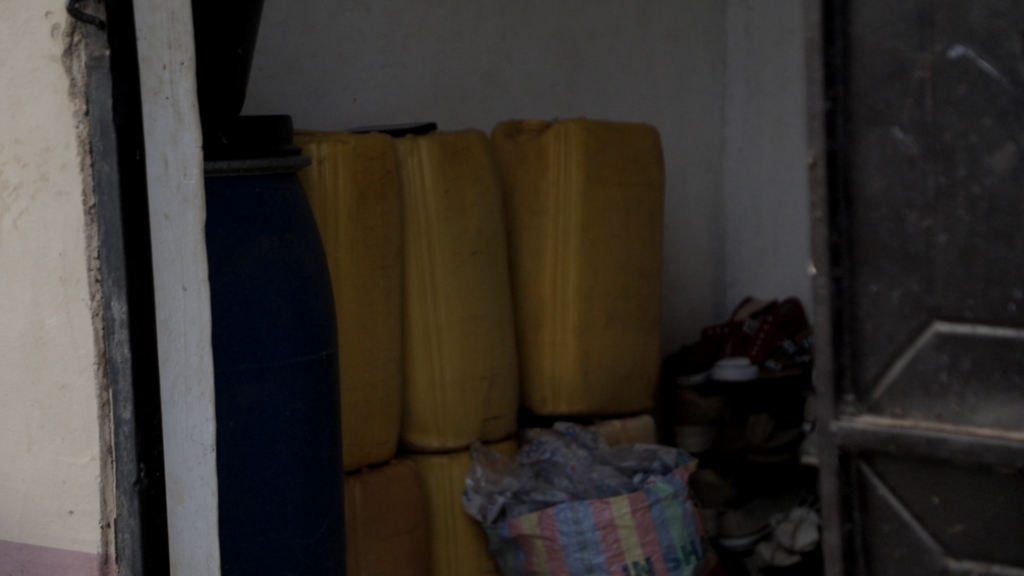
For Maryam, this is how many days begin. “Sometimes you wake up, check your jars and basins, and there is nothing,” she says. “You go from one person to another asking, but they too do not have water.”
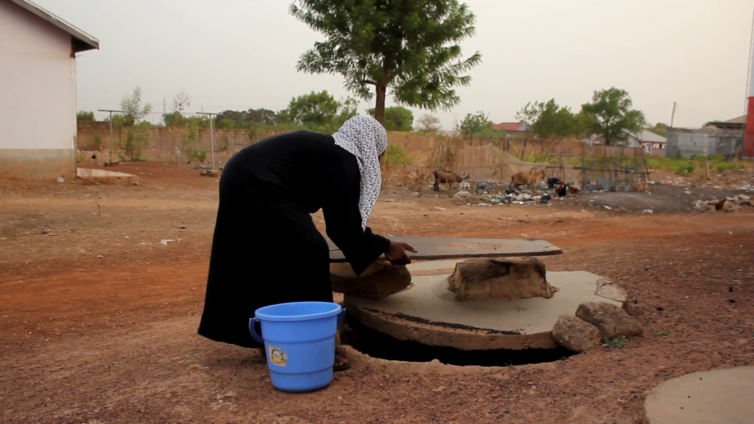
In Dungu, a rapidly expanding settlement surrounding one of northern Ghana’s largest public universities, water scarcity has become part of daily life. Though rain still falls during the wet season, residents say it no longer comes in predictable patterns, and when it does arrive, much of it is wasted.
Combined with failed public water systems and weak storage infrastructure, this results in a crisis that drains money, threatens health, and disrupts education.
Dungu has an estimated resident population of nearly 4,000 people, based on available local data, but that number rises sharply during the academic year as students move into hostels around the University for Development Studies (UDS).
UDS’s Tamale Campus serves thousands of students, many of whom depend on Dungu and the surrounding communities for accommodation. There, rain clouds bring hope, but rarely relief.
A community where the taps have fallen silent
Tahiru Alhassan Mohammed has lived in Dungu since 2018. When he first moved into his newly built home, water shortages were already common, but at least the taps worked occasionally.
“On some days, water would flow around midnight or 1:00 a.m.,” he recalls. “By 5:00 a.m., it would stop.” Then even that stopped.
“For the past four years, not a drop has come from our taps,” he says. “Four years, nothing.”
The pipelines installed by the Ghana Water Limited (GWL) still run through the community, but residents say they have remained dry.
Now, the company has explained why. Northern Regional Chief Manager of the Ghana Water Limited, Stephen Amihere, says the problem is mainly a gap between supply and demand.
“On average, we produce about 35,000 cubic meters of water a day,” he explains. “But demand is around 90,000 cubic meters daily.”
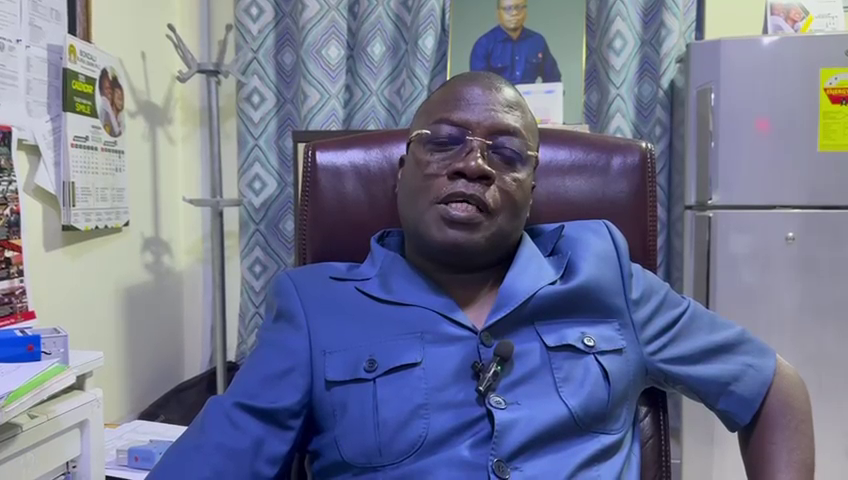
He says the system has not been expanded to meet growing demand. “The source is the same. The treatment plant capacity is the same. There has been no expansion,” he says.
As a result, the limited supply is stretched across homes, businesses, and institutions. “When other sources dry up, everyone depends on this same supply, homes, food vendors, car wash centres, even animals,” he adds.
Mr Amihere says some improvements have been made since 2023, when key facilities were not working. “Reservoirs and overhead tanks that were not functioning are now working,” he says, noting that areas like the Tamale Teaching Hospital are now receiving more regular supply.
But major challenges remain. “The pumps we use are old,” he explains. “Some days we use three pumps, other days two, sometimes even one. That affects how much water we can produce.”
Breakdowns, he says, make supply unreliable. To address this, the company has begun replacing parts and plans to invest in new pumps, but securing funding remains a challenge.
Losses, debts, and illegal connections
The situation is made worse by water losses and unpaid bills. According to Mr Amihere, about 52 per cent of the water produced in Tamale is lost or unaccounted for. “These losses are mainly due to illegal connections,” he says. “People break pipelines and use pumps to take water.”
He adds that the company owes more than GH¢50 million. “We issue demand notices and take legal action when necessary,” he says.
But the financial strain is limiting investment. “When investors see that much water is lost and bills are not paid, they are reluctant to invest,” he explains. “We need people to pay their bills and stop illegal connections so we can improve the system.”
In Dungu, residents say these explanations have not changed their daily struggle. “At times you call the water vendors, and they say they are serving someone else,” Tahiru says. “You wait and hope they come back.”
For his family of five, survival depends on buying water. He spends about 800 cedis every three weeks to fill his household tanks. “That is the only way we survive,” he says.
Students Paying to Bath, Cook and Study
For thousands of students living in Dungu, water is no longer a public utility. It is something they must chase every day.
Maryam says students often pay about four cedis for a single jar of water, usually fetched from unsafe wells rather than treated pipelines.
“Cooking becomes difficult,” she says. “If there is no water, what will you use to cook?” The shortage affects nearly every part of student life.
Without water to bathe, some miss lectures. Without water to cook with, many go hungry or spend extra money on food outside. Without safe drinking water, illness spreads.
Some students have resorted to bathing with sachet water. “Others bathe with sachet water,” Maryam says. “It is not good, but they have no option.”
Another UDS student, 24-year-old Awudu Faiza, says sachet water has become part of survival. “We use it for drinking, for ablution, sometimes even for cooking,” she explains.
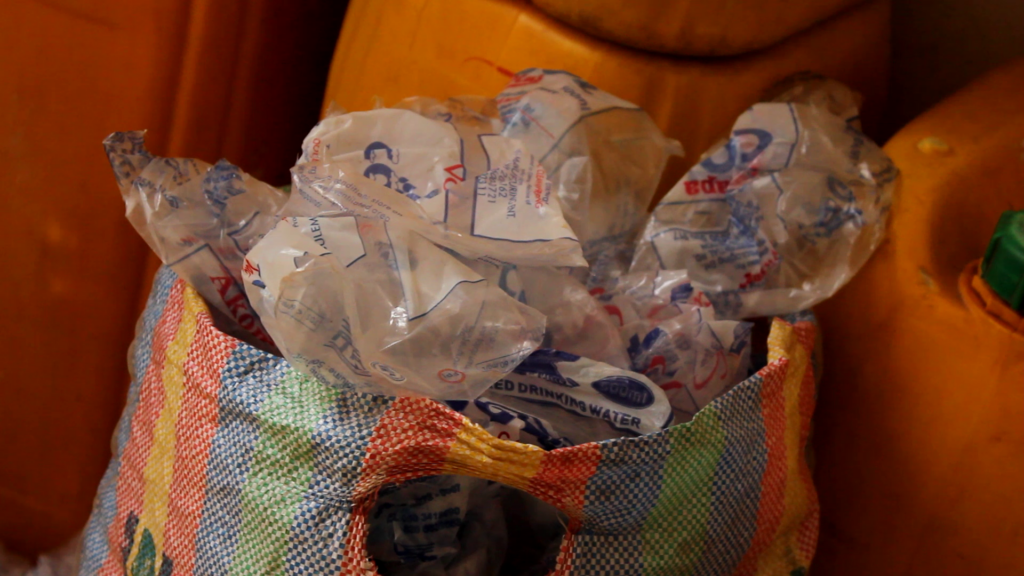
A single week can consume more than ten bags of sachet water in one hostel household. “Because of the heat here, we drink a lot,” Faiza says. “Sometimes you come back from class drained, and you need water immediately.”
Even sachet water is not always available. During shortages, shopkeepers ration sales. “They tell us, buy only one bag,” she says.
Unsafe Water, dangerous choices, while Climate change makes a bad system worse
When vendors cannot supply enough water, students and families turn to open wells. Many of these wells are uncovered and contaminated. “In the rainy season, when you fetch from there, you see insects, frogs, and small animals inside,” Maryam says. “But you still have to use it.”
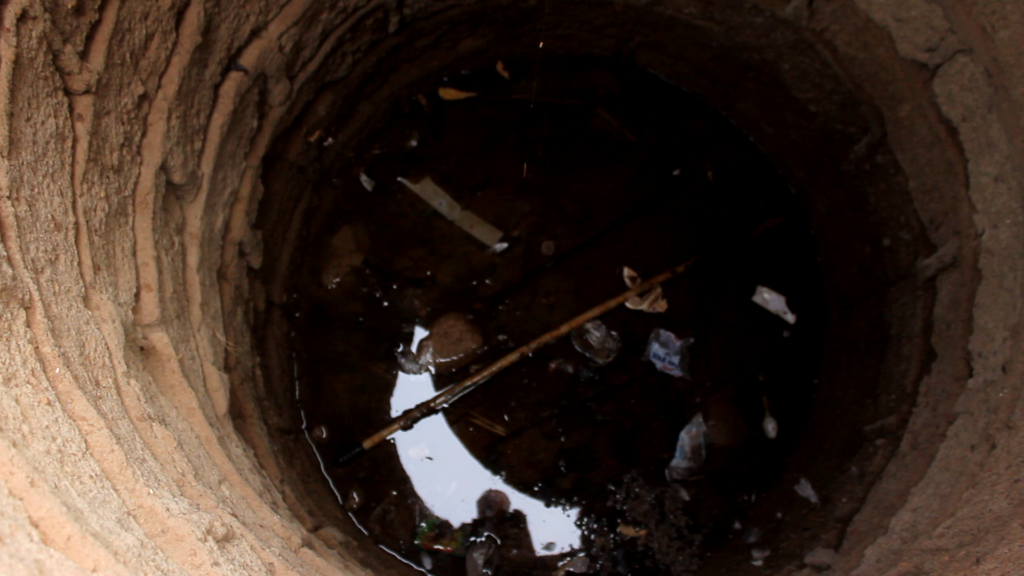
Sometimes they boil the water. Sometimes they use it untreated. That gamble carries consequences. Maryam remembers warning her roommate not to drink from one of the wells. “She got typhoid,” Maryam says quietly. “It was severe. She would sit crying because of the pain.”
In northern Ghana, water-related illnesses such as typhoid and diarrhoea remain persistent risks in communities where safe piped water is unreliable, especially during prolonged dry spells when reliance on unsafe sources increases.
The water crisis in Dungu is not caused by a single factor. Climate change is reshaping rainfall patterns across West Africa, making rainy seasons shorter, less predictable, and increasingly erratic. Northern Ghana typically receives between 900 and 1,200 millimetres of rainfall annually, concentrated between May and October, but recent climate assessments show increasing variability in onset and intensity.
Climate assessments from the Ghana Meteorological Agency, supported by academic studies on northern Ghana’s rainfall patterns, show that rainfall has become increasingly erratic in recent decades, with less predictable seasonal onset, irregular distribution, and longer dry periods between rainfall events.
Tamale rainfall records show sharp fluctuations in annual totals and rainfall days, with some years experiencing significantly reduced distribution compared to historical averages. Scientists say this variability is affecting groundwater recharge and surface water availability across the region.
“When it rains, we are happy,” Faiza says. “But sometimes when the rains begin, we are about to vacate campus. And when we return, the rains are ending.”
Associate Professor at the Centre for Climate Change and Sustainability Studies at the University of Ghana, Yaw Agyeman Boafo, says the deeper challenge is not just rainfall variability but the inability to store what falls.
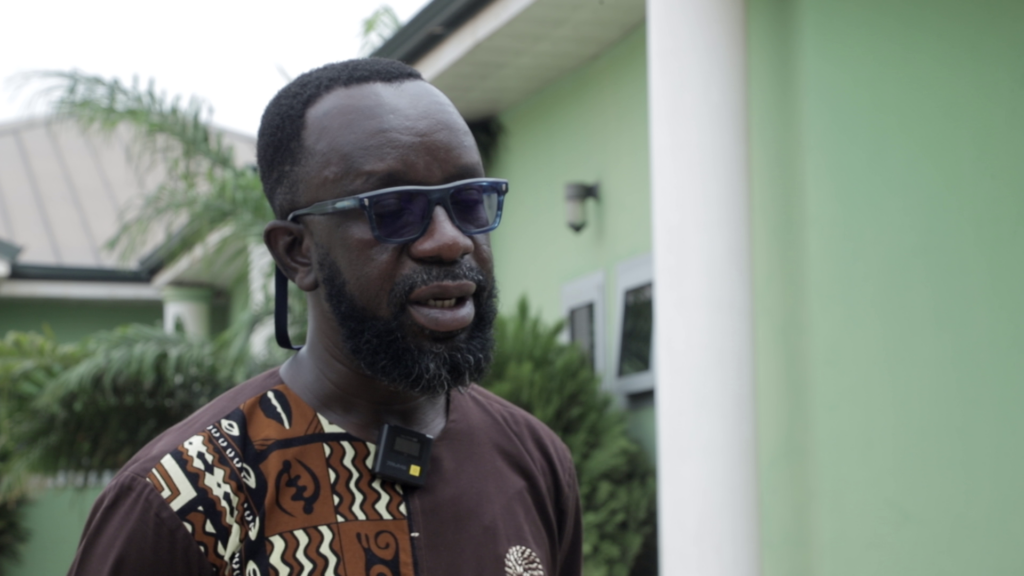
“Rain is not being captured effectively because of a lack of basic technology,” he says.
In many communities, storage tanks are broken, undersized, or poorly maintained. Drainage systems also fail to capture runoff, allowing water to quickly disappear into streams and flood channels.
“The biggest challenge is a lack of capacity to capture rainwater,” he says.
So even during heavy downpours, Dungu loses most of its water within hours. Rain falls in abundance, yet homes remain dry.
A crisis of urban growth and broken infrastructure
Dungu’s water crisis reflects a wider structural problem across northern Ghana, where rapid urban expansion is outpacing infrastructure development.
Tamale Metropolitan Area now has an estimated population exceeding 730,000, making it one of the fastest-growing urban centres in Ghana. As peri-urban communities expand around institutions such as UDS, water systems originally designed for smaller populations are under severe strain.
Engineers and urban planners note that without major upgrades to pumping stations, pipeline networks, and storage systems, entire settlements risk prolonged disconnection from formal water supply systems.
In many cases, infrastructure failure is gradual, beginning with low pressure, intermittent flow, and eventually a total breakdown, as seen in Dungu.
A working solution already exists elsewhere
Yet solutions to water scarcity are already being explored in parts of northern Ghana. Across the region, interventions such as mechanised boreholes, solar-powered water systems, and small-scale water infrastructure have been used to improve access to water in underserved communities.
Rooftop rainwater harvesting systems have also been studied and used in Ghana to collect and store water during the rainy season, helping households reduce reliance on unsafe sources such as open wells and seasonal streams.
Evidence from research and local projects suggests that, with the right investment, simple and low-cost technologies can improve water access in climate-vulnerable communities.
Experts say communities like Dungu could adopt similar solutions, including rainwater harvesting, improved storage systems, and expanding reliable piped-water infrastructure.
“At the household level, each family should have some kind of storage system,” Professor Boafo says. “But government support is necessary.”
If combined with functioning pipelines and decentralised rainwater harvesting, experts say communities like Dungu could significantly reduce their vulnerability.
Waiting for rain, waiting for relief
At sunrise, Dungu begins again. Empty drums take positions. Students walk across dusty compounds with jerrycans, hoping to find water before lectures begin.
A tricycle engine sometimes breaks the silence, followed by the rush of jerrycans and hurried calls from residents trying to secure a share. But even when the rains come, they do not stay long enough to solve the problem.
In Dungu, survival has become a daily calculation of water, money, and uncertainty.
As dawn breaks again, Maryam and her colleagues lift another empty jerrycan, monitoring outside, hoping that today, the water seller will come.
********
This is a JoyNews-CDKN-University of Ghana C3SS project funded by the CLARE R4I Opportunities Fund.
Latest Stories
-
We won’t be at war with President Mahama; we need to sit up – GFA Communications Director
14 minutes -
No football association can curb match fixing on its own – GFA
19 minutes -
Ghana must turn horticulture into global export powerhouse – Vice President Naana Jane
24 minutes -
Greening must be part of Ghana’s development, not an afterthought – Prof Naana Jane
1 hour -
ECG procurement is where politicians ‘milk’ the company – Ben Boakye
2 hours -
IPPs’ contractual arrangements partly to blame for energy sector problems – TUC’s Dr Otoo
2 hours -
Like Benzema & as good as Haaland – Alonso on Joao Pedro
2 hours -
Check out 41 countries Ghanaians can visit without a visa on ordinary passports
2 hours -
I disrupted pre-season travel plans to prepare players – Arteta
2 hours -
Richarlison’s move to Vasco da Gama falls through
2 hours -
Dictator meme shows lack of human awareness – Mbappe
2 hours -
2030 World Cup: Moroccan official told to stop making 2030 final promise
2 hours -
Mourinho compares Mbappe and Vini Jr to fruit trees after boos
3 hours -
Lewis Hall signs new contract with Newcastle until 2031
3 hours -
Signed instead of Rashford, Gordon is proving worth at Barca
3 hours