

Audio By Carbonatix
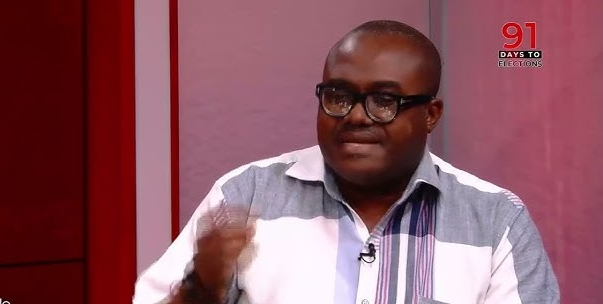
President of the Ghana Medical Association (GMA), Prof. Dr Ernest Yorke, has described comments suggesting that frustrated health professionals should resign as “unfortunate”, insisting that Ghana’s healthcare challenges require support and reforms rather than blame.
Speaking on Joy FM’s Super Morning Show on Friday, May 8, Prof. Yorke reacted to remarks by the Chairman of Parliament’s Health Committee, Mark Kurt Nawaane, who called on medical professionals who are unwilling or unable to cope with the demands of the job to resign, following the presentation of findings by a committee investigating the death of Charles Amissah.
According to the GMA President, while doctors and other health professionals may indeed be stressed or frustrated, asking them to resign is not the right response.
“For me, I think it is unfortunate. Yes, a doctor may be stressed, and a healthcare professional may be tired or frustrated. But I don’t think the answer is to say, ‘If you are tired.’” Prof. Yorke said.
He said that Ghana already faces a shortage of healthcare professionals, particularly in deprived communities, and losing more trained personnel would worsen the situation.
“We are always complaining that we do not have adequate doctors and healthcare professionals,” he said.
“And the few we have are unevenly distributed in favour of the urban areas, to the detriment of deprived areas.”
Prof. Yorke acknowledged that there may be some healthcare workers whose conduct falls below expectations, but said that policymakers and managers must first seek to understand the root causes of frustration among workers.
“Yes, there may be bad nuts, there may be people who may be frustrated. But if I am a manager or policymaker, my attitude will not be ‘go home’ or ‘resign if you are tired’. Rather, I will ask how we can assist these people to address their concerns so they can give their best,” he said.
He added that many health workers operate under difficult conditions, including poor working environments, inadequate equipment, and pressure from overstretched facilities.
“We all know about the poor tooling, the poor working environment, the renovations and all that. So it is a broader conversation than simply pushing the health professional under the bus,” he stated.
The GMA President called for a more balanced national discussion that considers both public expectations and the realities facing health workers.
“As stakeholders, let’s all think it through. If indeed somebody is really a bad nut, let’s fish the person out. But where there are genuine concerns, we should address them,” he urged.
Prof. Yorke disclosed that the GMA is currently supporting the health professionals involved in Charles Amissah's death report.
“We are providing the necessary support. We’ve enlisted psychologists and psychiatrists for them, and we are also providing legal support. We will monitor the process to ensure fairness, equity and justice,” he revealed.
He said that the ultimate goal should be improving healthcare outcomes for ordinary Ghanaians.
“In the end, I am hoping that whatever comes out of these processes, the Ghanaian will be the beneficiary,” he said.
Prof. Yorke also raised concerns about the mental health pressures faced by doctors globally, noting that the profession records one of the highest suicide rates in the world.
“Doctors have one of the highest rates of suicide across the world, and that is a fact that cannot be denied. Even in advanced countries where systems are better, the situation exists. So it is even worse for us.”
He clarified that health professionals were not demanding special treatment but wanted authorities to listen to their concerns and use the current crisis as an opportunity for long-term reform.
“We are not asking to be pampered. But let’s use this unfortunate situation to learn lessons and broaden the conversation so the issues identified can be addressed holistically.”
During the interview, he was asked whether healthcare workers who feel overwhelmed should simply leave the profession.
In response, Prof. Yorke said resignation should never be the first option for managers or policymakers.
“That general statement may hold, but if I were a manager or policymaker, that would not be my first approach,” he replied.
“If somebody has a problem, the duty of management is to get closer and ask what the issue is. The frustration may be for genuine reasons, and there may be solutions that can help both the worker and the system.”
Latest Stories
-
Surveyors caution against treating compensation disputes as professional misconduct
47 seconds -
Mahama calls for AU dialogue on migration after South Africa xenophobic tensions
6 minutes -
I haven’t experienced any envy in the gospel music industry — Ohemaa Mercy
1 hour -
Prayer does not solve everything — Ohemaa Mercy
2 hours -
New PURC office symbolises stronger consumer protection – Dr Jinapor
2 hours -
Rev. Wengam re-elected Assemblies of God, Ghana General Superintendent
2 hours -
Less than 20km of clearing left to connect Accra-Kumasi Expressway to Kumasi – Agbodza
2 hours -
US judge strikes down policy suspending immigrant visa processing for 75 nations
3 hours -
MCEs collecting fees from galamseyers are facilitating illegality – Ken Ashigbey
3 hours -
Developer LMI Holdings commits to completing first 700 Saglemi housing units
3 hours -
Africa’s next chapter will be built by institution-builders, not idea-havers
3 hours -
Wenchi Traditional Council suspends Twafohene indefinitely
3 hours -
Kpassa-Merimeri road undergoes filling and levelling works to improve accessibility
3 hours -
9 Blue Water Guards arrested over alleged bribery, impersonation
4 hours -
Wildlife guard shot dead during Kakum patrol
4 hours