

Audio By Carbonatix
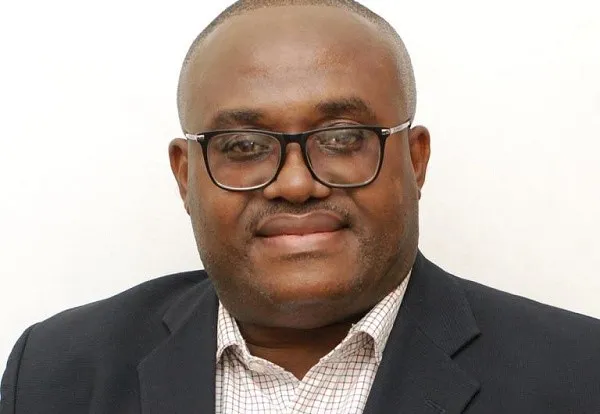
President of the Ghana Medical Association (GMA), Prof Dr Ernest Yorke, has urged the public to avoid rushing to conclude that doctors and nurses are culpable in the ongoing “no bed syndrome” debate linked to the death of Charles Amissah.
He argued that the issue reflects deeper systemic challenges within Ghana’s emergency healthcare delivery rather than the actions of individual health workers.
Speaking on Joy FM’s Super Morning Show on Friday, May 8, Prof Yorke said recent committee findings suggesting possible negligence among some health workers should not be interpreted as proof of guilt.
“It’s easy, because of how nice it may sound, to say that yes, the doctors and the nurses were culpable. The fact that the committee has found some initial prima facie evidence that they may be culpable does not mean they are guilty,” he stated.
He stressed that only a formal disciplinary process conducted by the relevant employer or regulatory body can establish culpability and determine sanctions.
“It is only a thorough disciplinary process instituted by the employer, whether Korle-Bu, Ridge, the Police Service, or even the Medical and Dental Council, that can establish potential guilt and pronounce sanctions. So let’s hold our horses,” he explained.
Prof Yorke emphasised that the GMA was not defending any individual, but was instead calling for a broader national conversation on systemic weaknesses in emergency healthcare.
“We are not holding brief for anybody. But let’s broaden the conversation. We’ve been discussing these issues for decades, and nothing has really changed. If you ask me, things are probably getting worse,” he said.
He referenced recommendations from recent reports, including the need for an emergency tracking system to improve coordination between ambulances and hospitals.
“The GMA has long advocated for an emergency tracking system so ambulances do not just move from one hospital to another,” he noted.
“Once a decision is made, a central system should be able to identify where appropriate beds are available before the patient is moved, so patients do not get stranded.”
Prof Yorke also called for increased training of emergency physicians and emergency medical technicians (EMTs), improved healthcare policies, and greater funding for emergency services. He further suggested stronger involvement of the private sector and the military in emergency healthcare delivery.
“We are not discussing enough about how to bring in the private sector, and I’m happy they are now involving the military as well,” he added.
Describing the “no bed syndrome” as a symptom of a wider systemic failure, he said the problem extends far beyond frontline health workers.
“The issues surrounding this so-called no bed syndrome, which is really a euphemism for a failed emergency medical system, are many and complex,” he stated.
He explained that challenges begin at the point of referral and include ambulance responsiveness, EMT training, and overall coordination within the emergency system.
“You need to look at where the decision to refer the patient starts from. You have to consider ambulance responsiveness, the training of emergency medical technicians, and the fact that we do not have enough trained EMTs across the country,” he said.
Prof Yorke revealed that Ghana has fewer than ten fully trained emergency medical technicians nationwide, with many ambulance personnel limited to transporting patients without providing specialised care.
“The rest are technically drivers. They just scoop and deliver,” he said.
He also highlighted operational challenges, including fuel constraints and weak communication between emergency teams and hospitals.
“Sometimes people even have to pay for fuel before an ambulance can move. The ambulances are not properly equipped, and often, no calls are made ahead of time before patients arrive. They simply come and leave the patient at the hospital gate,” he stated.
Latest Stories
-
Adom FM Y2K Jam delivers a night of music, fashion and nostalgia
36 minutes -
Lawrence Kobena Nsarko Otoo, Esq
2 hours -
Bel-Aqua intensifies mental well-being campaign ahead of 15th anniversary
2 hours -
From banking to party finances: Alfred Kwadwo Thompson elected NPP Treasurer
2 hours -
George Christian Papa Mends
2 hours -
Ali Suraj elected NPP NASARA Coordinator
2 hours -
Mustapha Hamid misses out on NPP Vice Chairmanship by 31 votes despite early poll lead
2 hours -
Kojo Bamba, Henry Nana Boakye and Nana Akomea elected NPP Vice Chairmen
3 hours -
From Delta Force to NPP First Vice Chairman – Kojo Bamba’s political journey
3 hours -
Police restore calm at Larteh following Odwira festival disturbance
4 hours -
‘All the camps will dissolve’ – Bawumia demands one NPP for 2028
4 hours -
There is no time to waste – Bawumia orders NPP to begin 2028 work
4 hours -
Sarkodie visits MobileMoney Fintech LTD
4 hours -
John Boadu unveils new NPP strategy to win back youth and modernise party
4 hours -
Hawa Koomson elected NPP National Women’s Organiser
4 hours