

Audio By Carbonatix
The killing of senior Islamic State commander Abu-Bilal al-Minuki in a joint United States-Nigerian military operation may represent a tactical victory in the fight against terrorism in West Africa, but it is unlikely to cripple extremist networks operating across the region, Security analyst Dr Victor Doke.
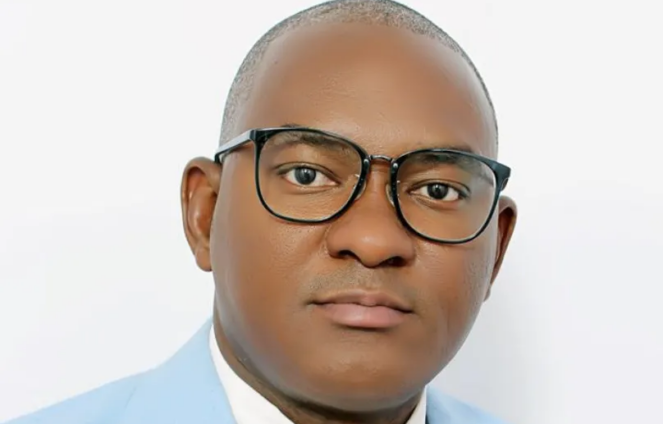
Dr Victor Doke, a Research Fellow and Lecturer in Conflict, Peace and Security at the Kofi Annan International Peacekeeping Training Centre (KAIPTC), said the elimination of the alleged ISIS second-in-command should not be mistaken for the defeat of the broader insurgency movement.
Speaking in an interview with MyJoyOnline following the strike in northern Nigeria, Dr Doke argued that extremist organisations such as Islamic State West Africa Province (ISWAP) are structured to survive the deaths of their leaders.
“With regards to history in line with armed groups, we’ve seen and noticed that they don’t really have one person in command,” he said.
“They have prepared people — second-in-command, third-in-command, or even young ones who would take up the mantle should their leaders get eliminated.”
His remarks come days after US Africa Command (AFRICOM) and Nigerian authorities announced that Abu-Bilal al-Minuki, described by Washington as one of the world’s most dangerous terrorists and ISIS’ global director of operations, had been killed during a coordinated overnight assault in Nigeria’s north-east.
The operation targeted a fortified compound linked to ISWAP militants in the Lake Chad Basin.
US President Donald Trump described the mission as a “powerful and deadly strike”, while AFRICOM commander Gen Dagvin Anderson said the operation demonstrated the strength of the US-Nigeria security partnership.
But despite the military success, Dr Doke warned that the killing could trigger retaliation attacks and further instability across the region.
“The killing of one person doesn’t mean the network or the armed group is obliterated,” he said.
“You have to look at how you deactivate or eliminate other key personalities in there and then try to infiltrate their camp and get to know where, how, and what they do and who their sponsors are, and then you try to disorient their activities.”
A Region Living Under Fear
Across Nigeria’s north-east, years of insurgency have left deep scars on communities already battling poverty, displacement and insecurity.
In villages surrounding Borno State and the wider Lake Chad Basin, families continue to live under the constant threat of kidnappings, raids and bomb attacks. Children have been orphaned, schools abandoned, and entire farming communities uprooted.
Only hours after reports of al-Minuki’s death emerged, local media in Nigeria reported fresh kidnappings in parts of the region, including cases where armed groups allegedly abducted toddlers and civilians to use as human shields.
For Dr Doke, such incidents underscore a painful reality, highlighting that military victories alone cannot defeat extremism.
“One, we should look at why these insurgents or violent extremists are springing up,” he said.
“The main root cause is the fact that they feel that they’ve been marginalised. They feel their needs, wants and interests have not been taken into consideration.”
He argued that weak governance, corruption, inequality and state neglect continue to create fertile ground for recruitment by extremist groups.
“Some of these armed groups come in with the promises of making lives better, trying to provide the basic needs that the people want.”
‘A Drop in the Ocean’
The analyst described the latest strike as “just a drop in the ocean”, warning that splinter factions could quickly emerge to replace fallen commanders.
“There is not only one major armed group,” he said.
“There are so many armed groups in those areas. So you do away with one, and then you realise a splinter one is also coming up.”
He pointed to developments in Mali and the wider Sahel, where militant alliances have evolved rapidly despite years of international military operations.
“Should these groups come together, then we are in for big trouble,” he warned.
Dr Doke also questioned the effectiveness of intelligence coordination in the region, particularly after confusion surrounding previous reports that al-Minuki had earlier been declared dead.
“If our intelligence system is operating effectively, you wouldn’t have these kinds of confusions coming up,” he said.
America’s Interests
The direct involvement of the United States in the operation has also raised questions about Washington’s strategic interests in West Africa.
Although US officials framed the mission as part of the global war against terrorism, Dr Doke suggested geopolitical calculations were also at play.
“In geopolitics, nobody comes into your domain without knowing what they will benefit,” he said.
“Do you think they’ll just send equipment thousands of miles away without knowing what they are benefiting? Interest is very key.”
The United States has expanded its counterterrorism footprint in Africa over the past decade, particularly in the Sahel, where extremist violence has intensified following military coups, political instability and the withdrawal of some Western forces.
But Dr Doke warned that deeper US involvement could itself make American interests in Africa more vulnerable to attacks.
“What the US is doing is also going to make them a target,” he said.
“Not directly in Washington, but the locations where they have their consulates or installations in Africa.”
Calls for African-Led Security Response
Dr Doke criticised African governments and regional blocs for failing to operationalise collective security mechanisms capable of responding effectively to insurgencies spreading across the continent.
He renewed calls for the African Standby Force to become fully operational, describing it as essential to Africa’s long-term security.
“We need to implement the standby force as soon as possible,” he said.
“The threat Nigeria faces could be a threat to Benin; it could be a threat to Ghana if not dealt with because we are interconnected.”
He warned that unchecked instability in Nigeria could eventually trigger wider regional consequences, including mass migration, refugee pressures and cross-border radicalisation.
“What happens in Nigeria would indirectly affect Ghana,” he said.
“If you have mass migration or asylum seekers, the pressure will be on the host nation. And that also brings another security threat.”
Dr Doke believes the real battle lies beyond the battlefield.
“Development, economic growth, issues about marginalisation, injustice, corruption, transparency and accountability,” he said.
“If you are not able to tackle them, then you create room for these armed groups. You create room for youth to radicalise and join them.”
Latest Stories
-
Ghana needs a law to sustain constitutional reforms – CDD-Ghana
3 hours -
COVID fumigation audit: Auditor-General has a lot of questions to answer – Akwatia MP
3 hours -
Stranded Ghanaian medical graduates in Cuba appeal to Mahama for immediate return
3 hours -
GNFS contains fire outbreak at Teshie Lekma Road near Lekma Hospital
9 hours -
Samia Nkrumah rejects the narrative that Ghanaians were happy after Nkrumah’s overthrow
10 hours -
A Mother’s pain: Tribute by Ivan Baidoo’s mother
10 hours -
‘Forgive us for staying away’ — Samia Nkrumah leads family back to Nkroful, pledges to preserve Nkrumah’s legacy
11 hours -
Ernest Nuamah scores twice as Lyon beat Rennes
11 hours -
‘My dear Ivan’ – A father’s tribute to a son tragically killed
11 hours -
GNPC Explorco advances Voltaian Basin drilling preparations with 13.5km access road
11 hours -
Cabinet approves facility manager for Borteyman Sports Complex – Kofi Adams
12 hours -
Sanitation is improving; critics may be ‘living in another world’ – Salaga South MP replies Bekwai MP
12 hours -
Government must do more to tackle sanitation crisis – Bekwai MP
12 hours -
World Cleanup Day: GFF begins sanitation education in local communities
12 hours -
EU Ambassador, IGP discuss stronger cooperation on policing and security
12 hours