

Audio By Carbonatix
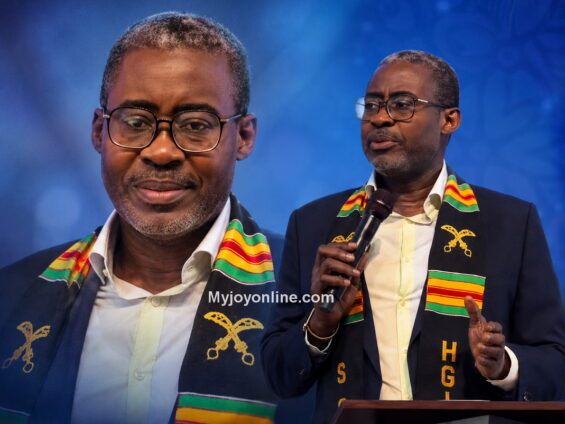
Prominent lawyer and public intellectual Ace Anan Ankomah has called on young Africans to combine technological excellence with strong ethical values as the world enters an era increasingly shaped by artificial intelligence.
Speaking at the graduation ceremony of the SOS-Hermann Gmeiner International College (SOS-HGIC) Class of 2026, Ace Ankomah delivered a keynote address on the theme, “Shaping Ethical Leaders for an AI-Driven Future: A Pan-African Responsibility.”
Addressing graduates, parents, faculty members and guests, he described the present moment as “an extraordinary moment in human history,” noting that artificial intelligence is rapidly transforming economies, politics and human interaction across the globe.
“Technology may amplify intelligence, but it cannot create wisdom or conscience,” he said. “The defining question of your generation will not be what technology can do, but what kind of people will control it.”
Ace Ankomah referenced concerns raised by leading scientists, technologists and global leaders about the need for responsible AI development.
He noted that advances in artificial intelligence have heightened calls for stronger safeguards to ensure that powerful technologies remain under human control and are deployed for the benefit of society.
According to him, these concerns carry special significance for Africa.
“For too long, our continent has entered global revolutions late, often as a consumer rather than a creator,” he said, adding, “Today, however, Africa has a rare opportunity not merely to participate in the new technological age, but to help shape it.”
He challenged the graduating class to become ethical leaders capable of ensuring that innovation serves humanity rather than narrow interests.
“The AI era demands more than technical excellence,” he said. “It demands courage, wisdom and vision.”
A Personal Story of Transformation
In one of the most personal sections of his address, Ace Ankomah reflected on his own academic struggles as a secondary school student four decades ago.
Recalling his graduation from secondary school in 1986, he admitted that he was far from an obvious success story during his early years.
“For most of my first five years in secondary school, I drifted aimlessly,” he said. “Had we voted for the classmate least likely to succeed, I probably would have voted for myself and won.”
He recounted being placed in a class reserved for weaker-performing students and battling the challenges of a speech impediment. The experience, however, became a turning point.
“I realised I was failing and needed to change course,” he told the graduates.
That realization led him to discover the power of reading, disciplined study and perseverance.
“You only know what you study, and you cannot study what you do not read,” he said.
Determined to improve, Ace Ankomah said he immersed himself in reading and developed a rigorous study routine, repeatedly reviewing material, practising past examination questions and setting clear academic goals for himself.
At age 16, he set his sights on studying law at the University of Ghana and even identified the residence hall where he hoped to live. He wrote his goals and personal mantras in his textbooks as constant reminders of the future he envisioned.
One of those guiding principles was: “Failure finds no home when discipline and dedication live.”
The effort paid off. Ace Ankomah gained admission to the Faculty of Law at the University of Ghana and achieved academic success that surprised even him.
“The boy who barely scraped into Sixth Form graduated as the best A-Level student of his year,” he recalled. “Everyone was shocked — myself most of all.”
A message for the future
Drawing lessons from his personal journey, Ace Ankomah urged graduates to embrace discipline, resilience and lifelong learning as they navigate a future increasingly influenced by artificial intelligence.
He stressed that while technological tools will continue to evolve, character, integrity and ethical leadership will remain indispensable.
“As Africa seeks its place in the AI age, the continent will need leaders who can combine innovation with conscience,” he said. “You must be that generation.”
Below is Ace Ankomah's written address in full
2026 COMMENCEMENT ADDRESS AT SOS-HERMANN GMEINER INTERNATIONAL COLLEGE BY ACE ANAN ANKOMAH, ESQ, 6 JUNE 2026, TEMA, GHANA.
Good morning distinguished guests, faculty, parents and most importantly, the SOS-HGIC Class of 2026.
It is both an honour and a profound responsibility to speak on the subject: ‘Shaping Ethical Leaders for an AI-Driven Future: A Pan-African Responsibility.’
We gather at an extraordinary moment in human history. Artificial Intelligence is transforming civilisation before our eyes, from shaping economies, through influencing politics, to redefining human interaction. Yet one truth remains unchanged: no machine can replace human character. Technology may amplify intelligence, but it cannot create wisdom or conscience. The defining question of your generation will therefore not be what technology can do, but what kind of people will control it.
That is why leading AI pioneers such as Geoffrey Hinton, scientists and technologists including Stephen Hawking, Bill Gates, Elon Musk and Steve Wozniak, and global leaders such as António Guterres and Pope Leo XIV, have urged that AI be developed responsibly and with safeguards proportionate to its power.
Just two days ago, Anthropic, the company behind Claude, warned that future AI systems may eventually be able to improve themselves rapidly, creating risks that humans could struggle to control. It urged governments and AI developers to be prepared to slow development if such capabilities emerge. As Anthropic co-founder Jack Clark put it: ‘Right now, it’s like the AI industry has a gas pedal, but it doesn’t have a brake pedal.’
These issues carry particular urgency for Africa. For too long, our continent has entered global revolutions late, and even then, as a consumer rather than a creator. Today, however, Africa has a rare opportunity not merely to participate in a new technological age, but to help shape it. The AI era therefore demands more than technical excellence; it demands ethical leadership: young people with the courage, wisdom and vision to ensure that innovation serves humanity, not just power or profit. You must be that generation.
Exactly forty years ago, I was also part of a graduating A-Levels class, but at Mfantsipim. We simply call it ‘Kwabotwe’ or ‘THE SCHOOL.’ But the young man who graduated in 1986 had not always been an obvious success story.
For most of my first five years in secondary school, I drifted aimlessly. Had we voted for the classmate least likely to succeed, I would have probably voted for myself; and won. After Form Three I was assigned to Form 4G2, the class reserved for the weakest students academically. Worse, I was, and still am, a stammerer.
With the reality of 4G2 came my Turning Point: admitting to myself that I was failing, and that the only light at the end of my tunnel seemed to be that of an onrushing train. I knew that I was not dumb; what I needed to completely change and outrun the train.
That was when I discovered, late, but just in time, the power of reading and disciplined study, around a simple truth: you only know what you study, and you cannot study what you do not read. I covered the lost ground by reading. That late decision carried me into Sixth Form by the narrowest of margins.
In Sixth Form, my late, and longsuffering father bought me almost all the set books, and I devoured them voraciously. Then I discovered something important deeper: if I read something ten times, I was unlikely to forget it. So, ten times I read. To this day, when law students ask me the secret to studying law, my answer is simple: ‘read everything at least ten times. If you cannot find the time, the problem is usually not time itself, but distraction, laziness or too much sleep.’ Then I add the wry aphorism, ‘sleep is for the weak, those with little to wake up for, and those who can afford it.’
I also practised past questions obsessively because ‘there is nothing new under the sun.’ No matter how inventive examiners believe themselves to be, sooner or later they repeat themselves. So, I organised years of past questions by topic and let them guide my reading.
I also adopted a simple mantra: failure finds no home where discipline and dedication live. At sixteen, I boldly predicted my A-Level grades and set myself a clear goal: to study law at the University of Ghana and live in Annex A of Legon Hall. I wrote those goals and mantras inside every book I owned as a constant reminder. Then I worked relentlessly towards them. Yes, I prayed. But I worked even harder than I prayed.
The dream came true. I entered the Faculty of Law and stayed in Annex A. But there was one outcome nobody saw coming. The boy who had barely scraped into Sixth Form in 1984, graduated in 1986 as Mfantsipim’s best A-Level student, that year. Trust me, everyone was shocked: me first, and to borrow from my best friend, ‘me mostest.’
Becoming ‘Junior Scholar’ or ‘Senior Scholar’ at Kwabotwe remains one of the great honours of anyone’s life. And why not? You don’t only receive the prizes to acclaim: you earn the lifelong nickname ‘Jusco’ or ‘Sisco,’ almost like receiving the green jacket at the golf Masters.
I share this story because too many young people underestimate the transformative power of disciplined effort. Dreams matter. Visions matter. Aspirations matter. But as an ancient and wise Jewish king once observed that ‘a dream comes through much activity.’ I take that to mean that dreams, by themselves, are merely dreams. It is hard work, discipline, sacrifice and sustained effort that bring them to life.
Hard work does not always guarantee success; but without it, success is unlikely. Talent alone is not enough. As the saying attributed to basketball coach Tim Notke reminds us, ‘Hard work beats talent when talent does not work hard.’ Success, I strongly suggest, is rarely accidental or even natural. It is usually built deliberately, through disciplined habits, consistent effort and the intentional willingness to sacrifice comfort for growth. What people often call ‘natural success’ is usually the visible result of invisible preparation. It is said that ‘Real supermen and superwomen do not leap over buildings in a single bound; they take small, determined steps, consistently, over time.’ That is my challenge to any young person whose struggles today, are like mine, decades ago.
Years after school, now as a parent, I experienced an epiphany that reminded me how far education had evolved from my time in school.
Disclosure: all three of my children (Niakoaa, Pappa and Ohemaa) passed through this school. Today, for weal or for woe, they have all followed me into the legal profession. I blame SOS-HGIC for that: that is my story, and I am sticking with it. But so did my niece Elise Korletey, who, two weeks ago, graduated from Villanova with a master’s degree in accounting with data analytics. So did my goddaughter, Akosua Opare, now a student at Brandeis but who just spent her junior year at Oxford. My godson, her brother, Kwame Opare is here; and two other goddaughters are joining you in August. Almost every child associated with me comes here. But I would still go to Mfantsipim!
Now the epiphany. During a parent-teacher meeting right in this hall, I was discussing my daughter’s performance with her history teachers. She was doing great, but I wanted more; perhaps too much more. Then from the back, a voice quietly intervened: ‘Be quiet, Ace. Weren’t you a late starter yourself?’
I nearly jumped out of my skin. It was Mrs Acheamfour-Yeboah, my own sixth-form history teacher from Mfantsipim. She knew my story of early struggles and eventual transformation, and now she was teaching my daughter at SOS-HGIC.
But the real lesson was not the coincidence; it was the system. In my day, your parents met your teachers probably only when you were in trouble. But here, parents and teachers come together regularly to discuss the progress of every child in every subject. That is intentional development. That is deliberate progress.
My children benefited from structures here and elsewhere that many of us never had. And it shows. Today, when the morning chat on my family platform is on intellectual property implications of the sale of eponymous brands, I thank SOS-HGIC for the foundation. And when one says ‘Daddy, I really disagree with the law on so-and-so,’ I blame SOS-HGIC for it. But I also thank God for providing the health and strength to work and the wealth to pay the fees here and beyond. Today’s SOS-HGIC parents, I know and can feel your pain. I salute you. But trust me, it is worth it. May I suggest to you that your greatest achievement in life would be when your children become better and greater than you.
And yet, Class of 2026, the challenges I faced in school and even those changes I saw here a few years ago, pale beside the transformation confronting your generation. When I was a student, research meant class notes and library books. Our understanding was shaped largely by what teachers taught and authors wrote.
Today, Artificial Intelligence is reshaping the world before our eyes. It writes essays, diagnoses disease, drafts legal documents and creates music and art. But despite all its power, AI cannot define justice, feel compassion or choose conscience over convenience. Only human beings can do that.
That is why your generation matters so much. I suggest to you that the defining question of the next fifty years will not simply be, ‘What can technology do?’ It will be, ‘What kind of people will control it?’ Will AI deepen inequality or expand opportunity? Will it entrench exploitation or advance human flourishing? Those questions will not be answered by machines. They will be answered by leaders; ethical leaders: YOU!
And Africa, our Africa, cannot afford to be absent from this conversation. For too long, our continent has entered technological revolutions late, often as consumers rather than creators, recipients rather than architects. Yet AI offers a rare opportunity to leapfrog centuries, to bypass the delays of history, to reclaim agency over our destiny, and help shape, rather than merely inherit, the future. For perhaps the first time, a student in Accra, Tamale, Koforidua or Ho armed with imagination plus discipline plus a laptop (minus dumsor) can build something that affects millions.
I recently met young innovators in Kigali who embed digital business cards in rings. Now, when someone hands me a card, I touch their phone with what looks like my wedding ring and my details instantly appear. As people stare in amazement, I often joke, ‘That is African juju,’ before explaining the technology and ingenuity behind it.
But innovation without ethics is dangerous. I recently wrote that ‘AI makes a good lawyer better and a bad lawyer dangerous.’ The same is true of every profession. Technology without ethics is power without restraint. History reminds us that advances in intelligence do not always produce advances in wisdom. The twentieth century gave us antibiotics and concentration camps, nuclear energy and atomic bombs, the internet and misinformation.
That is why education must aim at more than technical competence. Africa needs coders, but conscientious coders; engineers, but ethical engineers; entrepreneurs, but principled entrepreneurs. Above all, Africa needs brilliant people who are also good people.
For in this new world, the greatest danger may not be machines becoming human, but humans becoming machine-like: efficient but unfeeling, connected but isolated, informed but not wise.
We already see the warning signs. Algorithms reward outrage. Deepfakes blur the line between truth and fiction. Automation disrupts livelihoods faster than societies can adapt. Data is harvested without consent. Hidden biases in AI can discriminate against vulnerable groups. And, if I may add, many of your parents, aunties, uncles and grandparents are enthusiastically forwarding ‘fake news’ and swearing by AI-generated content; and then becoming defensive when you point it out.
The challenge is even greater for Africa. Imagine healthcare systems that do not recognise African genetic diversity, financial systems that unintentionally exclude African communities (especially our women), or language technologies that sideline indigenous African languages. Imagine AI making decisions about African realities without adequately understanding Africa. These are not merely a technological problem; it is a moral one.
As I have often quoted, ‘if you are not at the table, chances are that you are on the menu.’ And that is why a Pan-African responsibility is required: not merely to secure a seat at the table, but to build our own table and help write the menu.
Pan-Africanism must now be understood beyond political and economic terms. In the twenty-first century, it must also be intellectual and technological. Kwame Nkrumah urged us to ‘seek first the political kingdom.’ Today, Africa must also seek technological sovereignty. Not isolation from the world, but the capacity to shape our own future within it.
We cannot be and remain passive users of systems designed entirely elsewhere. We must help design the technologies and ethical frameworks that will govern the future. This is because despite all our challenges, Africa possesses something the world urgently needs: a deep tradition of community, shared responsibility and human-centred thinking.
The African wisdom captured in the phrase ‘it takes a village to raise a child’ borrowed by Hillary Clinton as her book title, reminds us that human beings flourish in community. None of us succeeds alone. Just as a village helps raise a child, societies help shape leaders, and nations help shape civilisation. In an age increasingly defined by individualism and technology, Africa’s enduring contribution may be this reminder: that our responsibilities extend beyond ourselves.
That is why many African philosophies emphasise interdependence rather than radical individualism. The ideas embodied in Ubuntu, ‘I am because we are,’ your own ‘knowledge in the service of Africa,’ and Kwabotwe’s ‘Dwen Hwԑ Kan (Think and Look Ahead)’ offer a comprehensive moral framework deeply relevant to the AI age.
In a world increasingly shaped by automation, Africa can remind humanity that people are more than data points or economic units. We are moral beings bound together by responsibility to one another. That may prove to be one of Africa’s greatest gifts to the future.
And so, as you step into an AI-driven world, permit me to suggest five principles you must cultivate.
First: intellectual excellence. Ethics without competence is ineffective. Whatever your field, strive for mastery. If you can earn an A*, do not settle for a B+. The future rewards the prepared.
Second: moral courage. Will you speak when misinformation spreads, reject corruption when it pays, and defend truth when falsehood is fashionable? Integrity requires courage because doing the right thing is often inconvenient.
Third: humility. Intelligence is not wisdom. Some of the world’s most educated societies have committed grave moral errors and today find themselves in literal and figurative ‘Straits of Hormuz.’ Humility asks: Who might be harmed? Which voices are missing? What are the unintended consequences?
I speak not of timidity, but true humility, the confidence to recognise that not everything that can be done should be done.
Fourth: empathy. AI may process information, but only human beings can truly understand suffering. A society that prizes efficiency over compassion may become technologically advanced yet morally impoverished.
Fifth: service. Leadership is stewardship, not self-glorification. Education should lead not only to personal advancement but also to societal contribution. Africa’s future will be shaped not by cynicism, but by service-driven excellence.
Class of 2026, history belongs to no civilisation forever. Every generation redraws the map. Africa's rise must therefore be not only economic, but ethical. The world has enough powerful nations; what it needs are ethical ones.
As you leave here for university and beyond, remember that the word university comes from the Latin universitas: the whole, a community united in the pursuit of knowledge and truth. Let your university experience shape not only your intellect, but your character. Wherever you go, show the world what it means to be African: humanise technology, defend truth, expand dignity and build societies worthy of human beings.
Years from now, when people have forgotten the grades you earned, the clothes you wore today or even the applause in this hall, they will remember the kind of leaders you became: whether you used knowledge responsibly, stood for truth, uplifted others and acted with integrity when compromise would have been easier.
And so, as you step into this new era, I dare you to be a true African: combine intelligence with wisdom, innovation with conscience, ambition with compassion, and leadership with service.
That is because the future of a world reshaped by technology at breathtaking speed, will not be decided by machines, but by the character of those who create and use them. Long after AI has evolved beyond our imagination, integrity, courage, discipline, compassion and service will still determine whether societies flourish or fail.
Africa’s destiny in this new age depends not only on skilled graduates, but on ethical leaders: men and women who can unite innovation with conscience, ambition with humanity, and intelligence with wisdom.
Class of 2026, become that generation: building not only successful careers, but just societies; not only powerful technologies, but humane ones. History one day must say that when your moment came, you used knowledge not merely to advance yourselves, but to uplift Africa and serve humanity with honour.
I commend to you the words of the hymnist William Tarrant, who wrote:
Praise we the wise and brave and strong,
Who graced their generation;
Who helped the right, and fought the wrong,
And made our folk a nation.
I will end where I often do, with another mantra, one that I have long embraced, attributed to one Muriel Ann Murphy:
When others sit, stand
When others stand, stand out
When others stand out, be outstanding
And if others are outstanding, be the standard.
Thanks for inviting and thanks for listening to me.
I salute the graduating class.
In this AI age, may you lead and serve like a true African should: wisely, courageously and ethically.
Latest Stories
-
GACL to hold full-scale emergency simulation exercise on October 15
32 minutes -
327 entries submitted for 30th GJA Media Awards
46 minutes -
Mahama proposes rent-to-own scheme for unfinished houses
47 minutes -
Mahama wants banks to introduce affordable housing loans within six months
48 minutes -
Photos from National Conference on Housing Finance
52 minutes -
Italy, Ghana unite 40 artists for ‘Beyond Creation’ exhibition at Accra Art Centre
1 hour -
Premature to call for Sports Minister’s removal while CID probe is ongoing – Ernest Norgbey
2 hours -
NPP mourns Samuel Arthur Odoi-Sykes
2 hours -
Stay out of World Cup visa probe to avoid interfering with CID investigations – Ernest Norgbey to politicians
2 hours -
Bono East Minister inspects ‘Big Push’ roads; contractor on Tankor-Fiema-Busunya road ahead of schedule
2 hours -
Scrutiny is not disloyalty – Chief of Staff defends serious journalism at 30th GJA Awards launch
2 hours -
Abuse case: Nana Akua’s husband Harold unable to appear in court after hospital admission – Police
2 hours -
Mahmud Kabore picks NDC Ashanti Regional Communication Officer nomination forms
2 hours -
KNUST Career Services pioneer Selina Doe Angmor named among 2026 40 Under 40 honourees
2 hours -
Nana Akua domestic abuse case: Police to arraign husband after hospital discharge
3 hours