

Audio By Carbonatix
The era of rote memorisation, commonly known in Ghana as "chew and pour", is a thing of the past. For decades, the education system has rewarded the ability to "chew" (memorise) facts, store them briefly, and "pour" them onto an exam paper. But in the age of the 4th Industrial Revolution, memory is a cheap commodity. As Artificial Intelligence (AI) permeates our classrooms, we face a critical crossroads: Will we use AI as a high-tech crutch for shortcuts, or will we harness it as the ultimate partner in human intelligence? This urgent debate served as the central focus of the March 2026 edition of EdTech Mondays Ghana.
The Over-Reliance Gap: Tool vs. Tutor
The fear in many staff rooms is that AI is simply a "cheating machine." However, as Miracule Gavor (GSET) points out, the real threat isn't the technology itself, it’s the over-reliance gap.
When students use AI without digital guidance, they treat it as an answer key rather than a thought partner. There is a fundamental difference between:
- The Shortcut: Asking AI for the final answer to a math problem to finish homework faster.
- The Learning: Asking AI to explain the logic behind a theorem so you can solve the next ten problems yourself.
Without a shift in how we approach these tools, we risk raising a generation that can operate software but cannot think through a problem.
Watch Miracule’s submission here
Redefining "Smart": If AI Can Answer It, the Question Must Change
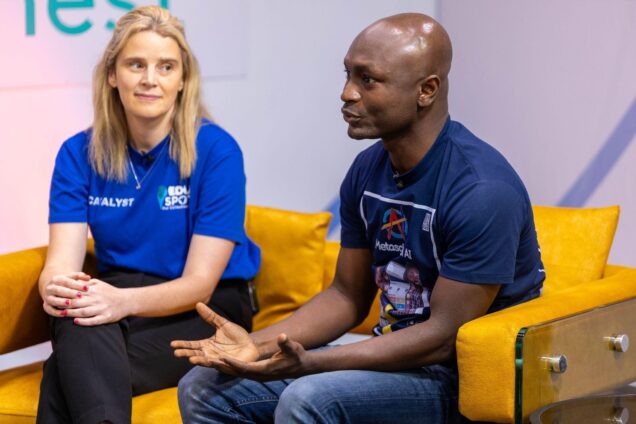
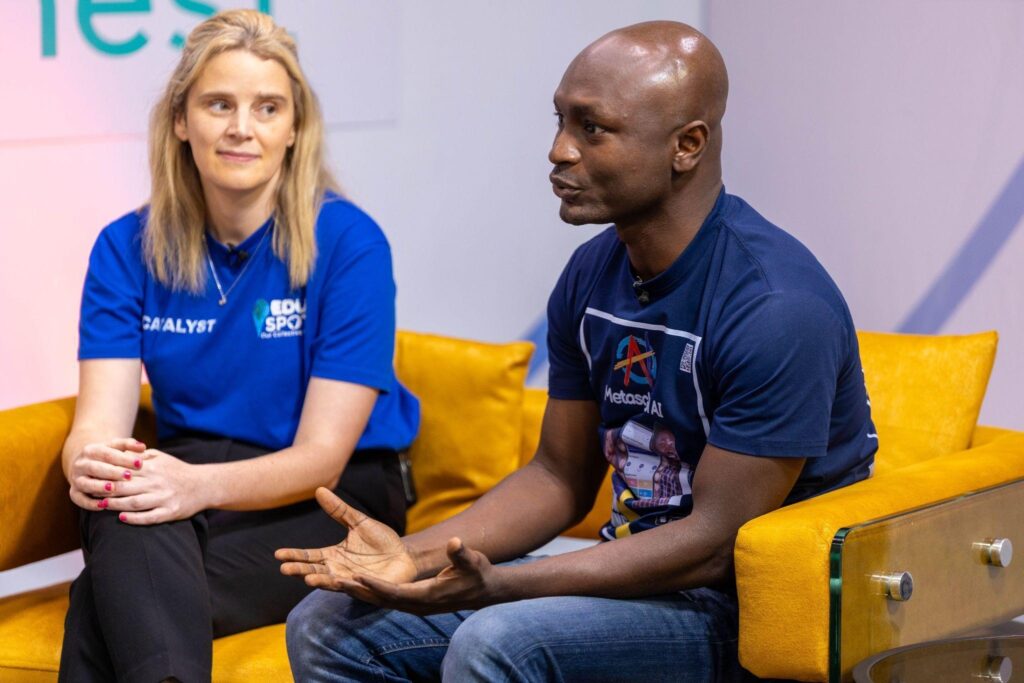
If a student can generate a perfect essay in ten seconds, the problem isn't the student; it's the assignment. Richard Duodu (Metaschool AI) argues that AI forces a radical shift in how we define intelligence.
In the 4th Industrial Revolution, "smart" is no longer about knowing the “what”. It is about mastering the how and the why.
The New Benchmark for Educators:
- Process over Product: Don’t just grade the final essay; grade the prompts and the iterative steps the student used to get there.
- Inquiry-Based Learning: Shift from asking "When did the 1948 riots happen?" to "How would the 1948 riots have unfolded differently if social media existed?"
- Critical Evaluation: Teach students to fact-check AI, identify biases, and challenge the "machine's" logic.
Why Humanity Wins: The Skills AI Can’t Touch
While AI can synthesise data, it cannot feel, lead, or care. Cat Davison (EduSpots) reminds us that in a "click culture," our greatest assets are our human virtues. To future-proof our students, we must double down on the skills no algorithm can replicate:
- Empathy & Kindness: Understanding the human impact of a decision.
- Resilience: The ability to fail, iterate, and try again, a uniquely human experience.
- Community Engagement: Applying knowledge to solve real-world problems in local towns and villages through project-based learning.
- Curiosity: The drive to ask the questions that AI hasn't been programmed to answer yet.
Call to Action: Become a Digital Guardian
To the parents and educators of Ghana: Banning AI is a losing battle. Instead, we must transition from "gatekeepers" to Digital Guardians.
Don’t stand over their shoulders to catch them using AI; sit beside them to guide how they use it. Use the "Guardian Method" of questioning to reinforce learning:
- "Why did the AI give you this specific answer?"
- "How can you verify that this information is accurate?"
- "What would you change to make this uniquely yours?"
We must empower our youth to command their tools rather than be commanded by them. The future belongs to the thinkers who use AI to amplify their own humanity, leaving the days of "chew and pour" in the history books where they belong.
The revolution is here. Let’s lead it.
If you missed the live broadcast, watch the replay
Stay Engaged: EdTech Mondays continues to facilitate these high-stakes discussions on the last Monday of every month at 9:15 am on MEST Africa’s Youtube channel and Facebook page. Join us as we navigate the path forward together.
#EdTechMondaysGhana #EdTechMondays #SmartTools #CriticalThinking #GhanaEducation #MastercardFoundation
Latest Stories
-
Ghana lose Morocco friendly as Atlas Lions turn to Mali
1 hour -
2026/2027 GPL: Kelvin Nkrumah strike sends Medeama top of league table
1 hour -
Emmanuel City crowned champions of maiden Global Game Scouting Tournament
1 hour -
Thomas Partey loses father Jacob Teye Partey
2 hours -
Martin Kpebu explains when EOCO can arrest Manhyia South MP after securing court warrant
2 hours -
EOCO’s reasons for seeking Manhyia South MP arrest warrant not justified – Kpebu
2 hours -
MTN Ghana warns SMEs against sharing PINs amid digital fraud risks
2 hours -
Yendi nursing students warn restricted access to skills lab could affect their training
2 hours -
Minority awaits formal notice of arrest warrant for Manhyia South MP – Annoh-Dompreh
2 hours -
LTIF announces 2026 Pan-African edition in Accra from October 6-7
2 hours -
Mfantsipim needs broader funding partnerships to bridge infrastructure gap – Prof Baiden
2 hours -
MP status must not shield anyone from law enforcement – Kwakye Ofosu
2 hours -
EOCO had tactical team ready to arrest Baffour Awuah – Felix Kwakye Ofosu
2 hours -
Afoko can unite NPP’s factions, says Charles Owusu Juanah
3 hours -
Guardiola backing Man City after guilty verdicts
3 hours