

Audio By Carbonatix
The Ghana Meteorological Agency (GMet) has proposed a new legislative framework to transform the Agency into the Ghana Meteorological Authority.
The move aims to strengthen meteorological governance, enhance climate resilience, and improve public safety by expanding regulatory powers.
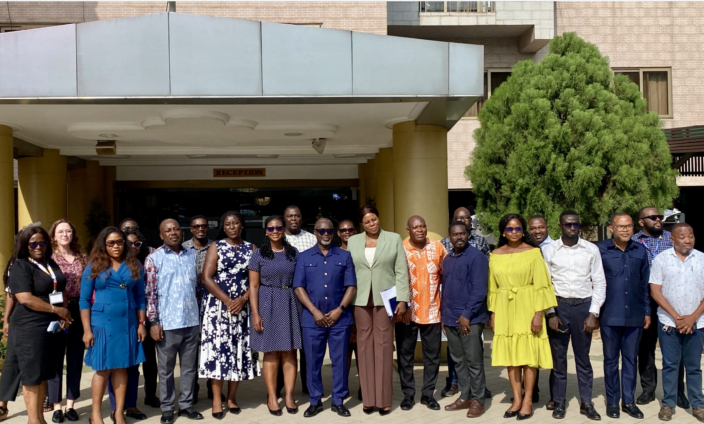
The proposal was presented on Wednesday during a stakeholder engagement in Accra, organised by GMet, to solicit inputs into the Ghana Meteorological Authority Bill, 2025, before it was finalised and submitted for further consideration.
Dr Ignatius Kweku Williams, the Deputy Director-General of Operations, GMet, said the proposed Ghana Meteorological Authority Bill, 2025, sought to elevate GMet from an Agency into an Authority with full regulatory oversight.
He said the elevation would allow GMet to license and regulate meteorological operators, establish national standards, enforce compliance, protect the public from misleading weather information, and strengthen Ghana’s climate resilience and early warning systems.
The proposed Authority would also remain the country’s principal provider of weather and climate services.
One of the most significant proposals in the Bill is that the Authority would become the single official source of national severe weather warnings and public safety alerts.
The Bill proposes that no other institution would issue such alerts outside the Authority’s regulatory framework.
It introduces a licensing system for organisations involved in meteorological activities.
Institutions that would require licences include those engaged in weather forecasting, climate modelling, remote sensing, issuing public weather alerts, commercial redistribution of meteorological data, and the installation and maintenance of meteorological equipment.
However, Dr Williams noted that academic institutions conducting research, personal non-commercial users, and organisations using weather information solely for internal purposes would be exempted.
Licences would be valid for one year and subject to renewal and ongoing compliance monitoring.
The Bill proposes expanding the National Meteorological Fund to provide sustainable financing for operations and infrastructure.
Existing aviation-related revenue sources would remain, including portions of landing charges, overflight charges, and airport taxes.
The Bill also introduces proposed contributions from other sectors, such as the construction sector, where there will be a 1.5 per cent contribution of the pre-tax contract value of construction projects valued at GH¢500,000 or more, including roads, bridges, dams, and telecommunications infrastructure.
There will also be a 2.5 per cent consultancy fee on public construction contracts.
For the Maritime sector, Dr Williams proposed allocations of 10 per cent of the Ghana Maritime Authority's annual service charges, 50 per cent of the port charges, 3 per cent of the pilotage charges, and 1 per cent of the terminal handling charges.
He said additional revenue would come from licensing fees, the sale of specialised forecasts and meteorological data products, consultancy services, training programmes and grants and donations.
Dr Williams argued that sustainable financing was necessary because modern meteorological services required substantial investment.
The Bill proposes establishing a National Framework for Climate Services (NFCS) to coordinate climate-related activities across government.
The framework would involve 11 ministries responsible for Environment, Science, Technology & Innovation, Food and Agriculture, Communications, Digital Technology and Innovations, Energy and Green Transitions, Fisheries & Aquaculture Development, Interior, Works and Housing, Transport, Finance, Defence and Health
Ms Vivian Abla Kally, Deputy Director-General, General Services, GMet, said the Bill represented a major institutional reform aimed at modernising Ghana’s meteorological services.
If passed, it would enhance public safety through stronger early warning systems; improve climate governance; establish regulatory oversight of meteorological activities, she said.
It would also promote adherence to international standards, create more sustainable financing arrangements, and position meteorological information as a strategic national asset for development planning and climate resilience.
Ms Kally said more than 21 stakeholders submitted comments, some of which included the Authority’s dual mandate as both a player and a regulator; the proposed licensing framework; the composition of the governing board; sources of funding and newly proposed charges; and the need for clearer definitions of technical terms.
She said recommendations had already been incorporated, while others required further consultation.
The Bill introduced clear sanctions for misconduct, citing offences such as operating without a licence; issuing unverified forecasts; forging licences or supporting documents; unlawfully disclosing confidential meteorological information and disobeying legally binding Meteorological Orders.
Depending on the offence, sanctions may include fines of up to 10,000 penalty units; imprisonment of up to three years and administrative penalties recoverable as civil debts.
Ms Kally said that represented a major shift towards ensuring accountability within the sector.
The event brought together representatives from the Ghana Hydrological Authority, the Minerals Commission, the Ghana Chamber of Telecommunications, the Ministry of Communications, Digital Technology and Innovations, the Ministry of Environment, Science and Technology, the Energy Commission, the Ministry of Local Government, and the Danish Embassy.
Others included the Ghana Statistical Service, Environmental Protection Agency, Ghana Health Service, Water Resources Commission, Ghana Irrigation Development Authority, Ghana Standards Authority, and the National Disaster Management Organisation.
Latest Stories
-
Power restoration fault suspected in Kumasi Central Market fire
36 minutes -
The 7-foot giant of Ngleshie Amanfro: Seven-foot Ghanaian Ephraim Saawa dreams of joining the national basketball team
1 hour -
Government promises support for Kumasi Central Market fire victims
1 hour -
Vibes The Movie: Big Ghun’s Ghanaian film earns five nominations at 2026 REFFA
2 hours -
MamaCare CEO warns unresolved conflicts among health workers could undermine maternal and neonatal care
2 hours -
Health professionals urged to translate medical knowledge into practice to save mothers
2 hours -
Conflicts among care providers linked to maternal, neonatal deaths – Expert
4 hours -
GIS marks 10th TIME conference, champions improved teaching practices
4 hours -
BRICS Or Balance? What Ghana’s bid really means
4 hours -
GPRTU wants full TRAFFITECH-GH implementation to start in 2027
5 hours -
Mahama announces plans to import electric wheelchairs for PWDs
5 hours -
KGL U17 Colts 2026: Western beat Prempeh Elite Academy to set up final final with Greater Accra Region
5 hours -
Late Solanke strike salvages 10-man Spurs draw at Man United
5 hours -
Gender Ministry to monitor welfare of Nana Akua Addo’s children amid domestic violence case
5 hours -
Benedict Okyere Yeboah: Ghana’s football problem goes beyond sacking a coach
6 hours