

Audio By Carbonatix
The Institute for Democratic Governance (IDEG) has identified the lack of political consensus between the New Patriotic Party (NPP) and the National Democratic Congress (NDC) as a major obstacle to efforts to deepen decentralisation and strengthen local governance in Ghana.
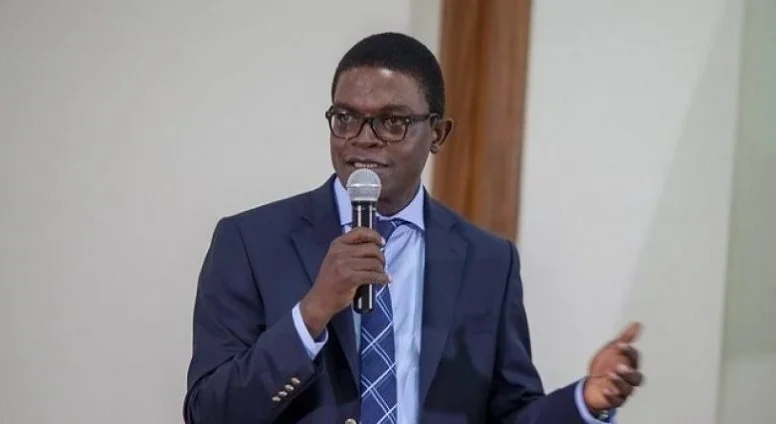
Executive Director of IDEG, Dr Emmanuel Akwetey, said the disagreement was particularly evident in the debate over whether political parties should be allowed to participate in local-level elections.
He said the absence of agreement on the issue had made it difficult to achieve durable reforms to Ghana’s local governance system.
Speaking on the final day of the National Dialogue on Decentralisation and Responsive Governance on Tuesday, August 11, Dr Akwetey said the two major political traditions must overcome their differences and find common ground on local government reforms.
“The real challenge under these key challenges is that there is unresolved consensus on local government reform. The two major political parties, I think two major political traditions, remain one of the greatest obstacles to durable local government reform,” he said.
He said Ghana had, over the past three decades, developed an extensive local government framework supported by participatory planning and inter-governmental transfers, but had been more successful in decentralising responsibilities than transferring authority, resources and accountability to local authorities.
“NDC holds its position, NPP holds its position, and we have to find out how we could have the consensus that will move us forward,” he said.
Dr Akwetey noted that the strengthening of fiscal transfers to Metropolitan, Municipal and District Assemblies (MMDAs) represented one of the significant gains in Ghana’s decentralisation process.
However, he said central political control, fiscal dependency, capacity constraints and limited citizen participation continued to undermine local autonomy, service delivery and accountability, making a broad political consensus necessary for meaningful reform.
Latest Stories
-
Power restoration fault suspected in Kumasi Central Market fire
40 minutes -
The 7-foot giant of Ngleshie Amanfro: Seven-foot Ghanaian Ephraim Saawa dreams of joining the national basketball team
1 hour -
Government promises support for Kumasi Central Market fire victims
1 hour -
Vibes The Movie: Big Ghun’s Ghanaian film earns five nominations at 2026 REFFA
2 hours -
MamaCare CEO warns unresolved conflicts among health workers could undermine maternal and neonatal care
2 hours -
Health professionals urged to translate medical knowledge into practice to save mothers
2 hours -
Conflicts among care providers linked to maternal, neonatal deaths – Expert
4 hours -
GIS marks 10th TIME conference, champions improved teaching practices
4 hours -
BRICS Or Balance? What Ghana’s bid really means
5 hours -
GPRTU wants full TRAFFITECH-GH implementation to start in 2027
5 hours -
Mahama announces plans to import electric wheelchairs for PWDs
5 hours -
KGL U17 Colts 2026: Western beat Prempeh Elite Academy to set up final final with Greater Accra Region
5 hours -
Late Solanke strike salvages 10-man Spurs draw at Man United
5 hours -
Gender Ministry to monitor welfare of Nana Akua Addo’s children amid domestic violence case
6 hours -
Benedict Okyere Yeboah: Ghana’s football problem goes beyond sacking a coach
6 hours