

Audio By Carbonatix
The Ghana Meteorological Agency (GMet) has presented the Ghana Climate Atlas to the National Development Planning Commission (NDPC) as part of efforts to integrate climate information into Ghana's national development planning and policymaking processes.
The presentation followed GMet's request for a strategic partnership with the Commission to demonstrate how the Atlas can support policy formulation, public investment decisions, climate risk management and long-term development planning.
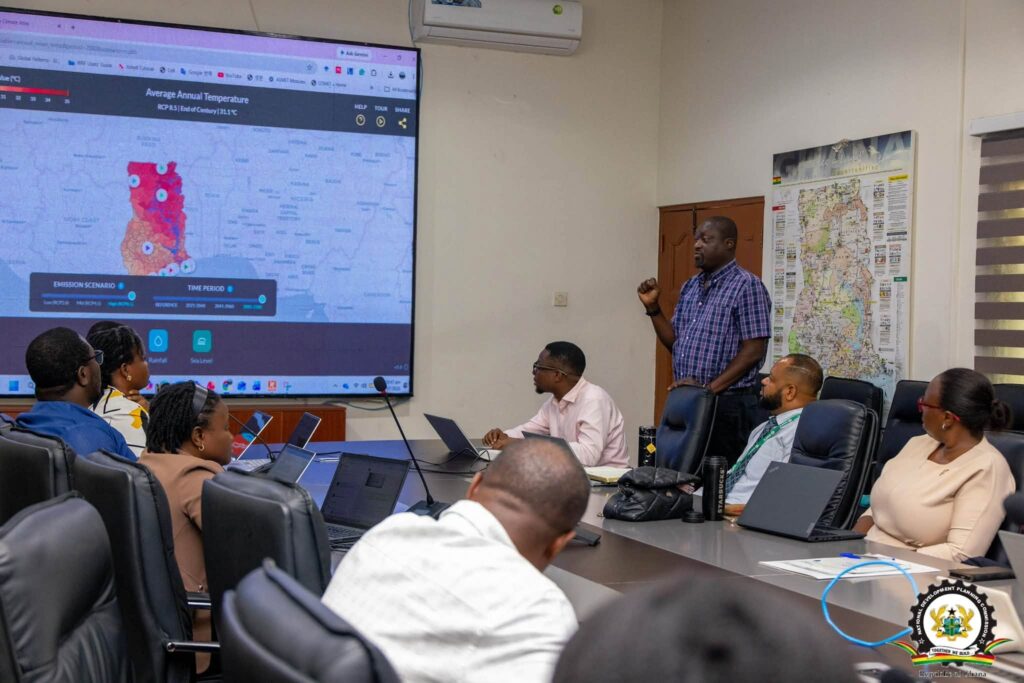
Speaking during the engagement, Principal Meteorologist Ms Maureen Abla Ahiataku said the Atlas, developed with support from the Government of Denmark through the Danish Meteorological Institute, is Ghana's first comprehensive long-term climate projection platform.
Officially launched in March 2026, it provides historical climate data and future projections at the national, regional, district and agro-ecological levels.
Ms Ahiataku explained that the platform, although developed with international support, is managed by GMet staff to ensure its long-term sustainability.
She said the Atlas provides projections on rainfall, temperature and sea-level rise under different greenhouse gas emission scenarios, allowing users to assess climate conditions up to the end of the century.
Under a medium-emission scenario, Ghana's average temperature is projected to increase from about 27.8°C to around 29°C by 2081, while coastal communities are expected to remain vulnerable to sea-level rise, erosion and other climate-related threats.
She also disclosed that GMet is expanding its public weather alert systems through WhatsApp notifications, the Common Alerting Protocol and planned location-specific alerts via telecommunications networks.
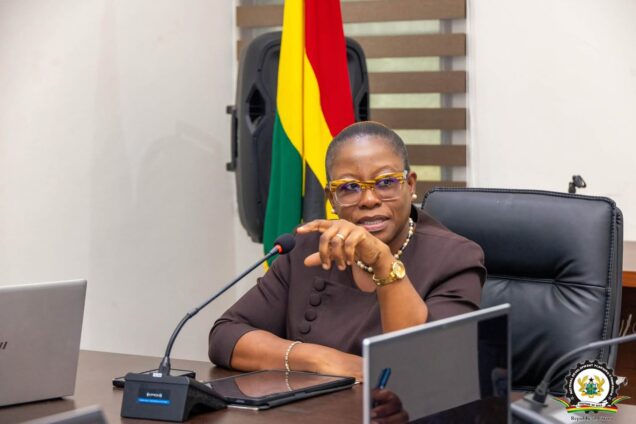
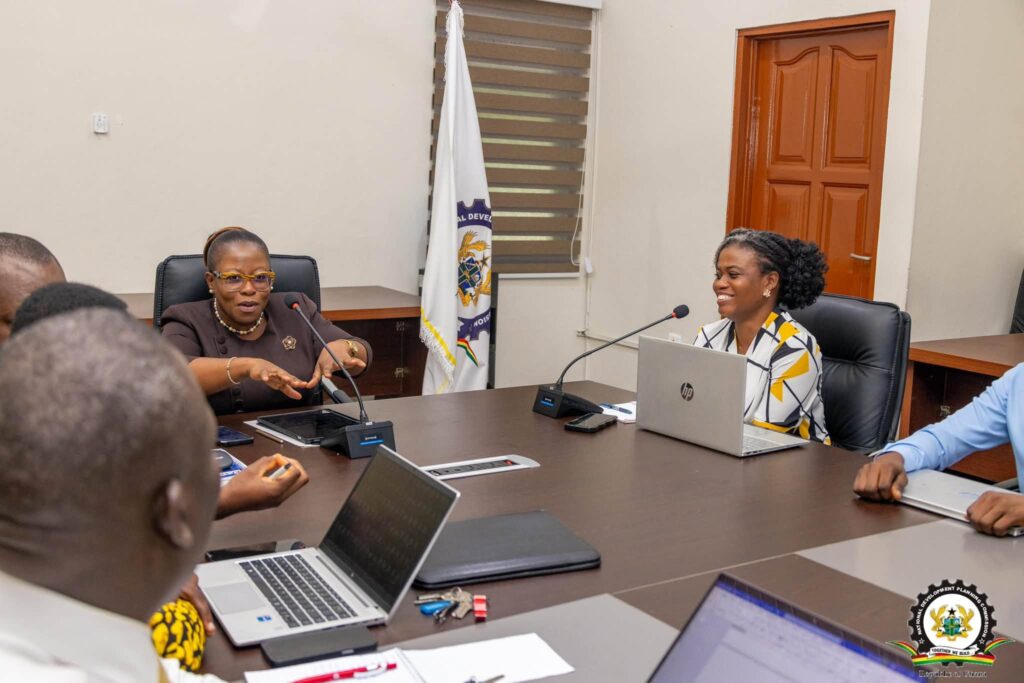
Responding on behalf of the NDPC, Director-General Dr Audrey Smock Amoah described the presentation as timely, saying climate information would be critical to the preparation and implementation of Ghana's long-term national development plan.
She urged GMet to align key climate indicators with the Commission's forthcoming national results framework and Sustainable Development Goals reporting system, adding that closer collaboration would help mainstream the Ghana Climate Atlas into national and sub-national planning while strengthening climate-resilient development across the country.
Latest Stories
-
NDC threatens sanctions over oversized campaign posters, gives aspirants 5 days to comply
16 minutes -
Star Oil paid GH¢2.7bn in taxes, levies in nine months of 2026
30 minutes -
Samson’s Take: The rule of law is cheaper before the bulldozer
31 minutes -
GRA blames system failure for delay in issuing receipt over passenger’s customs duty
52 minutes -
Livestream: Newsfile discusses World Cup visa scandal, beach demolitions, education strikes, BRICS bid
56 minutes -
NC-PTAs welcomes end of teachers’ strike, urges parents to prepare children for Monday
1 hour -
Government procures over 2,000 transformers as Ghana’s electricity access hits 89.13% – Energy Minister
2 hours -
UTAG-UG threatens strike on October 19 over unpaid allowance
2 hours -
Let The Constitution direct Chieftaincy to deliver “All Development Is Local”
3 hours -
John Jinapor outlines renewable energy, nuclear power priorities for 2027
3 hours -
Ghana explores centre of excellence for hearing, communication and cochlear implant care
4 hours -
Schizophrenia-related disorders lead mental health cases recorded in Ghana
5 hours -
Dutch authorities enlist Ghana in hunt for fugitive drug lord Bolle Jos
5 hours -
Ghana housing finance conference adopts communiqué to improve affordable housing access
9 hours -
Special Initiatives Minister urges Wa Technical Institute to enrol more girls as EU-backed solar training lab opens
10 hours