

Audio By Carbonatix
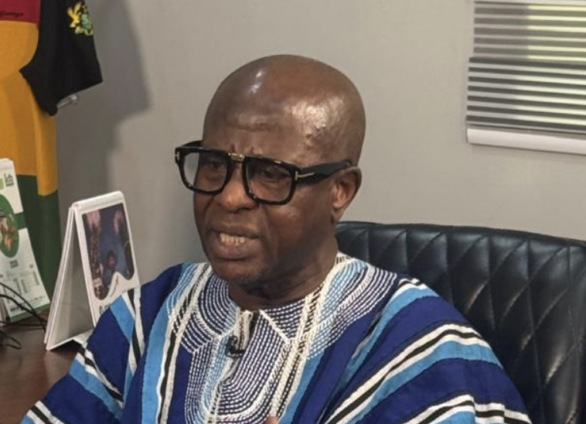
Ghana needs at least ¢1.5 billion to build a meaningful national food reserve system, far above the ¢300 million currently available to the National Food Buffer Stock Company, its CEO, George Abradu-Otoo, has said.
Speaking on JoyNews’ PM Express Business Edition on Thursday, he said the amount allocated so far is inadequate for large-scale purchases of surplus grains from farmers.
“Last year, Minister of Finance Dr Ato Forson announced that they were giving us further ¢200 million to continue the good work that we were doing, so in other words, so far we had only ¢300 million,” Mr Abradu-Otoo said.
He explained that while the funding has enabled the company to begin building reserves, it falls far short of what is required to make a real impact.
“If we need to do proper meaningful mopping up of excess grains, we need no less than ¢1.5 billion, so you can imagine what ¢300 million has done,” he stated.
Mr Abradu-Otoo, however, described the government’s intervention as an important first step towards strengthening the country’s food security system.
“But it’s a good beginning because it hasn’t been done before. That’s where I draw my comfort from,” he said.
According to him, the government's decision to prioritise establishing food reserves marks a significant policy shift.
“It’s a good beginning for the government to even think in the first place that we need to have a national food reserve,” he noted.
He said Ghana has lagged behind its neighbours in setting up strategic food reserves despite being a major agricultural producer.
“Because if you take the West African sub-region, Ghana is the only country that did not have a food reserve, can you believe that?” he said.
Mr Abradu-Otoo pointed out that several countries in the region have long recognised the importance of maintaining food stocks to cushion their populations against supply shocks and price volatility.
“Interestingly, we can also have Mali, etc, have a national food reserve,” he added.
His comments come as concerns grow over food security, post-harvest losses and the need for government interventions to stabilise grain markets and support farmers during bumper harvests.
The Buffer Stock CEO believes that scaling up funding for the programme would enable the company to buy larger quantities of excess grain, reduce waste, and provide the country with a stronger buffer against future food shortages.
Latest Stories
-
GRIDCo restores power nationwide after August 20 blackout, says grid strengthening measures ongoing
7 minutes -
Journalism must prioritise public interest over attention — Kwesi Pratt
44 minutes -
Ghana Mineworkers Union demand suspension of contract mining directive, threaten industrial action
1 hour -
ADB Ghana Medicals constructing and equipping new Cardiothoracic Centre at Komfo Anokye
1 hour -
AFREIKH Summer School challenges Africa to harness critical minerals
1 hour -
Government plans 2,000-acre pharmaceutical innovation park in Osudoku to boost local drug production
1 hour -
Partey undergoes medical ahead of Al Shabab move in Saudi Arabia
2 hours -
Today’s front pages: Friday, August 21, 2026
2 hours -
Power outages could drive up cost of digital services — NITA
2 hours -
Patients face basic sanitation gaps in West African health facilities — WHO / UNICEF
2 hours -
Competence has no age; let’s stop punishing new businesses
2 hours -
JoyNews Republic Bank Habitat Fair 2026 opens today at Achimota Mall
2 hours -
What Is Wrong With Us: The roads that keep counting our dead
2 hours -
MTN condemns recent xenophobic attacks on Ghanaians in South Africa
2 hours -
Philip Nai: What happens at your front desk can make or break your brand
3 hours